Written collaboratively by Clarence Winter, Eric Jones, Philip Rozeboom, Jill Alms, and David Vos.
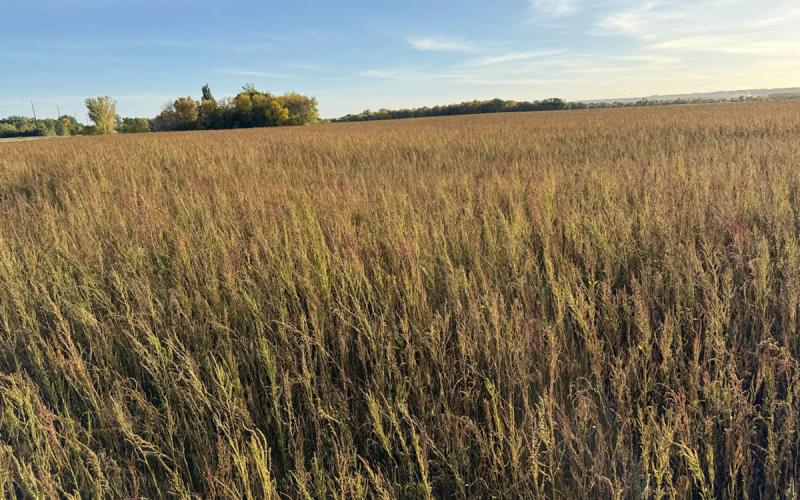
The 2026 growing season was abnormally hot and dry, which may have reduced the number of weed flushes witnessed this year. The weeds that did germinate may not have been controlled by a preemergence herbicide(s) as there was likely not an activating rain event (0.5 to 1” of precipitation) to move the herbicide into the soil where seeds are germinating. Since the conditions were hot and dry during postemergence herbicide application, weeds were stressed and the herbicide may not have provided effective activity. The spotty rainfall during the later part of the season (many areas of the state received multiple ~0.25” rain events) may have been enough to stimulate weed germination, while also missing all the herbicide applications (Figure 1).
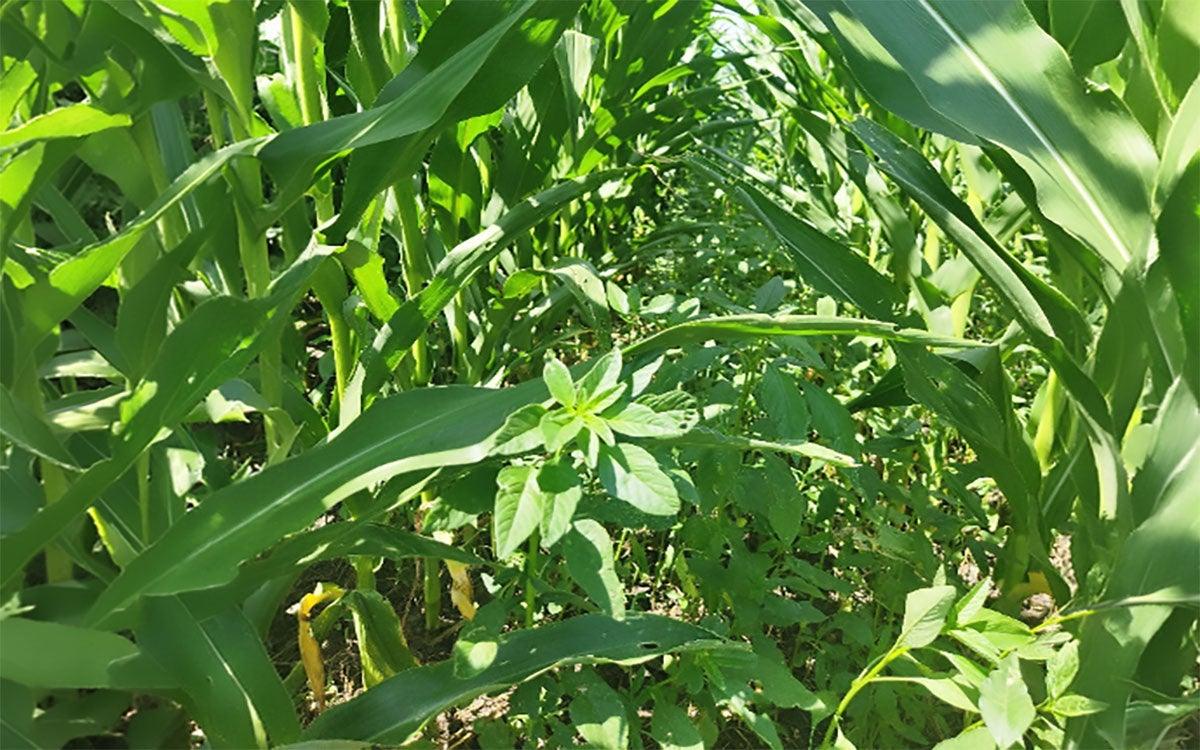
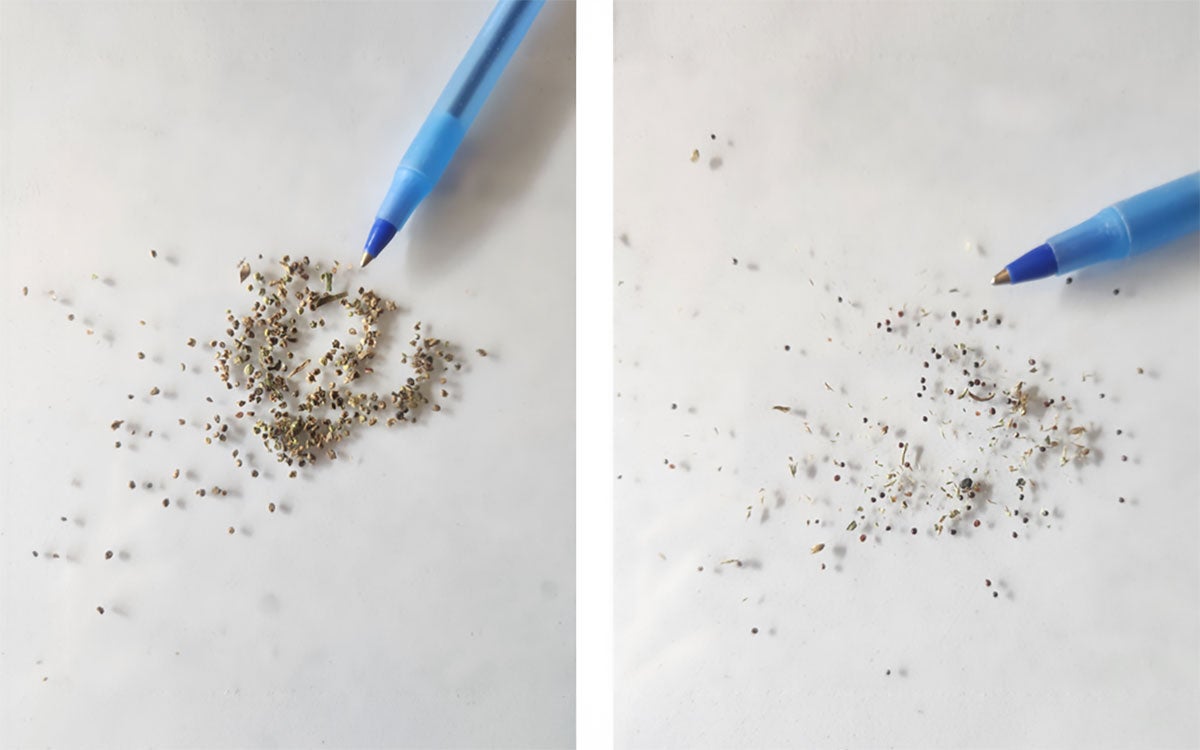
Later emerging weeds can be seen in some crops now, but these weeds likely did not cause a yield loss (Figure 2). However, these weeds have produced viable seeds that should be removed (Figure 3). Unfortunately, the only means to manage these weeds now is to hand-pull and remove them from the field.
Determining Harvest Order
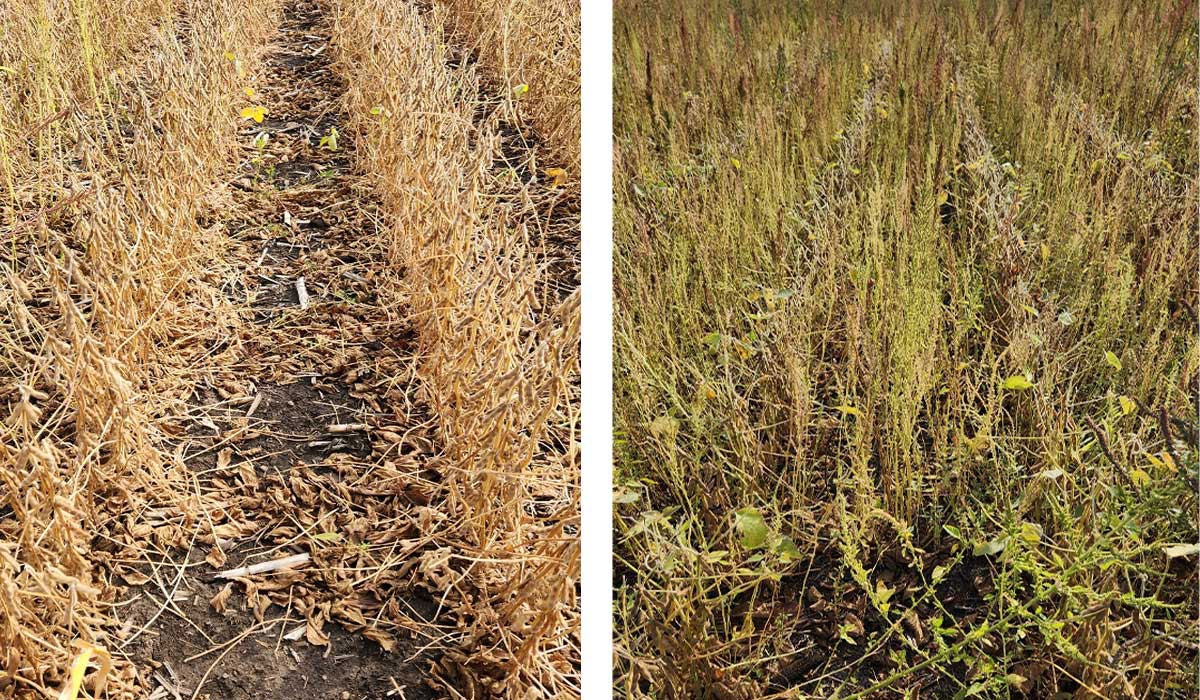
Although hot and dry conditions may have reduced weed infestations in some areas, an equally possible scenario is reduced herbicide effectiveness, as pesky weeds create a waxy layer over their cuticle, resulting in weeds being present at the time of harvest. The severity of weediness can vary from “clean” to “weedy mess” (Figure 4). Careful consideration should be taken to determine the order of fields to be harvested. What fields are “clean” and a “weedy mess” should be determined by preharvest scouting. Fields that are very weedy should be harvested last. If weedy fields are harvested first, the weed seeds can become lodged into crevices of the combine and be transported to other fields (Figure 5).
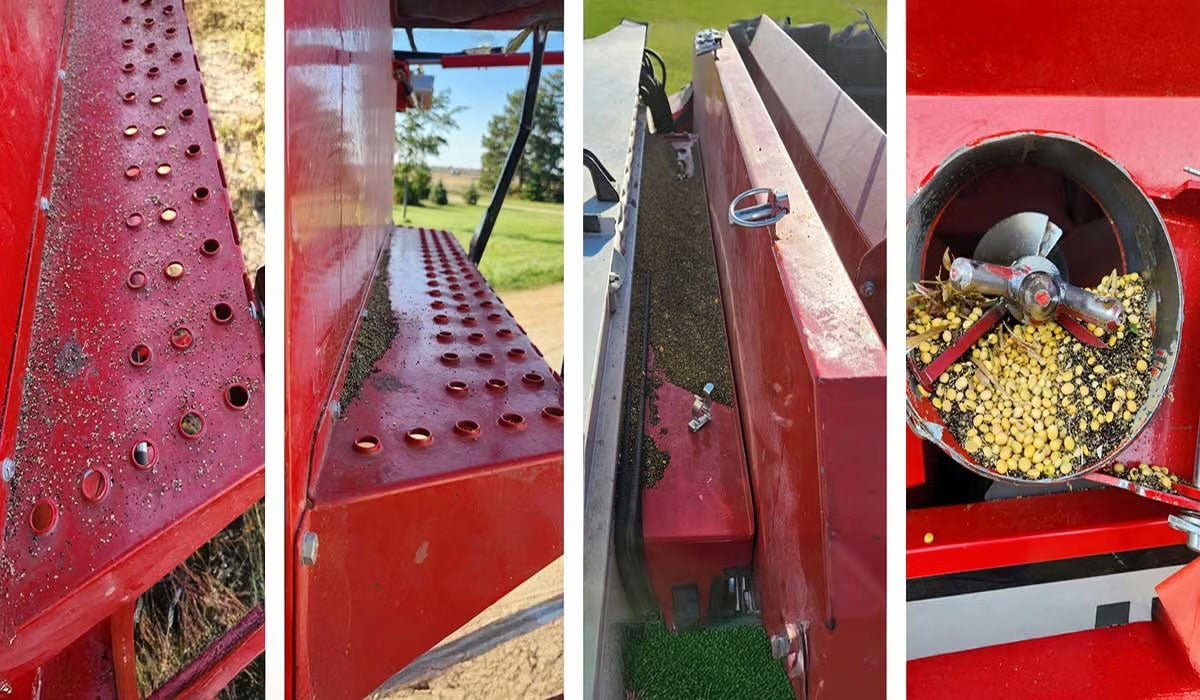
Additional Considerations
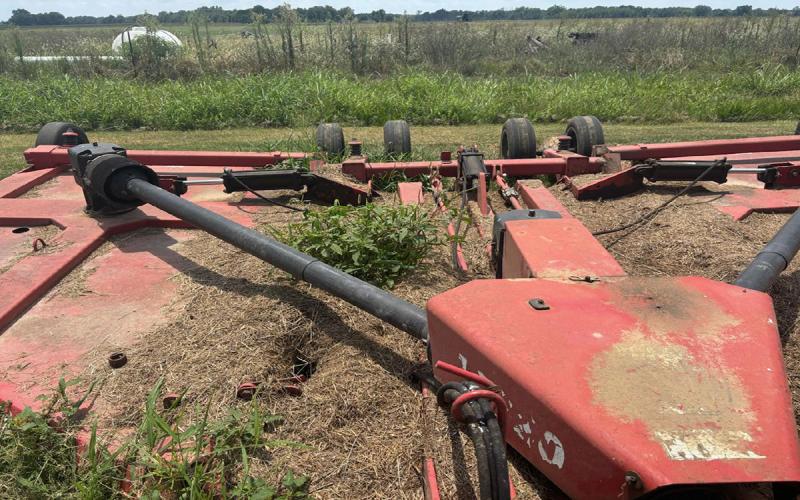
If a weedy patch is unavoidable or harvest is urgent, the combine should be cleaned before entering a different field. Many service trucks are equipped with an air compressor to blow out seeds in crevices of the combine. Regardless of the field harvest order, combines should be meticulously cleaned after harvest to remove weed seeds that may have become lodged into crevices. The residues from cleaning the combine should be contained and destroyed to ensure that any weed seeds removed do not inhabit fields in proximity. If machinery is not cleaned, weeds can grow to produce seeds that can inhabit nearby fields (Figure 6).
Weeds can also reduce harvest efficiency. Weeds usually exhibit a higher moisture content than crops and require the combine to operate at a higher output (i.e., increased RPM and fuel consumption). While the crop yield is nonaffected, the result is increased diesel consumption, harvest time, and further stress on harvesting equipment, all of which contribute to potential profit loss. While too late this growing season, select herbicides can be applied to desiccate both crop and weeds to reduce moisture content to increase harvestability. Refer to the most-recent South Dakota Pest Management Guides and specific herbicide labels for more information on applications for harvest desiccation.
Weedy fields at the time of harvest should have the location and species present recorded. The records can be used as a reference to ensure that effective weed management is implemented for the next growing season by knowing where the weedy fields are at and what species are present. Refer to the South Dakota Pest Management Guides for a complete list of herbicides to effective various weeds in different crops to start planning your herbicide program for next year.


