Search
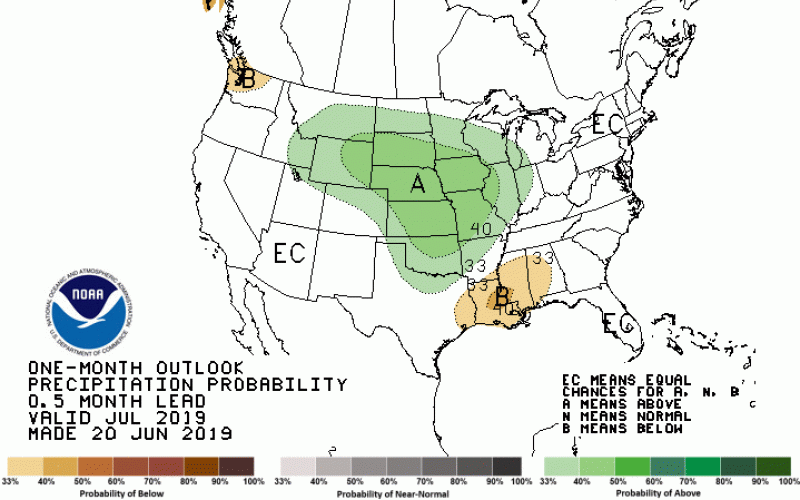
July 2019 Climate Outlook: Challenges Continue
This year’s seasonal pattern of wetter than average conditions is projected to continue through July and the rest of the summer season. The latest climate outlook, released June 20, 2019, shows an increased chance of wetter than average conditions in the next one to three months for the state of South Dakota.
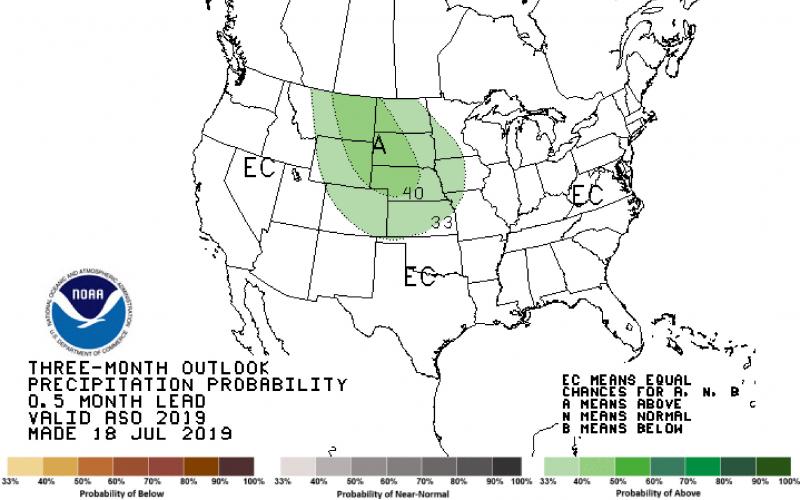
Wet Conditions Likely Into Fall Season
Many locations in South Dakota have already received as much precipitation this year as they do in an entire average year. The latest climate outlook from NOAA’s Climate Prediction Center shows increased chances of wetter than average conditions to continue into the fall season.
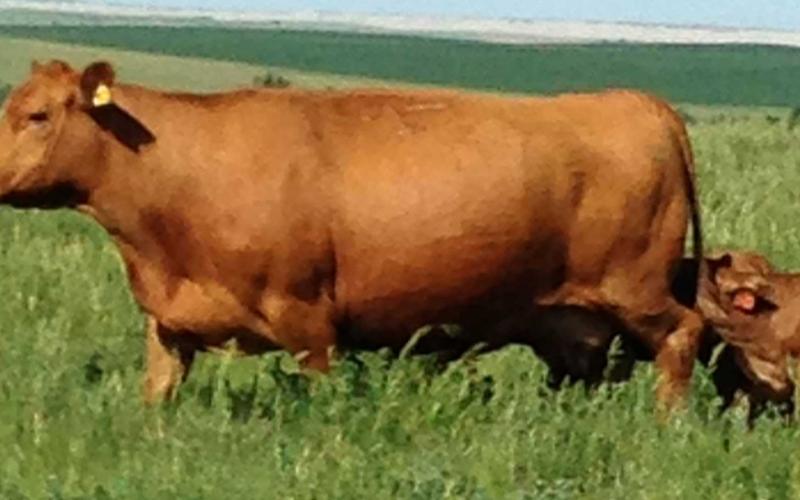
Alternative Calving Considerations
Structuring a calving program that best suites farm and ranch operations can be challenging. Of primary concern are: weather, labor, market timing, and animal health considerations, with weather possibly being the most volatile factor, as it ranges from challenging to catastrophic in some years.
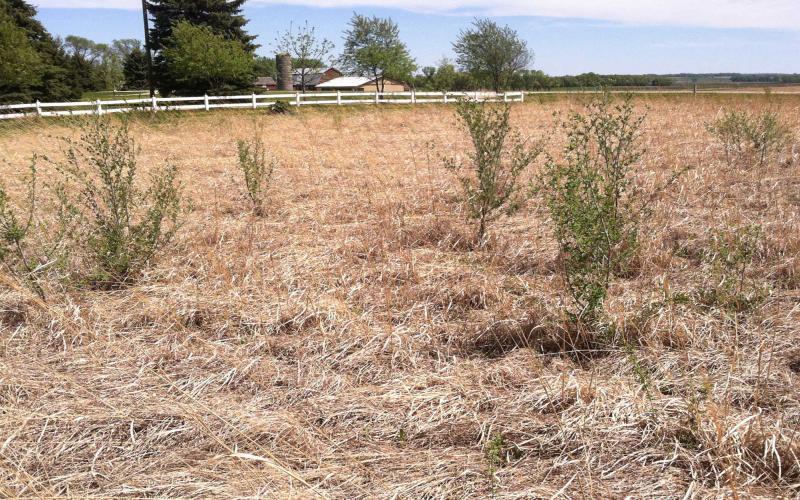
Removing Young Trees From Grasslands Will Save Money and Effort
Volunteer trees can hinder the development of desirable wildlife habitat and livestock resources. Early control of volunteer woody species is the simplest and most cost-effective option for maintaining open grassland habitats.
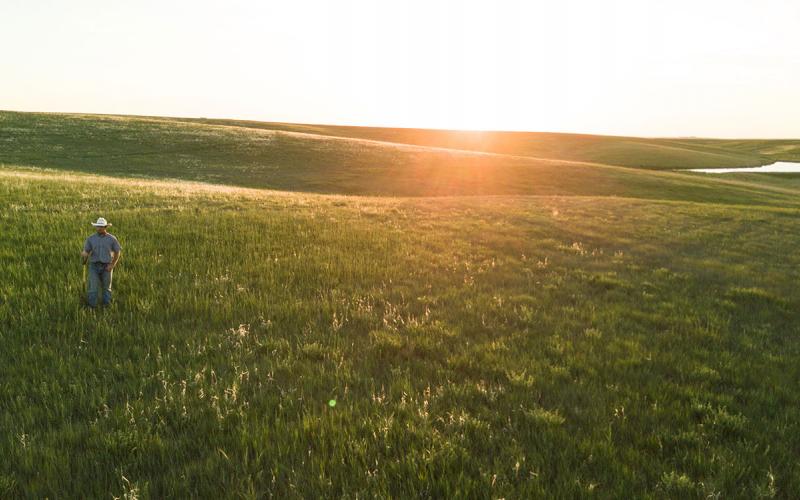
Grassland Fertilization: Terminology and Economics
This article is the first in a series of six focused on helping producers understand the pros and cons of grassland fertilization. We begin by learning some of the basic terminology and information related to fertilization.
SDSU Extension Professionals Honored for Accomplishments
November 10, 2020
SDSU Extension professionals were recognized for a variety of achievements at the annual Fall Conference held virtually October 28-29.
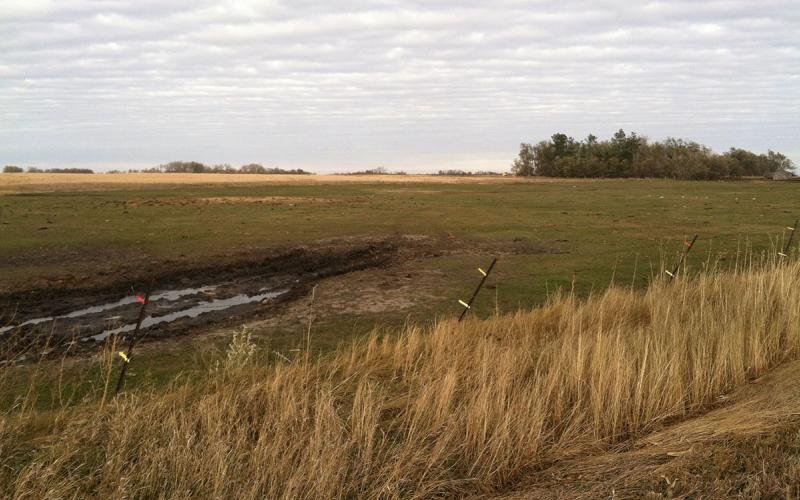
Grassland Fertilization: Native Pasture Case Study - Hamlin County
Whether fertilization pays or not depends on the species present, the past management history and the type of grazing strategy. This study compares two very different plant communities that represent typical pastures and management schemes in this area.
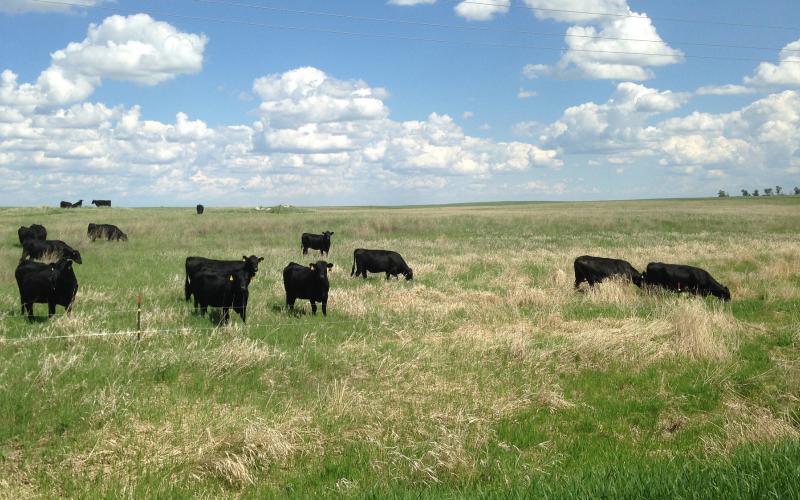
South Dakota Grazing Management Practices: Current & Future
Grazing land occupies 54% of rural land and accounts for a key portion of land use in South Dakota. Many grassland problems can be avoided by using efficient grazing management practices.
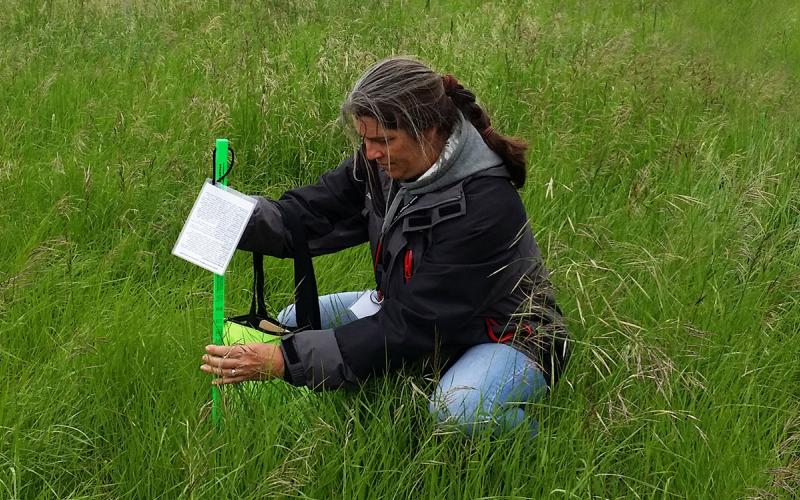
Using the ‘Grazing Stick’ To Assess Pasture Forage
Assessing pasture forage is a key step in planning grazing strategies. A grazing stick is a tool that uses simple math and measurements to determine herd size, stocking rates and available grazing days. We will address how to use a grazing stick in this article.