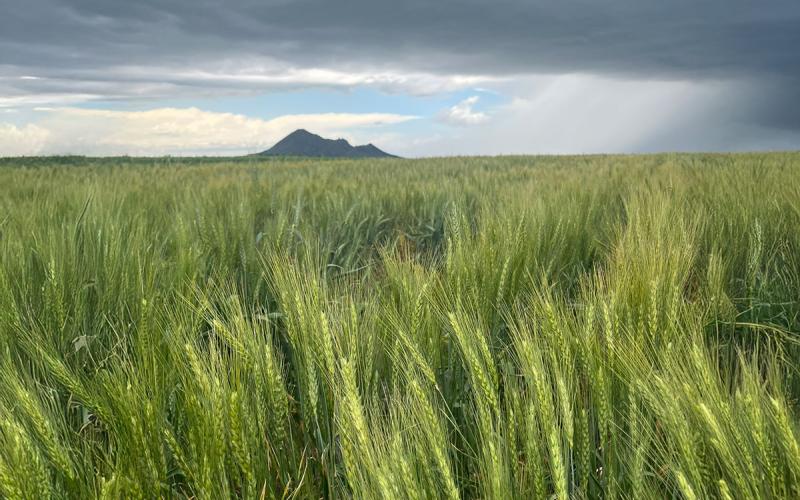
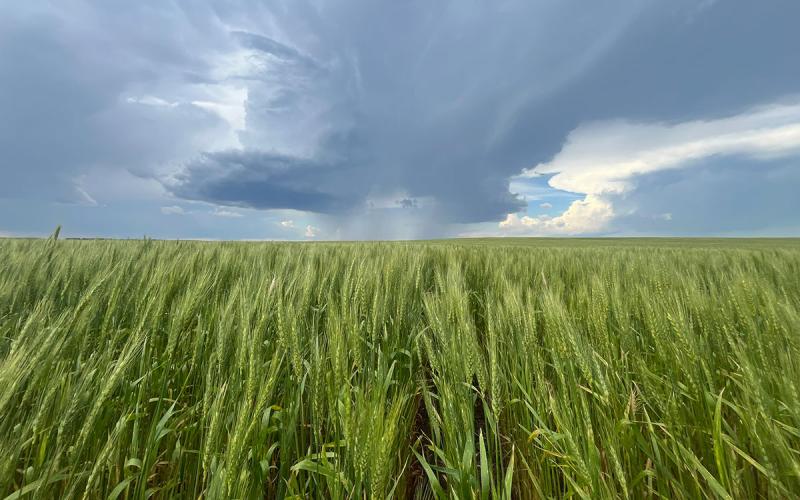
36th Annual Draper Winter Wheat Meeting https://youtu.be/ye8vOH27UoU
With the spring season arriving in South Dakota, now is the ideal time to start planning your wheat crop for the 2026 growing season. Whether it be winter wheat or spring wheat, there are many things to consider to help improve the health and success of these crops. This is especially relevant when considering the moisture deficit and overall dry conditions that are present across South Dakota.
Spring Wheat
Despite the varying opinions on the best time to plant spring wheat, the “wheels are starting to turn” in the field for South Dakota small grain farmers. Planting date for spring wheat is determined by many factors including soil temperature and soil moisture. Although soil temperature is an important factor to consider when planting small grains, waiting for higher soil temperatures is not ideal for some locations in South Dakota, as these conditions are not guaranteed with variable weather. Additionally, waiting for ideal temperatures can put the crop at risk of reduced crop yield and quality due to “crop shatter” consistent with higher temperatures seen later in the year (Hall, 2019).
Adequate moisture in the field is crucial for successful spring wheat seed germination, giving it the best chance of survival. When soil moisture is low, seeding depth may need to be adjusted based on available water. While the recommended depth is 1 to 1.5 inches, planting deeper may be necessary to reach moisture. Sufficient soil moisture also improves nutrient availability and plant uptake, making it an essential factor to consider during planting.
Variety selection is another critical factor that can influence spring wheat success in South Dakota, especially in years where soil moisture may be an issue. Wheat varieties differ in several important traits including yield potential, disease resistance, maturity, straw strength, and tolerance to environmental stress. By selecting varieties that are well adapted to local growing conditions, farmers can improve crop performance and reduce production risk. Producers are encouraged to consult the most recent Spring Wheat Variety Trial Results when making seed decisions, as these trials evaluate wheat performance across multiple locations and growing conditions.
Winter Wheat
Contrary to spring wheat, the winter wheat planting window has already passed, as this commodity went into the ground in the fall of 2025. According to the United States Department of Agriculture Crop Progress Report on March 4, 2026, topsoil moisture supplies in South Dakota rated at 21% very short, 27% short, and 49% adequate. Meanwhile, the corresponding winter wheat conditions were rated 6% very poor, 8% poor, 37% fair, and 47% good. Both of these measured variables are improvements compared to the 2025 growing season, resulting in improved wheat germination and health across the state so far. Despite this progress, several regions of South Dakota are flagged on the Drought Monitor, and timely precipitation will be needed for this crop to be successful in 2026.
Another concern for winter wheat success in 2026 was minimal insulating snowfall, a critical component that assists wheat in winter survivability. Luckily, most regions of South Dakota experienced unseasonably warm temperatures throughout the winter, which should mitigate wheat survival concerns. However, limited snowfall results in soil moisture reserves remaining low in many areas of the state. As a result, winter wheat stand establishment may still be uneven in fields where fall moisture was insufficient. A common concern for winter wheat growers under warm winter conditions is whether adequate vernalization has occurred. Vernalization is a critical process that allows winter wheat to transition from vegetative growth to reproductive development following exposure to cold temperatures during dormancy. It is important to note that winter wheat emergence is not required for successful vernalization to occur; only seed swelling and the inhibition of soil water are necessary for the process to begin (Pennington et al., 2023). Additionally, research has shown that winter wheat cultivars differ substantially in vernalization requirements, with some modern types completing vernalization after only a few weeks of cool temperatures (Distelfeld et al., 2009). Given the variable moisture conditions across South Dakota, evaluating winter wheat stands this spring will be an important management step. Conducting stand counts can help producers better understand growing conditions and determine whether any management adjustments may be necessary. For guidance on assessing winter wheat stands, refer to Sara Bauder’s article, Assessing Winter Wheat Stands.
Looking Ahead
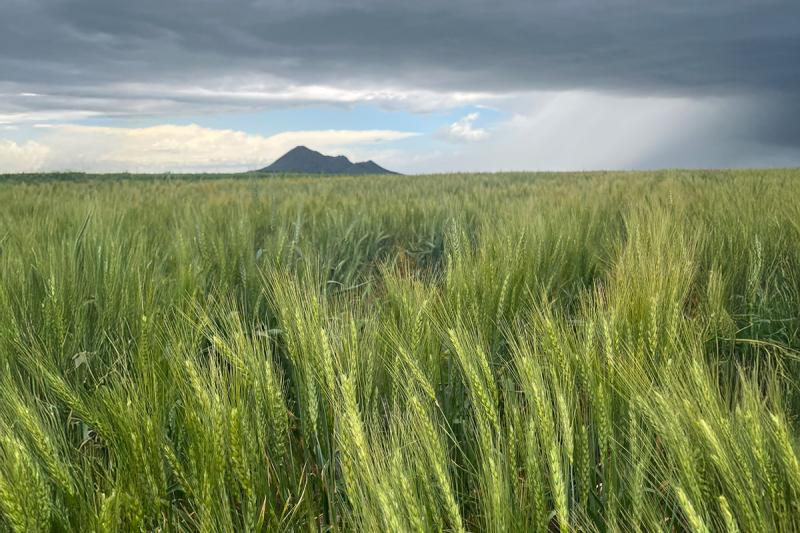
Like many years, close monitoring of soil moisture, crop emergence, and stand conditions will be crucial for optimizing wheat production. Spring rainfall could improve winter wheat stands and provide favorable conditions for spring wheat planting. Farmers should remain adaptable, making informed decisions to mitigate challenges posed by moisture variability and temperature fluctuations. By carefully managing planting strategies and moisture conditions, South Dakota growers can position themselves for a more successful wheat harvest in 2026.
References
- Bauder S., Assessing Winter Wheat Stands, SDSU Extension, 2023
- Distelfeld A., Li C., Dubcovsky J., Regulation of Flowering in Temperate Cereals, Current Opinion in Plant Biology, 2009
- Hall R., Chapter 5: Spring Wheat Planting Guide, SDSU Extension iGrow Wheat Best Management Practices, 2019
- Pennington D., Falor J., Fall Wheat Emergence and the Vernalization Process, Michigan State University Extension, 2023