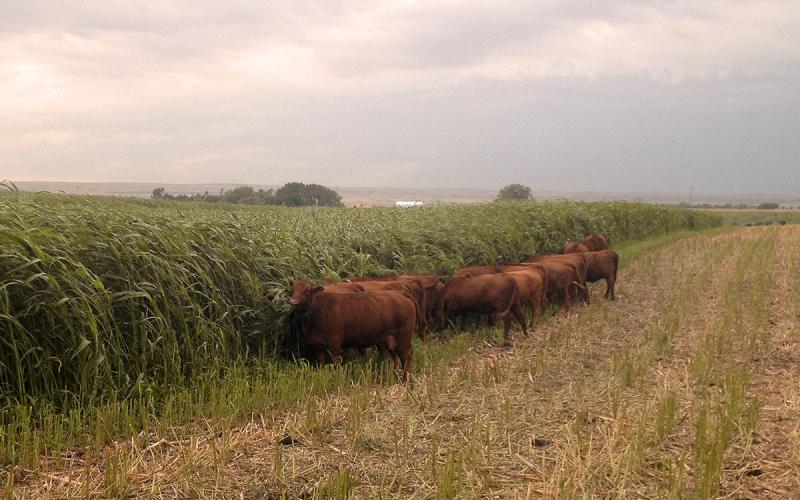
BROOKINGS, S.D. – South Dakota State University Extension is encouraging producers to test the nitrate levels in their forages.
High nitrate levels in hay and forage can pose serious health risks to livestock, particularly pregnant animals and ruminants such as cattle. Nitrate test strips can give producers a quick, low-cost screening tool to estimate the nitrate levels in their hay and forage.
Producers who suspect elevated nitrate levels or who receive high strip-test readings should consult a veterinarian, SDSU Extension field specialist, or certified forage testing laboratory for assistance interpreting results and developing safe feeding strategies.
Nitrate testing is available at the SDSU Extension regional centers in Aberdeen, Lemmon, Mitchell, Pierre, Rapid City, Sioux Falls, Watertown and Winner; Berg Agricultural Hall and Raven Precision Agriculture Center on the SDSU campus in Brookings; and at the Bennett County, Butte County, Clay County, Fall River County and Haakon County offices. To learn more, visit the SDSU Extension nitrate testing page
For a free, how-to guide on using nitrate test strips, visit the SDSU Extension page.
Environmental conditions including drought stress, frost, cloudy weather, hail damage, or heavy nitrogen fertilization can increase nitrate accumulation in plants. Because nitrate toxicity can lead to reduced performance, illness or death in livestock, testing forage before feeding is an important management practice.
"Don't let a preventable nitrate issue turn valuable forage into a costly liability,” said Parker Witt, SDSU Extension Crop-Livestock Systems Field Specialist. “Free nitrate testing through SDSU Extension helps forage producers preserve feed value, and livestock owners make informed management decisions before animal health, forage utilization or profitability are affected.”
For more information, contact Jaelyn Whaley, SDSU Extension Sheep Field Specialist; Parker Witt, SDSU Extension Crop-Livestock Systems Field Specialist; or Kim Ricardo, SDSU Extension Forage Field Specialist.