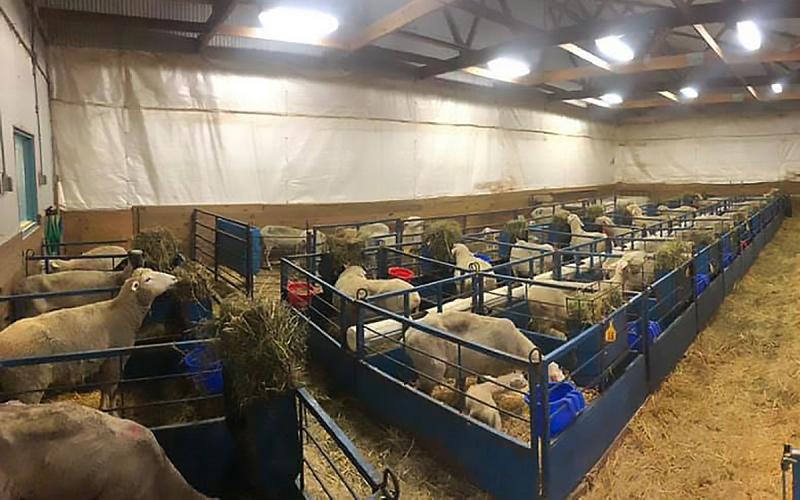
Hypoglycemia and hypothermia are the two biggest causes of lamb mortality within the first 24 to 48 hours of life. Hypoglycemia occurs when a lamb does not receive enough energy, typically because it is unable to consume sufficient colostrum or milk. Hypothermia occurs when a lamb’s body temperature drops below 101. Cold lambs are less likely to stand, nurse, and absorb nutrients from colostrum which increases the risk of hypoglycemia.
Understanding how lambs gain and lose body heat can help to create an environment that promotes survival. Body heat is transferred through four main mechanisms: conduction, convection, evaporation, and radiation.
Conduction
Conduction occurs when body heat is transferred between the lamb and another surface (the ground). Since the ground is often cooler than the lamb, heat will transfer from the lamb to the ground, lowering the lamb’s body temperature. This is why putting down bedding is important. The bedding acts as an insulating barrier for the lamb and prevents body heat from being transferred to cold surfaces. Heating mats in the jugs can also provide a warm surface that prevents hypothermia.
Convection

Convection is heat that is being transferred by the air. If lambs do not have access to shelter or wind breaks, they will lose body heat from the wind blowing against them which may be particularly important for pasture lambing. If lambs are wet and air is blowing on them that can increase evaporative heat loss. Convection can also be used to warm lambs through the creation of a warming box. Warming boxes circulate warm air across the lamb which has a heating effect. If using a warming box, it’s important to warm the lamb quickly and return it to the ewe to continue encouraging a strong ewe-lamb bond.
Evaporation
Evaporation is the process of water changing from a liquid to a gas. This process requires energy, which is drawn from the surrounding environment, resulting in cooling. Because of this cooling effect, we want to keep our lambing environment as dry as possible. Make sure ewes clean off their lambs after birth, place fresh bedding in jugs when you rotate a new ewe-lamb pair in and invest in water systems that are harder to knock over, such as the one pictured below. The PVC waterer also has the advantage of being high enough that the ewe cannot defecate in it as easily and the end caps can be removed for easy cleaning.

Cold lambs are sometimes placed in a bucket of hot water to help raise their body temperature. While this does produce a short-term warming effect, it also creates challenges. Most buckets are not insulated and will lose heat rapidly. Additionally, once the lamb is removed from the bucket any water remaining on the lamb can result in evaporative cooling. The water should be at or slightly above 101 degrees.
A more effective option is to use an insulated cooler filled with warm water and equipped with a small circulation pump, such as an aquarium pump. The insulation helps to retain heat, and the circulating water helps to improve heat transfer to the lamb. Once the lamb is removed from this insulated heater it should be dried immediately to minimize evaporative cooling.
Radiation
Radiation is the transfer of heat through electromagnetic energy. Radiant heaters do not have to directly contact the lamb to warm them. Hang radiant heaters such as heat lamps in jugs to provide a warm place for lambs to lay. The main precaution when using radiant heat is that fires can occur if they are not hung securely or if they are near combustible material. Placing a radiant heater in a barrel with bedding in the bottom can help to contain any potential risk of fire and helps to focus the area that is being heated which increases the efficiency of heat transfer to the lamb. Check out the SDSU Extension YouTube channel for a video on how to create a warming barrel.
Reducing heat loss through conduction, convection, and evaporation, while providing safe sources of radiant heat can dramatically improve lamb survival. Combining this with prompt colostrum intake can help to prevent the cycle of hypothermia and hypoglycemia that contributes to many early lamb losses.