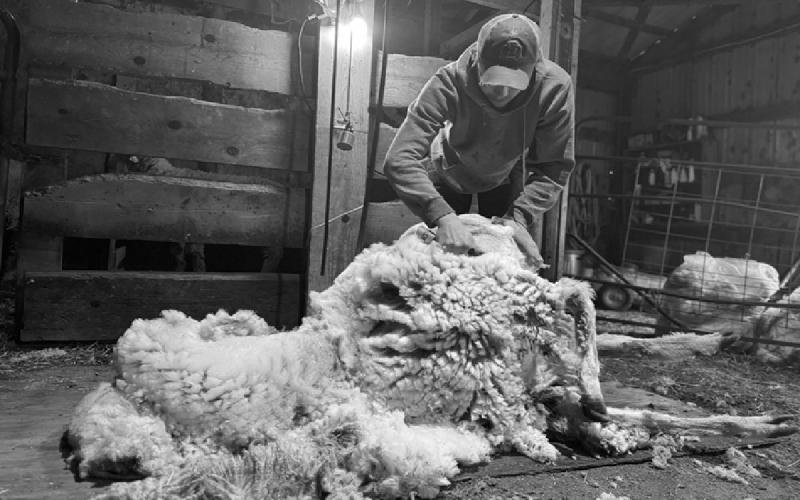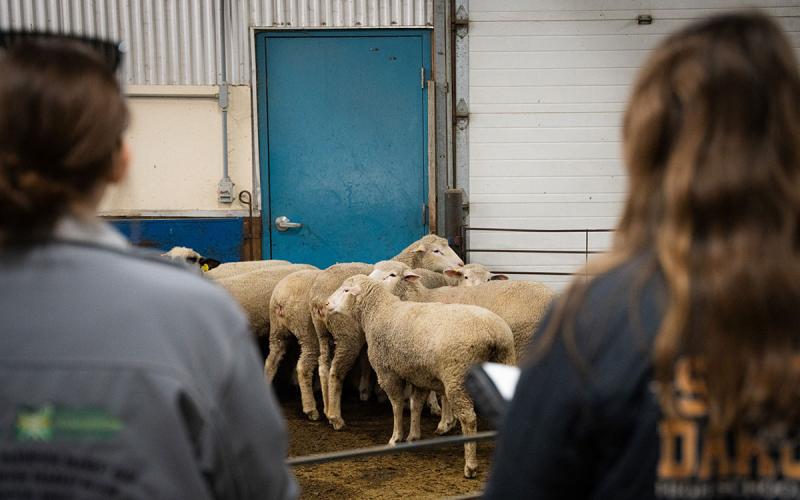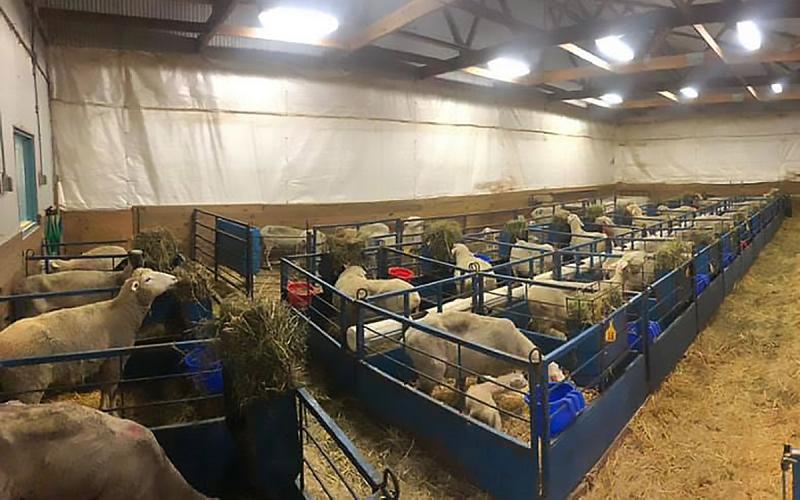
Scrapie is a prion disease occurring in sheep and goats that results from proteins within the body becoming incorrectly structured. Similar diseases exist in cattle (mad cow disease) and deer (chronic wasting disease). There is a movement to eradicate scrapie from the United States and officially become scrapie free. Eradicating scrapie in the United States would open new marketing avenues within the American sheep industry as many countries are hesitant to purchase U.S. lamb due to the risk of spreading the disease. To do this, there would need to be no scrapie cases in the United States for seven consecutive years. Until recently, the United States was on track to gain scrapie free status by the year 2028. However, there was a case of scrapie detected in late July 2026; as a result, scrapie free status cannot be obtained until 2033 at the earliest. The confirmed scrapie case came from an animal that did not have a tag, which makes tracing the animal difficult. Understanding scrapie and the role sheep producers play in its eradication is key to protecting flock health and supporting successful eradication.
What is Scrapie?
Scrapie is a prion disease, meaning that it is caused by a protein that has undergone structural changes, which then spread those changes to other proteins within the body. The structurally different proteins are less functional than the original proteins and cause many issues within the body, usually resulting in damage to the brain and lymphatic system. Clinical signs commonly manifest in animals that are two or more years of age and are expressed as abnormal behavior from neurological damage, such as excessive scratching and rubbing, as well as loss of coordination and weight loss. Many infected animals die within one to six months after the onset of signs. Scrapie can spread to other sheep and goats through two main routes:
- Vertical transmission: This is the most common mode of infection and occurs when the dam is infected with the scrapie prion and then gives birth. The placenta and other fluids such as urine and milk can shed scrapie prions into the environment and infect other sheep (normally her lambs).
- Lateral transmission: scrapie can spread from one adult animal to another. Prions can contaminate communal watering systems and other objects in paddocks such as feeders and even fencing, which can then infect animals who encounter environmental scrapie prions.
Sheep and Goat Scrapie Tag Regulations
Scrapie tags are an important way to identify the flock of origin of an infected animal and prevent the spread of scrapie if cases arise.
Do your stock require Scrapie Tags?
Animals required to have scrapie tags*
- Sexually intact sheep and goats not intended for slaughter channels (breeding stock)
- All sheep and goats older than 18 months of age (have two sets of mature incisors)
- Animals used for exhibitions (Animals entering the show ring or exhibited at breed association events)
- Any animal exposed to Scrapie
- Any animal suspected of infection or positive for Scrapie
- Sheep and goats from noncompliant flocks
*State scrapie tag regulations differ from federal regulations with many states requiring all sheep and goats to have scrapie tags. If you are planning to sell sheep and goats across state lines make sure that you are compliant with that state’s scrapie laws.
Animals not required to have scrapie tags**
- Sheep and goats under 18 months of age intended for slaughter
- Wethers under 18 months of age
- Sheep and goats shipped directly to any slaughter facility where the slaughter facility acts as an agent for the owner to apply the official ID and all animals in a section of a truck are from the same flock
- Sheep or goats moved for grazing or similar management without a change of ownership from one premises owned or leased by the owner to another premises owned or leased by the owner (these premises must be registered in the national scrapie database)
**Owner hauler statements are required for all animals intended for slaughter or interstate commerce regardless of scrapie tag requirements
Purchasing Scrapie Tags
In order to purchase scrapie tags and gain compliance with Scrapie regulations flocks need to be registered in the USDA Scrapie Eradication database by calling 866-873-2824. Once registered, the USDA will provide a flock ID number that is needed when tags are purchased. Once a flock ID is acquired, several manufacturers are approved to provide scrapie tags (see Table 1 below).
| Manufacturer | Phone |
|---|---|
| AllFlex USA, Inc. | 833-727-2743 |
| Premier 1 Supplies, LLC | 800-282-6631 |
| National Band & Tag Company | 859-261-8247 |
| Shearwell North America, Inc. | 800-778-6014 |
Additional information about these tags is also available through the USDA website.
Preventing Scrapie
Sheep infected with scrapie exhibit no immune response and there is no test that can detect scrapie in live animals. Additionally, there is no way to treat the disease if the animal becomes infected. Instead, the best way to prevent scrapie is by breeding animals that have resistance to the prion. Genetic testing is available to make sure that you are using breeding stock that are resistant to scrapie. Several tests are available that test for specific codons (regions of genes) that are associated with resistance to scrapie. The main codons associated with scrapie resistance and susceptibility are 136 and 171. Depending on the genes of the animal, the codon will be represented by the letter R or the letter Q.
| Codon Sequence | Level of Resistance |
|---|---|
| RR | Highly resistant |
| QR | Resistant |
| Susceptible |
Approved Testing Labs
Using rams verified to have the RR codon sequence is the quickest way to increase the number of scrapie resistant animals within your flock. Tests are performed by a few labs within the United States (see Table 3). It is important to work with your veterinarian to ensure proper sample collection and storage prior to shipping samples.
| Laboratory | Shipping address | Phone | Cost/sample | Sample type |
| Gene Check, Inc. | 1175 58th Ave., Suite 100, Greeley, CO 80634 | 970-472-9951 | $11.50 | Whole Blood, Tissue, Semen Straw |
| National Veterinary Services Laboratory | 1920 Dayton Ave., Ames, IA 50010 | 515-337-7388 | $43 | Whole blood, tissue, FTA card |
| Neogen GeneSeek Operations | 4131 N. 48th St., Lincoln, NE 68504 | 402-435-0665 | $18.25 | Blood Card |
| Pennsylvania Veterinary Laboratory | 2305 N Cameron St., Harrisburg, PA 17110 | 717-787-8808 | $37.00 | Whole blood |
Summary
Scrapie is a dangerous disease for sheep and goats, because it is fatal and difficult to detect. Gaining scrapie free status within the United States will help to open new marketing opportunities for sale of American lamb and potentially increase revenue to producers. Proper use of scrapie tags and screening animals for scrapie resistance helps to prevent outbreaks and protects your flock from the disease.
References
- Cassmann, Eric D., and Justin J. Greenlee. "Pathogenesis, detection, and control of scrapie in sheep". American Journal of Veterinary Research 81.7 (2020): 600-614.
- Goldman Wilfred, Nora H, Grace S, James F, James H. PrP Genotype and Agent Effects in Scrapie: Change In Allelic Interaction With Different Isolates of Agent in Sheep, a Natural Host of Scrapie. Journal of general virology. 1994 May 75;5, 989-995.
- Konold T, Hawkins SA, Thurston LC, Maddison BC, Gough KC, Duarte A, Simmons HA. Objects in Contact with Classical Scrapie Sheep Act as a Reservoir for Scrapie Transmission. Front Vet Sci. 2015 Sep 14;2:32.
- USDA APHIS. Scrapie Program Standards Volume 1: National Scrapie Eradication Program. April 25, 2019. Accessed on August 8th, 2026.