In South Dakota, rhubarb is generally hardy but can develop several diseases that, when left unmanaged, cause severe damage and decline of plants. Leaf spots caused by the fungi Ascochyta rhei and Ramularia rhei are the most common diseases we observe in the state. While both leaf spots are caused by unrelated fungi, they cause similar symptoms, have similar lifestyles, and are managed similarly. Both fungi spread through water splashing and wind, typically appearing or worsening during periods of cool, rainy weather. Spores overwinter on previously infected leaves and stems. Both diseases can also be spread through infected rootstocks. While neither leaf spot is typically lethal, successive years of heavy infestation can weaken plants, reducing yield and making plants vulnerable to more severe diseases.
Leaf Spot Diseases
Ramularia leaf spot
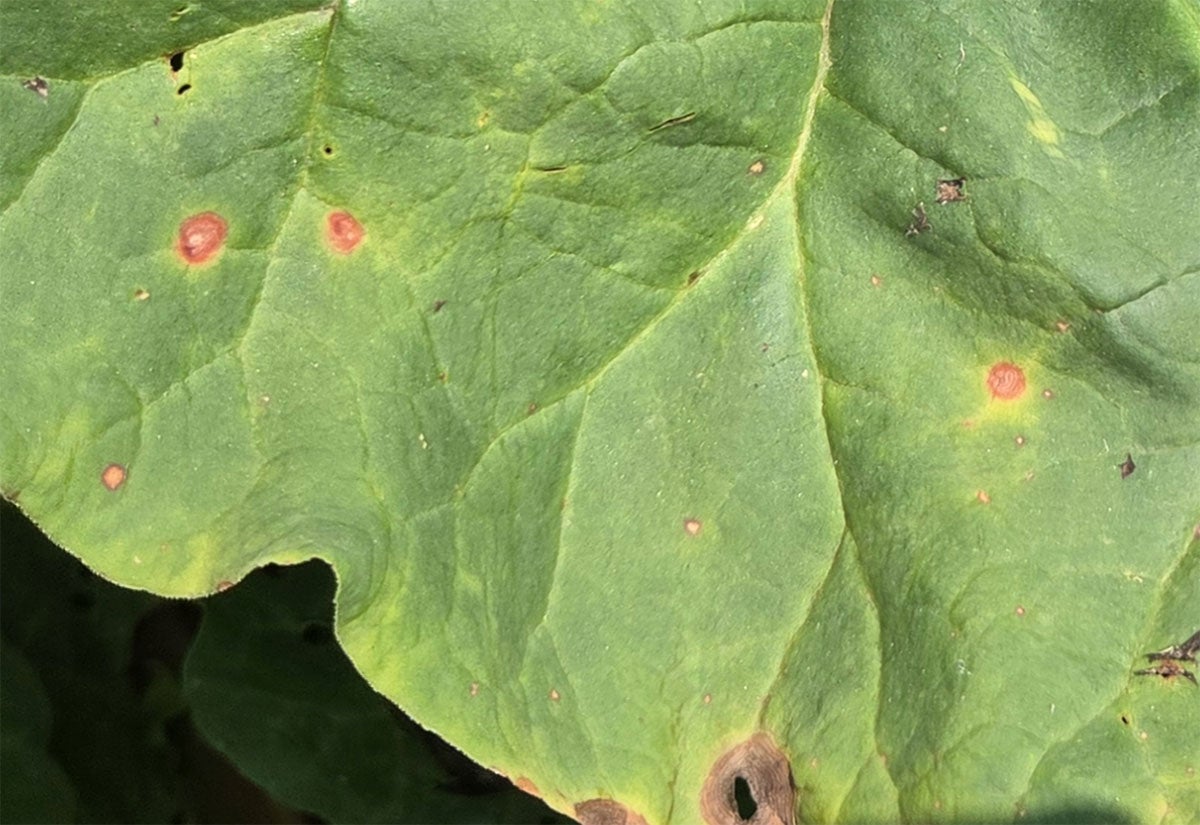
Ramularia leaf spot, caused by Ramularia rhei, begins as small red circular lesions on the surface of leaves or as white, oval-shaped lesions on stems (Figure 1). As the disease worsens, leaf spots tend to develop a dark red to purple halo, while the center of the spot becomes tan but remains circular. Spot and halo colors can vary with the cultivar of rhubarb, with some cultivars developing dark purple or light red halos.
Ascochyta leaf spot
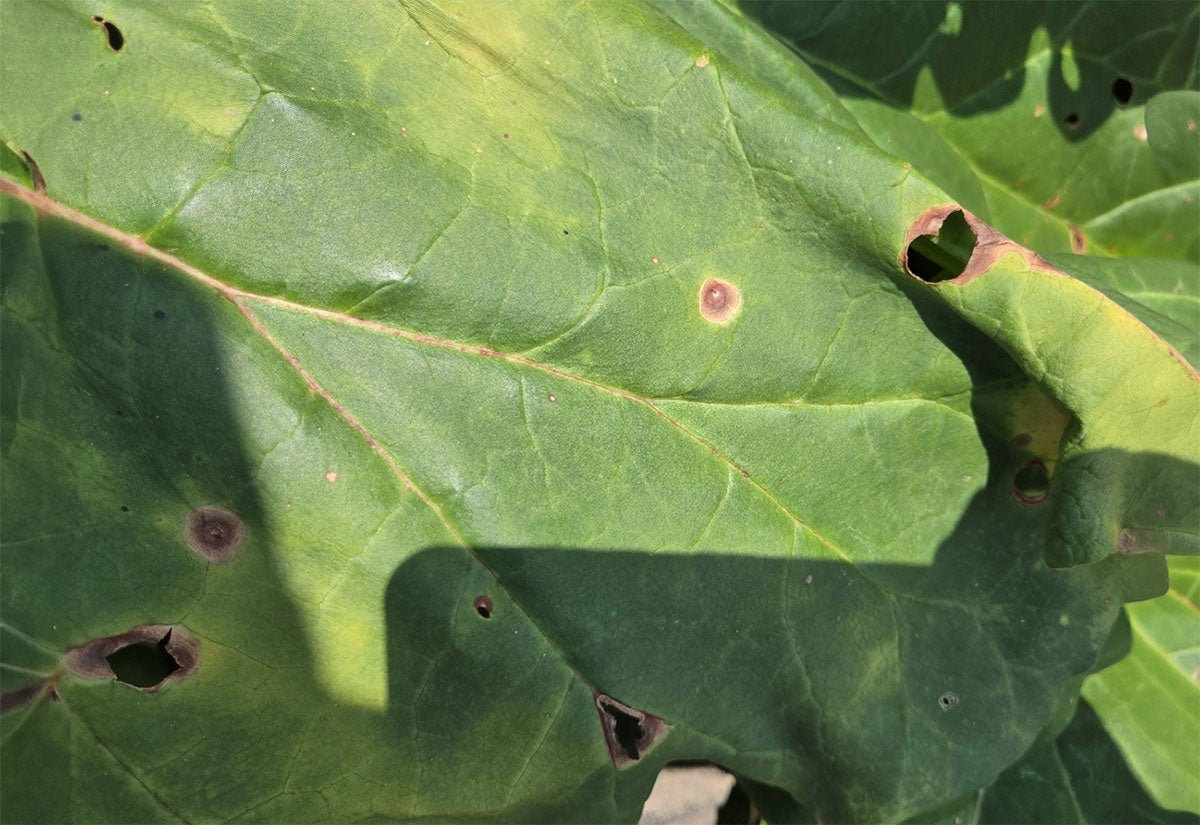
Ascochyta leaf spot, caused by Ascochyta rhei, causes leaf spots that can begin as small, yellow or brown spots that quickly grow into irregular-shaped lesions (Figure 2). The necrotic center portion of the lesion will often fall out (mimicking shot holes) and can be mistaken for insect feeding. Heavily infected leaves will appear tattered.
Management
Diseased leaves and stems should be removed by the end of the growing season to reduce overwintering spores. Frequent harvesting, especially in the spring, can help reduce Ramularia leaf spot by removing infected stems. Do not plant or distribute roots or rhizomes from infected plants, as this can spread disease and allow infection onto a new, vulnerable plant. Reducing water splashing and improving airflow around plants can help leaves dry faster and reduce the conditions that fungi need for their spores to germinate.
Several fungicides can be used to control leaf spots during severe outbreaks if needed. Fungicides containing active ingredients such as chlorothalonil (such as Bravo Weatherstik or Echo), pyraclostrobin (Cabrio), or azoxystrobin (Quadris) have been shown to be effective at managing leaf spots on rhubarb. Organic fungicides that contain copper (such as copper oxychloride or copper hydroxide) are also effective options. Always follow the label when making any pesticide application and only use products that are registered for use in South Dakota.
Questions regarding the identification of and management of leaf spots in rhubarb, as well as other disease issues, can be sent to SDSU Extension Horticulture Plant Pathology Field Specialist Cody Molnar or SDSU Extension Diagnostician Connie Tande.
Samples can also be sent to the SDSU Plant Diagnostic Clinic for fee-based diagnostics. The clinic’s mailing address is Berg Ag Hall 2207-D, 1451 Stadium Road, Brookings, SD 57007-1090 and the physical address for sample drop off is Berg Ag Hall Room 203 (business hours) or 001 (after hours and weekends). For more information, visit the SDSU Plant Diagnostic Clinic website.
Sources
- Pscheidt, J.W., and Ocamb, C.M., senior editors. 2026. Pacific Northwest Plant Disease Management Handbook [online]. Corvallis, OR: Oregon State University. (accessed 12 Aug 2026).
- Elmer, W., Indermaur, E.J., Smart, C. (2025). Diseases of Rhubarb. In: Elmer, W.H., McGrath, M., McGovern, R.J. (eds) Handbook of Vegetable and Herb Diseases. Handbook of Plant Disease Management. Springer, Cham.