Written collaboratively by Adam Varenhorst, Philip Rozeboom, Patrick Wagner, and Brad McManus.
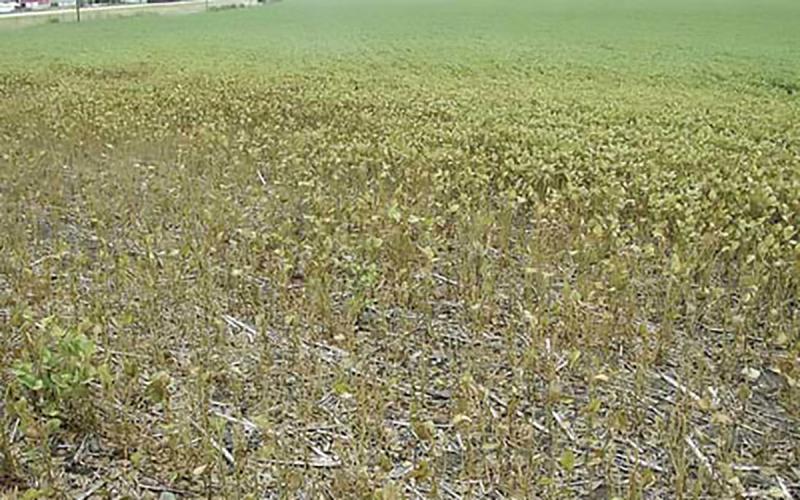
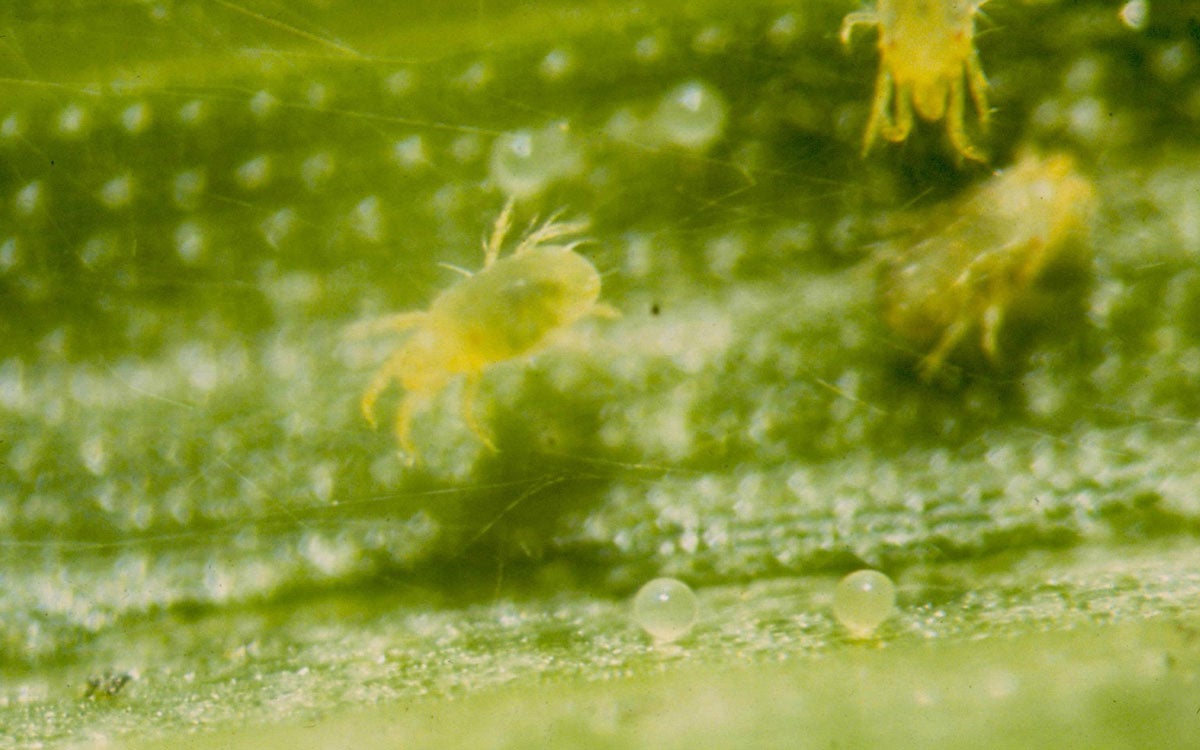
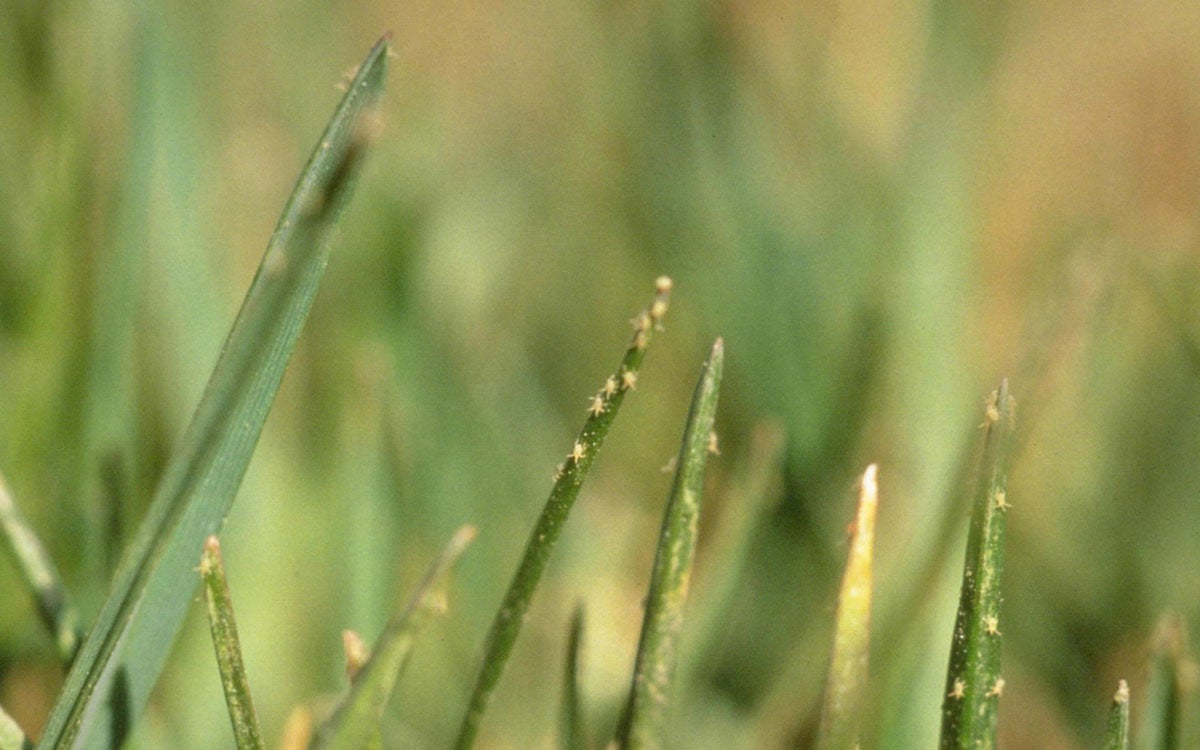
There have been reports of large populations of Banks grass mites (Figure 1) in South Dakota wheat fields. Although Banks grass mite populations are typically more of an issue for corn and sorghum, they can move to wheat when other hosts begin to dry down. This is typically observed during the fall in winter wheat fields, but the current drought conditions are likely causing this pest to move to wheat at this time. Banks grass mite populations are more successful during hot, dry weather that also increases the susceptibility of wheat due to it being drought stressed. During the spring, females will lay pearly white eggs on the leaves. Signs of infestation include yellowing or browning of the leaves, and the leaves being covered in large amounts of fine webbing (Figure 2).
It’s important to note that the Banks grass mite has numerous generations each season and infestations will continue until dry down when spring infestation occurs. During this time of the season, management can often be achieved by treating the edges of fields. Dimethoate is recommended for the management of Banks grass mite as it is labeled and previously shown to be effective against this pest.