Plants or Crops

All Plants or Crops Content

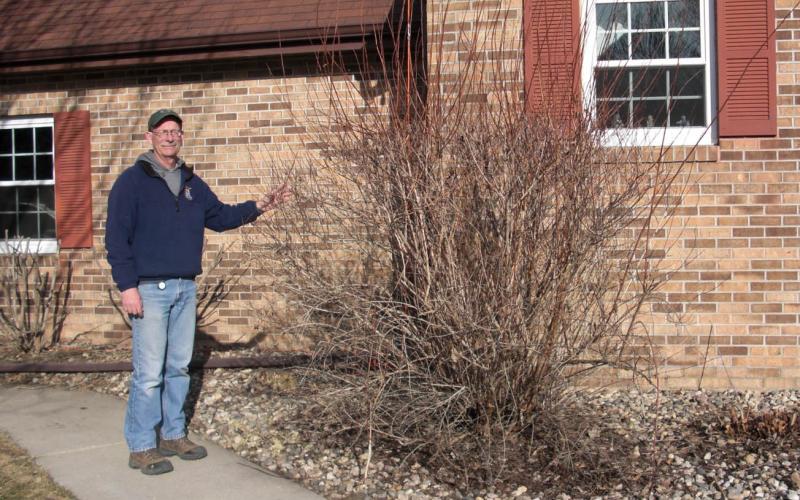
A medium-sized shrub with many upright stems next to a white shed

Woody Weeds: Tatarian Honeysuckle

Tatarian honeysuckle (Lonicera tatarica) was brought to North America from Asia in the mid-18th century for ornamental uses. In South Dakota it was also used as a windbreak species until the 1980s.

a close up of buckthorn berries

Woody Weeds: Common Buckthorn

When considering weed control in tree plantings, the focus is generally placed on the control of herbaceous vegetation (grasses and forbs), particularly during the establishment phase. This focus is appropriate since control of herbaceous weeds is generally critical to establish a successful planting. As these plantings mature, providing perching sites for birds, another weed problem develops – the establishment of competing woody vegetation. These woody weeds are often left unchecked for many years because they look “natural” in a windbreak or other area of trees.

What's That Vine?

One of the most frequently asked questions that I have gotten recently refers to a vining plant that looks like it is going to take over the world, or at least a few trees in the yard or a section of a shelterbelt.

A white and gray, mold-like growth on an ear of sweet corn.

What's Bugging Your Garden? Smut on Sweet Corn

Smut is a fungal disease that can attack the leaves, stalks, tassels, silks and cobs. While many fungal diseases cause spots on the leaves or stems, smut is much more flamboyant.

bunches of Aronia berries still on a bush

What is This Fruit… And is it Edible?

In mid- to late-summer, we often get the questions: “What kind of fruit is this?” and “Is it edible?” To identify a fruit, it is helpful to know both plant and fruit characteristics: Woody or herbaceous plant? Vining or upright? Do the leaves attach to the stem opposite each other (i.e., paired), or do they alternate from one side of the stem to the other? What size and color are the fruit? Is each fruit’s stem attached directly to the twig, or are they in a cluster that attaches to the twig? And, one question I find often helpful in distinguishing among smaller fruits, does it have a single pit, or are there several seed in each fruit?

onions still in the ground with their tops bending over

Growing Onions

Onions have been a commonly grown vegetable for thousands of years. They are easy to grow, nutritious and can be stored for months until they are needed as part of a meal. There are many different kinds of edible members of the Allium genus but bulbing onions are the most commonly grown.

a strand of oats in a field

Using Plant Growth Regulator in Oats Grown for Grain

With growers’ interest emerging, SDSU Extension and research faculty teamed up and initiated a study in 2016 in Northeast SD to evaluate the effects of plant growth regulator. The study was conducted at the SDSU Northeast Research Farm (NERF) near South Shore, SD.

small black sap beetles on sweet corn

What’s Bugging Your Garden: Picnic Beetles

One of the most common garden insect questions I get asked is “what are those little black, spotted beetles that are in my sweet corn, tomatoes, raspberries and perhaps worst of all, in your beer! These little nuisances are called picnic or sap beetles. They are attracted to ripe or damaged fruit and vegetables.

A group of farmers and ranchers sitting at a meeting

Choosing an Advisory Board

A board of directors is a vital part of the governance and constitution of many corporations. A board of directors is formally involved in the business and is legal responsible for the overall governance of the corporation.

sunflower head with maggots

What Are Those Small Brown Things Sticking Out of Sunflower Heads?

A few days ago, I received a couple of calls about small orange/tan colored sacs sticking out of sunflower heads and small black spots on heads. The brown structures are sunflower seed maggot pupae and the damage described is caused by its larvae.