Were your soybeans turning yellow early or exhibiting symptoms that resembled severe, early Sudden Death Syndrome (SDS)? If so, you could have experienced issues with a new soybean disease called Red Crown Rot (Figure 1).
Red Crown Rot was first identified in North Carolina in 1972 and has since spread throughout the southeastern United States and along portions of the Atlantic Coast. The disease was initially associated with only peanuts. In 2018, the disease was detected in the Midwest for the first time in Illinois on soybeans. More recently, Red Crown Rot was confirmed in Rock County, Minnesota, in 2025 and in Iowa in 2026. The disease has also been reported in several other Midwestern states, highlighting the importance of surveillance and early detection in South Dakota. To date, South Dakota has had two red crown rot suspect reports that have not been confirmed but are credible.
Red Crown Rot Symptoms
Above Ground
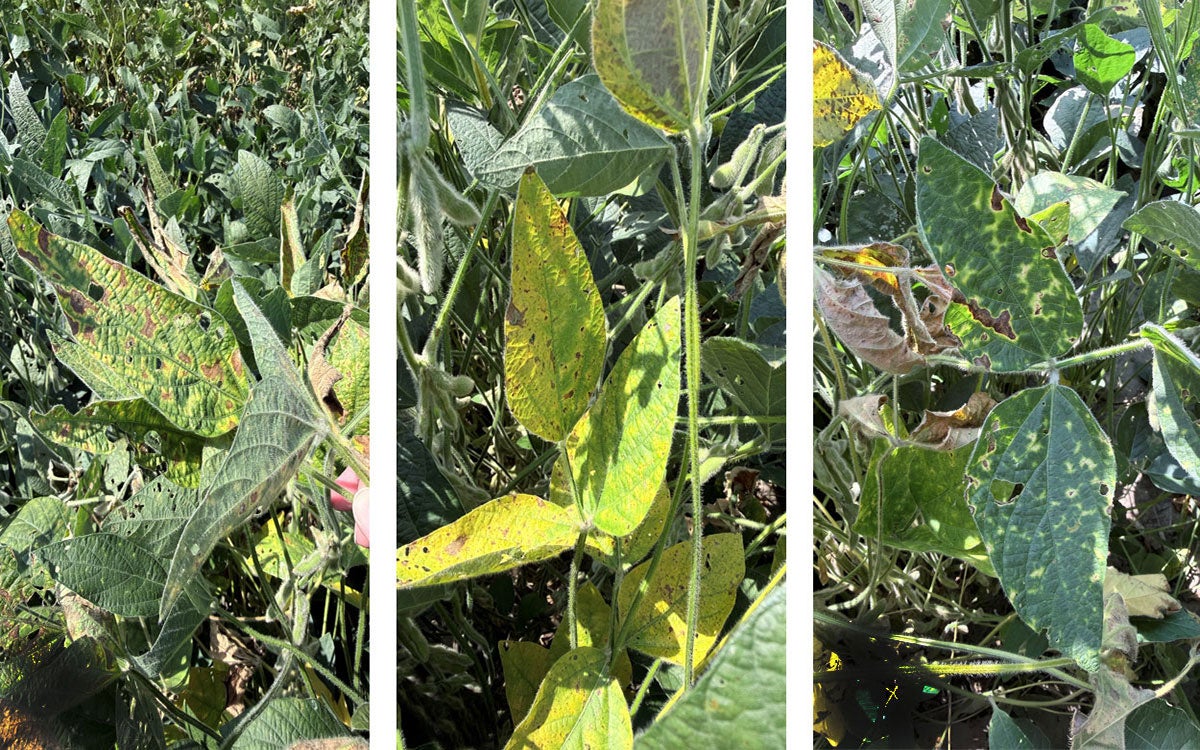
Symptoms of Red Crown Rot (RCR) typically begin to appear during the reproductive growth stages of soybean. Plants may develop interveinal chlorosis, where leaf tissue between the veins turns yellow while the veins remain green. As the disease progresses, affected leaves may become brown and necrotic, closely resembling symptoms associated with Sudden Death Syndrome. Figure 2 shows the various leaf symptoms that are attributed to RCR development.
Below Ground
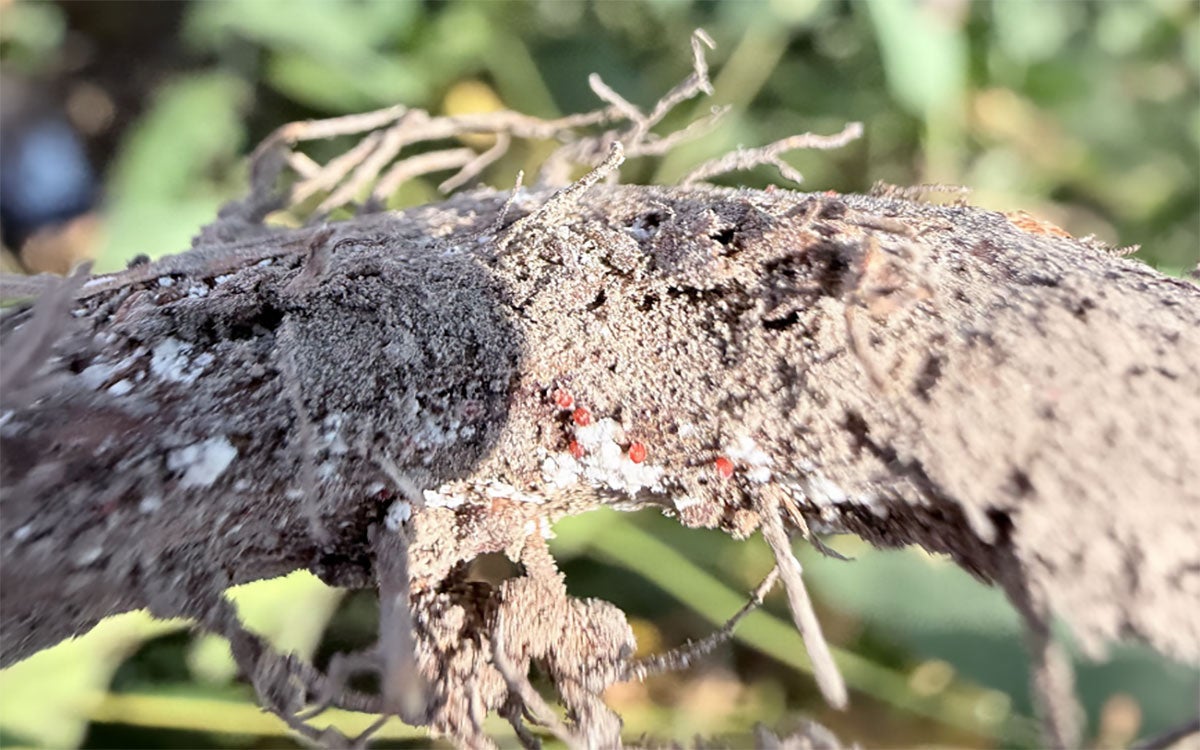
Below ground, infected plants may exhibit root rot and discoloration of the lower stem. One of the most distinctive signs of Red Crown Rot is the presence of small, reddish-orange fungal structures called perithecia on the stem near the soil line (Figure 3). These structures can appear as tiny red "crowns" around the base of affected plants, giving the disease its name.
In severely affected areas, plants may experience premature defoliation, reduced vigor, and significant yield loss. Symptoms often occur in patches within a field and may be more pronounced under warm, wet conditions that favor disease development.
Disease Identification
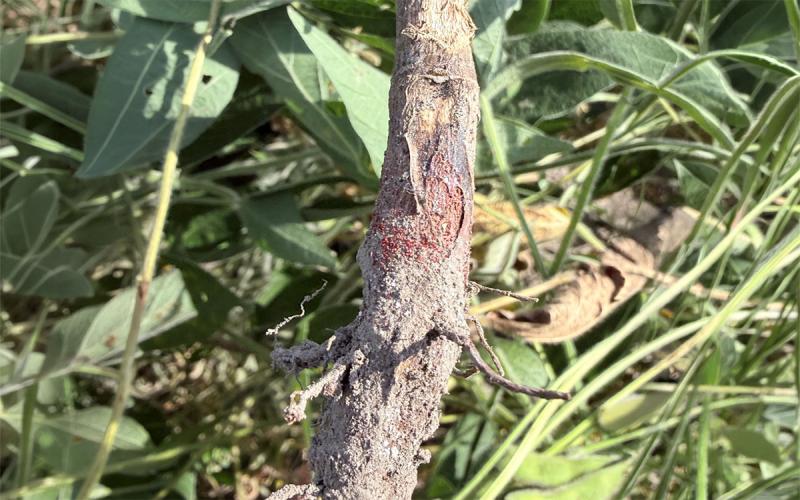
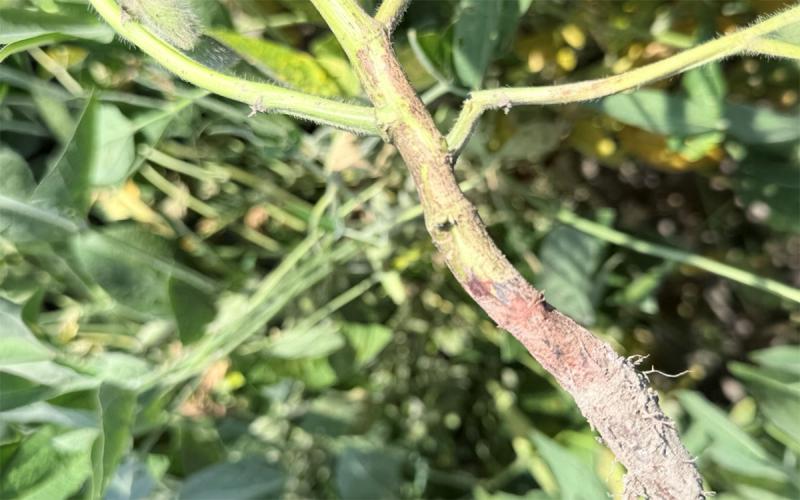
Because Red Crown Rot shares symptoms with several other soybean diseases, careful examination of roots and lower stems is critical. Suspect samples should be submitted to the Plant Diagnostic Clinic for diagnosis. An additional challenge for RCR identification is that the red perithecia are only present for a few weeks of the growing season and tend to disappear quickly. Figure 4 shows a plant infected with RCR that has an absence of perithecia.
Several soybean diseases can be mistaken for Red Crown Rot because the foliar symptoms closely resemble those of SDS, brown stem rot, and southern stem canker. Stem and root symptoms may also resemble charcoal rot, Rhizoctonia root rot, and Phytophthora stem rot. Because of these similarities, laboratory confirmation is often needed to accurately diagnose the disease.
Next Steps
While it is too late in the 2026 season for soybeans to be diagnosed with Red Crown Rot, it is important to keep this disease in mind for 2027. We don’t know the exact timing of symptoms development in the state; it is estimated that symptoms of RCR will start showing around August 1 to August 15th. Collecting distribution of this disease is important for development of management plans. Suspected cases of RCR can be reported on Crop Lookout or reach out to Maddi or Connie.
Sample Submission
If you suspect Red Crown Rot in your fields, collect whole plants that include roots and the lower stem. Place samples in a plastic bag, keep them cool, and submit them as soon as possible for diagnosis. Photographs of field symptoms and information about field history can also assist in the diagnostic process. Samples can be submitted to the Plant Diagnostic Clinic in-person at Berg Ag Hall 203, after-hours in Berg Ag Hall 001, or mailed to the clinic. Please complete a diagnostic form for samples, which can be found at the SDSU Plant Diagnostic Clinic website.
Early detection will help us better understand the distribution of Red Crown Rot and determine whether this emerging disease is present in South Dakota soybean fields.