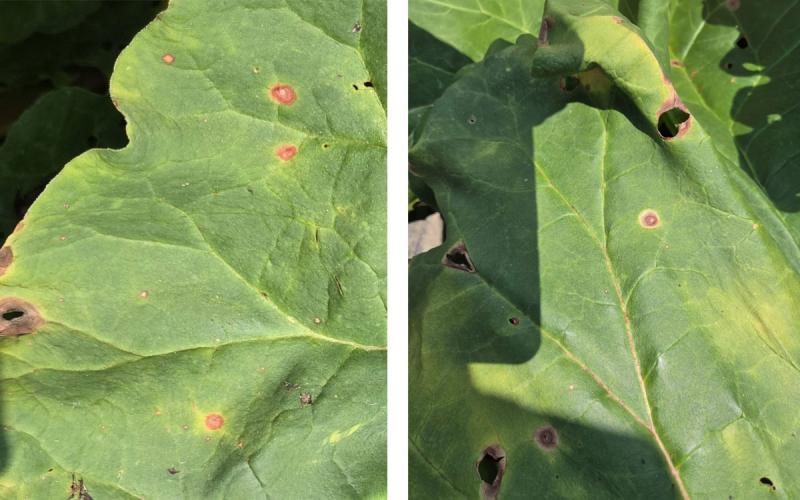
In March, we received a question from a grower in Northern South Dakota about stored potatoes showing black lines just below the surface of the tuber. These samples were sent to the Plant Diagnostic Clinic and underwent diagnostics. While a viral disease was suspected at first, these potatoes eventually tested positive for Clavibacter michiganensis subsp. sepedonicus, the causal pathogen of bacterial ring rot, one of the most damaging diseases of tubers and seed potatoes.
Ring Rot Symptoms
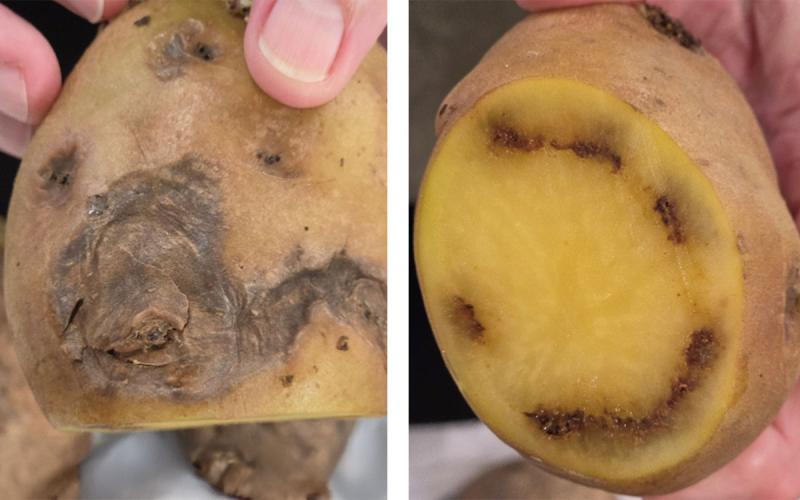
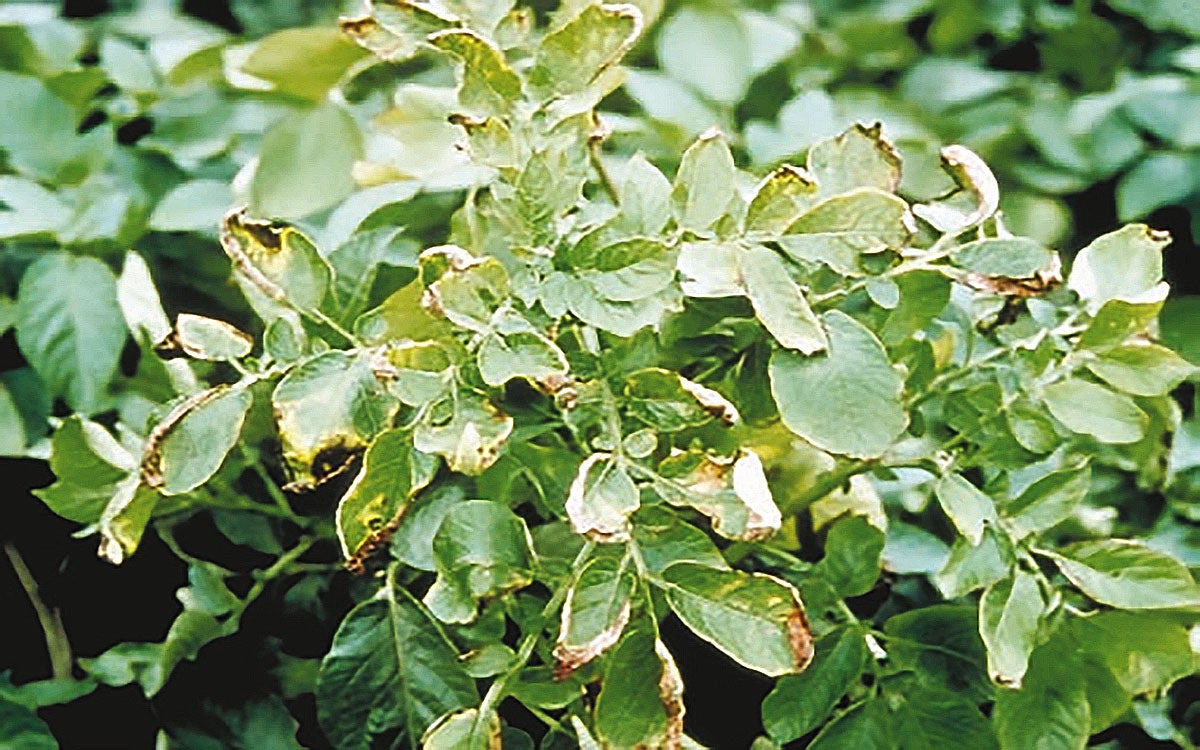
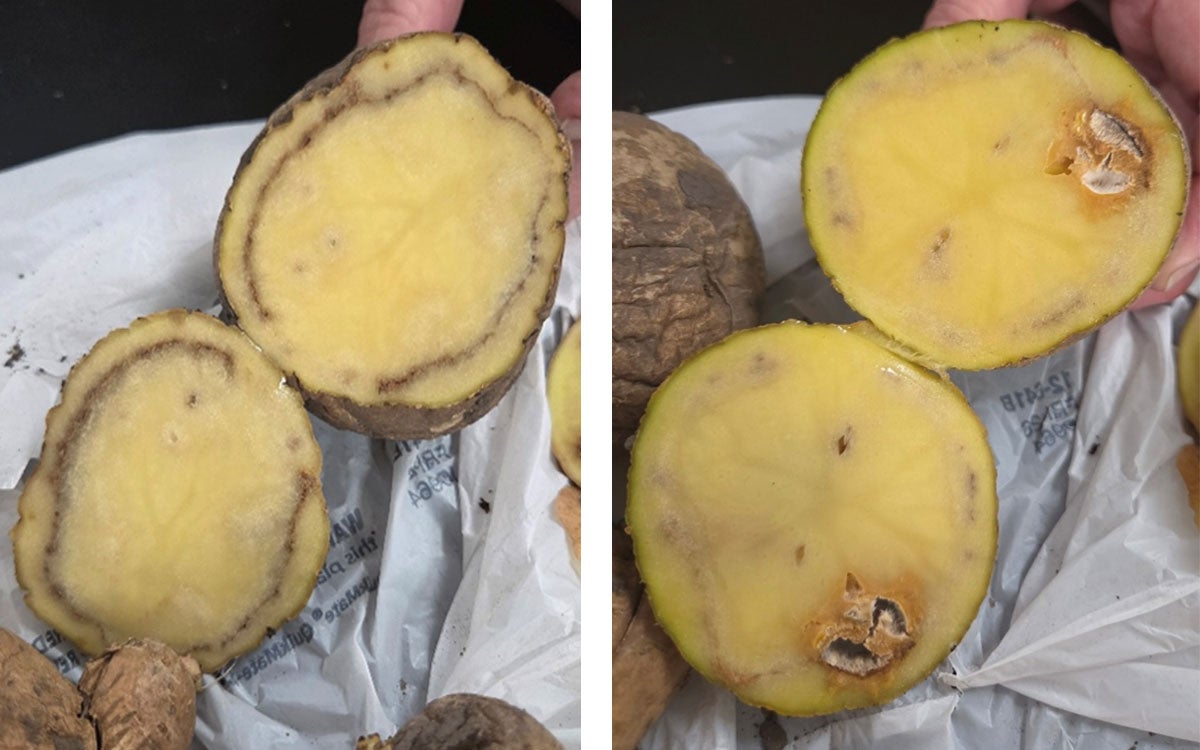
Ring rot is primarily a disease of stored tubers and seed potatoes, where it produces black or brown lines just below the surface of the potato. As the disease progresses, these lines will extend and thicken as the potato rots from the inside out. This most often happens during storage but can also happen in the field if plants are infected at the start of the season. If infected during the growing season, potato plants do not always show signs of disease. If present, symptoms tend to mimic other wilts and develop wilting, yellowing, leaf rolling, and dieback. Infected tubers can cause entire batches of seed potatoes to be rejected or rot entire harvests over the winter during storage. Ring rot is difficult to identify since it mimics many other diseases, both in tubers and plants. Other diseases and conditions that resemble ring rot that are present in South Dakota include Potato Leafroll Virus, Verticillium Wilt, Potato Virus Y, and Charcoal Rot, as well as freezing damage in stored tubers.
Prevention and Management
Ring rot is spread through contact with infected tubers or contaminated surfaces. Bacteria can survive as a biofilm (hardened survival structure) on surfaces it comes in contact with, so tools, farm equipment and storage containers can spread the disease during planting, storage and harvest. Bacteria can also survive on decaying plant material in the field but typically cannot live for long in soil without plant debris.
Managing ring rot is difficult, as there are no pesticides that are effective against it and it is spread easily through contact. Management should instead focus on sanitation and prevention of this disease. Only buy or use potatoes that are free of disease. Most commercial seed potatoes are certified free of ring rot. Do not plant infected potatoes, as this will spread disease. Clean all tools, containers, and equipment that come in contact with infected potatoes with soap and water. A disinfectant, such as bleach or alcohol, may be needed to kill any residual bacteria. Infested fields should be rotated to a non-solanaceous crop, like broccoli or squash, for at least 2 years to allow any decaying plant material to break down to ensure all inoculum is gone. There are no known resistant cultivars.
Identification and Diagnostics
Since so many other diseases can mimic ring rot, diagnostic work to determine the identity of the pathogen is needed to effectively manage any of the potential diseases that can cause these symptoms. Please send plant disease questions to SDSU Extension Horticulture Plant Pathology Field Specialist, Cody Molnar, or SDSU Extension Diagnostician, Connie Tande.
Sources
- Duellman, K., Wharton, P., Olsen, N., Woodhall, J., Whitworth, J., 2022. Managing Bacterial Ring Rot of Potato. University of Idaho Extension.