When thinking about the economic development of our rural communities, we often focus on sectors such as agriculture, manufacturing, tourism, or even the attraction of new businesses. However, there is another valuable economic asset that rural communities often already possess: the arts. Recent research increasingly indicates that the arts can play a significant role in rural economic development through a variety of means such as attracting visitors, supporting local businesses, and making our towns more attractive places to live and work.
One particularly encouraging finding emerges from research conducted by the National Endowment for the Arts (or NEA) in conjunction with the U.S. Department of Agriculture’s Economic Research Service. Their Rural Establishment Innovation Survey revealed that 31% of audiences attending rural performing arts organizations traveled “beyond a reasonable distance” to attend an event, in contrast to 19% for their urban counterpart organizations (NEA, 2017). This would indicate that rural arts organizations have the capacity to draw audiences from outside their immediate communities at remarkably higher rates. These visitors often contribute to the local economy through spending on travel necessities such as lodging, restaurants, transportation and gas, as well as other goods and services.
The economic impact of the arts goes beyond just visitor spending, however. A study conducted in 2018 by researchers Timothy Wojan and Bonnie Nichols examined the relationship between arts organizations and their impact on business innovation and economic performance within rural communities. The study concluded that rural counties hosting performing arts organizations were more likely to have businesses featuring a significant focus towards design and innovation; furthermore, their analysis indicated that rural areas influenced by these design-integrated businesses experienced a more rapid wage growth compared to areas where businesses lacked a systemic approach to design (Wojan & Nichols, 2018).
South Dakota specifically provides another useful example. According to the Arts & Economic Prosperity Study 6 conducted by Americans for the Arts in collaboration with Arts South Dakota and the South Dakota Arts Council, the state’s nonprofit arts and culture sector contributed approximately $363 million to the economy (2022). Furthermore, over 6,000 employment opportunities were supported, and a total of 6.4 million people attended arts and culture events in the state (Americans for the Arts, 2022). Although these statistics pertain to communities statewide rather than exclusively rural areas, they indicate that arts and culture are already well integrated into South Dakota’s identity and overall economic ecosystem.
How Does Local Creativity Translate into Economic Opportunity?
What remains especially encouraging is that rural communities do not necessarily need to construct large-scale arts centers or rely wholly on major arts organizations to reap the benefits of the creative economy. Instead, some of the more compelling opportunities may be modest in scale and driven by local community efforts. Consider the following.
- Begin with what you already have.
Each and every community possesses cultural assets, whether they be local artists or musicians, craftspeople or artisans, historic landmarks or buildings, culinary traditions, or unique museums or archives. Mapping some of these assets can help assist communities with identifying opportunities to connect these elements into a larger, more comprehensive visitor experience. - Organize an arts festival or other creative event.
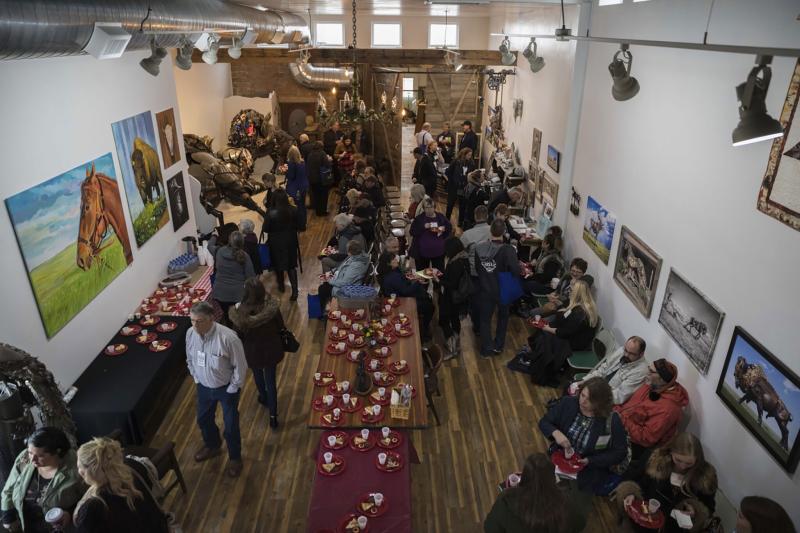
A festival can serve as a unifying platform for arts, local businesses, restaurants, and other nonprofit organizations and community groups. Most importantly, these events provide both residents and visitors alike with an occasion to dedicate time and money to the community. - Utilize public art opportunities to tell community stories.
Public art like murals, sculptures, unique signage, and other forms of public art can enhance the creativity of distinct town areas while bolstering local identity and pride. Deliberately integrating the arts into local culture and community development, or implementing some of these creative placemaking techniques, can be a great way to improve public spaces, draw visitor attention, and encourage ongoing investment. - Connect the arts with tourism assets that already exist.
Arts experiences have the opportunity to become even more impactful when associated with strengths the community already has. For example, a community with an established outdoor recreation area or nature trail system may be able to pair these locations with an arts festival or artisan market. If a community possesses a significant amount of public art in the form of murals or sculptures, an arts tour or “mural walk” might offer fun ways to engage with the arts.
References
- Americans for the Arts. (2023). Arts & economic prosperity 6: The economic and social impact study of nonprofit arts and culture organizations and their audiences in the state of South Dakota. Arts South Dakota.
- National Endowment for the Arts. (2017). Rural arts, design, and innovation in America: Research findings from the rural establishment innovation survey.
- Wojan, T. R., & Nichols, B. (2018). Design, innovation, and rural creative places: Are the arts the cherry on top, or the secret sauce? PLOS ONE, 13(2).