Velvetleaf is a large weed with soft leaves that’s normally associated with corn and soybean fields. However, we’re hearing more gardeners and specialty crop growers reporting its presence. Velvetleaf is a warm season species, and we’ve experienced a warmer than normal growing season. Growing degree days (GDD) are a measure of heat accumulation, which are recorded when the daily high is greater than 50˚F. Brookings, for example, accumulated 157 GDD in April of 2026, which is about the number of GDD needed for velvetleaf to begin emergence. This was also more than double the 76 GDD that’s normally accumulated in April. This early spring warm-up may have helped velvetleaf take hold in flower and vegetables gardens. Velvetleaf prefers moist soil but can adapt to moderate drought by dropping its lower leaves to conserve moisture.
Identification and Management
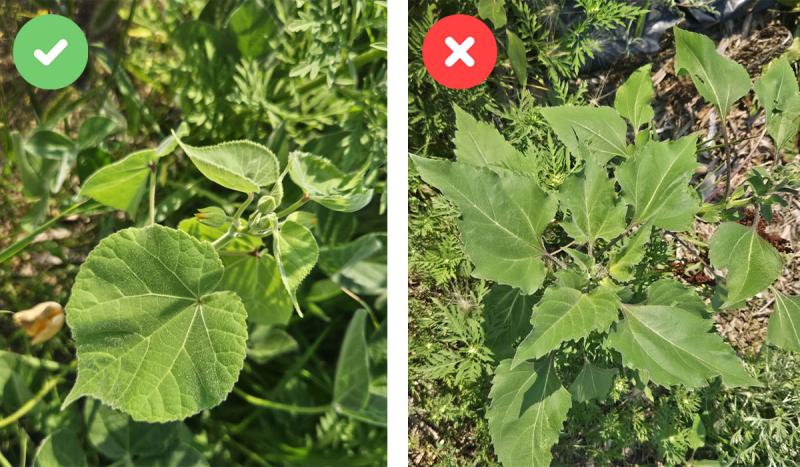
Velvetleaf is sometimes confused with wild sunflowers, especially prior to each of these species producing their flowers. The confusion is understandable since both are some of our tallest weeds in South Dakota, they both grow on a similar schedule, and have similar leaf shapes when viewed from a distance. Figure 1 illustrates some of the differences between these species.
Velvetleaf was first brought to the U.S. from China as a fiber crop during the colonial era. It’s best controlled by herbicides when smaller (less than 4 inches tall), typically in early summer. Since it’s a broadleaf weed, most of the herbicides that can kill it will also kill flowers, fruits, and vegetables. If unable to apply herbicides, hand-pulling or digging to remove at least some of the root is an effective control measure. Mowing or clipping can also work, but since velvet can regrow from a cut stem, expect to do this more than once per growing season.
Velvetleaf produces its seed in late summer, so now is the time to act. Preventing seed distribution is the best way to keep this weed from getting out of control.
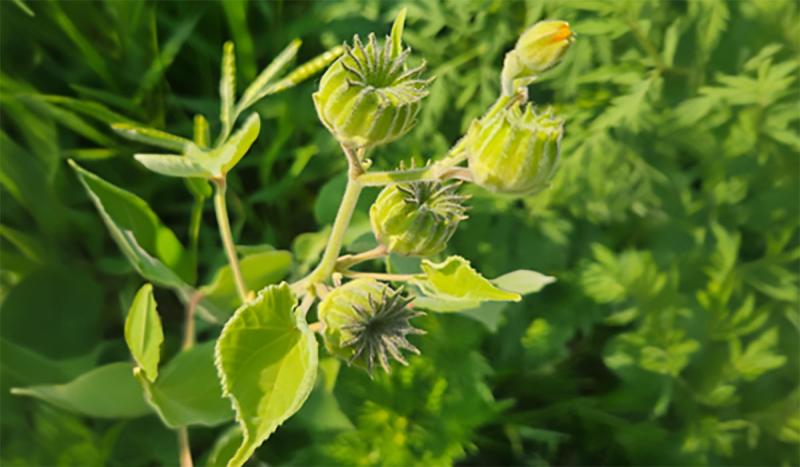
If seed inadvertently gets produced and distributed on the soil surface, avoid tilling the soil for as long as possible. This gives velvetleaf seed an opportunity to germinate on the soil surface, where they usually do not produce mature plants. Avoiding tillage also gives mice and other species the opportunity to consume the seeds, which can be very effective control measures.
If you must till, consider keeping the depth less than 3 inches. When seeds are buried deeper than 3 inches, they can remain viable for decades and will keep emerging anytime they’re mixed back into the top 3 inches by a tilling.
For those seeking information on managing this weed in commodity crops, including corn, soybeans, and sorghum, please refer to the most-recent South Dakota Pest Management Guides.


