Search

Youth For The Quality Care of Animals (YQCA) logo in front of a black and white image of a young girl feeding a small animal with a bottle

Youth for the Quality Care of Animals (YQCA) in South Dakota 4-H resources

About YQCA – the national program
Youth for the Quality Care of Animals (YQCA) is a national multi-species quality assurance program for youth ages 8 to 21 with a focus on three core pillars: food safety, animal well-being, and character development. The YQCA program is an annual certification created for youth producing and/or showing beef cattle, dairy cattle, sheep, meat goats, dairy goats, swine, poultry, and rabbits. The program has been designed by extension specialists and national livestock program managers to ensure it is accurate, current and relevant to the needs of the animal industry and shows, and is appropriate for youth learning levels.

Diverse group of school-age children sitting on bleachers outside in 4-H clothing.; Photos; 4-H Grows Here; Brand; 4-H youth

Character Links 5 curriculum

4-H Character All Stars will implement the Character Links 5 curriculum for the 2018-19 school year. Within the curriculum five character traits are highlighted: Honesty, Respect, Responsibility, Kindness and Citizenship.

A middle portion of a corn leaf enlarged to show tan-brownish lesions with dark brown wavy margins.

Bacterial Leaf Streak of Corn: A New Corn Disease in South Dakota

Bacterial leaf streak, caused by Xanthomonas vasicola pv. vasculorum (Xvv), is a recently discovered disease of corn in South Dakota. The disease was first identified in Nebraska in 2016 but now has been found in the majority of the Corn Belt states. Under favorable weather conditions bacterial leaf streak can develop to reach yield reducing levels. Like any other bacterial disease, once symptoms develop there is little that can be done to control it in the field. However, it is important to correctly diagnose this as a bacterial disease because it can be confused with gray leaf spot which is a fungal disease.

Baskets of fresh vegetables at a farmers market

Local Foods: Whole Fresh Vegetables and Herbs

Fresh, whole raw fruits and vegetables grown in South Dakota can currently be sold without a food service license from the South Dakota Department of Health.

Diseases & Disorders teaser

Fungicide Resistance: Risk and Management

What is fungicide resistance?
Fungicide resistance can be defined as when a pathogen population is no longer sensitive or has reduced sensitivity to the fungicide that used to control the same pathogen.

A young man and woman holding a csa box filled with fresh vegetables.

CSA Subscription ‘Box’

Community Supported Agriculture (CSA) subscriptions vary by producers; there is no set rule on the package size or box contents.

A table at a farmers market filled with fresh vegetable displays.

Developing a Vision Statement for a Farmers Market

The Vision Statement is a picture of what the market organizers want the market to look and feel like in the future.

A table display of vegetables at a farmer's market.

Farmers Market Food Safety: At the Market

Displaying food and produce safely requires attention to reducing the risk of contamination.

A row of vendor tents at a farmers market.

Drafting Farmers Market Documents: Market Rules

It is strongly recommended that new and existing farmers markets draft rules to govern the daily operation of the market.

bunches of Aronia berries still on a bush

Soil Testing for Vineyards in South Dakota

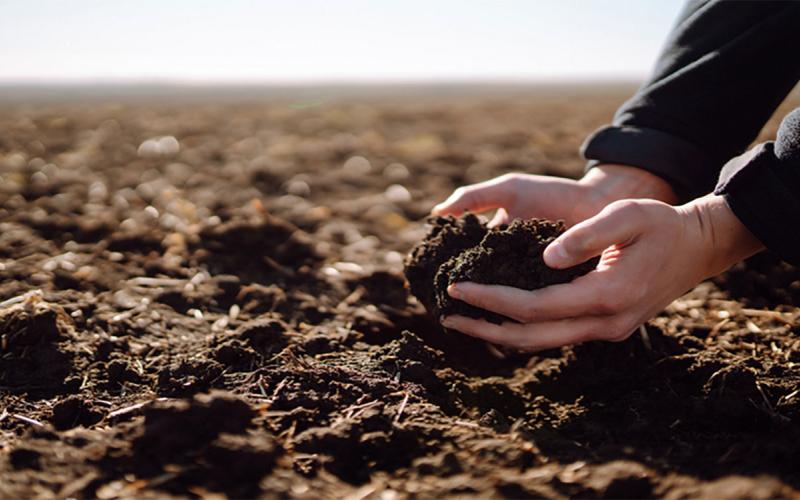
Not all soils are conducive to growing quality grapes, so prospective vineyard sites should be tested before a decision is made to plant grapes. Tests can identify soils that are either too high in pH, salts, or salinity, or that are “too rich” (too high in organic matter and nitrogen) for grapes. In addition, testing before planting allows for the incorporation of nutrients—such as phosphorus—that do not move easily through the soil to plant roots.