Are pasture conditions a problem?
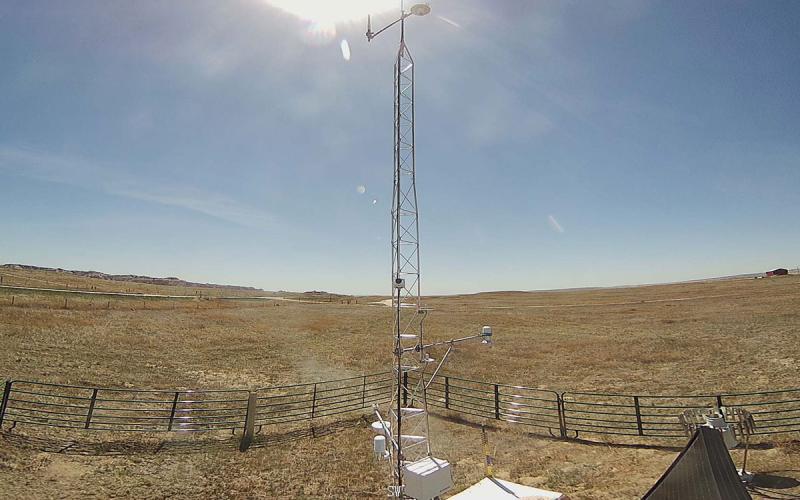
One of the most widely used tools for South Dakota producers to monitor weather conditions is the Drought Monitor. It provides a weekly look at the moisture situation across the nation.
Another available tool is the USDA Agricultural Statistics Service Crop Progress Report. Each week, this report provides an overview of planting, growing, and harvest progress across the state and the nation.
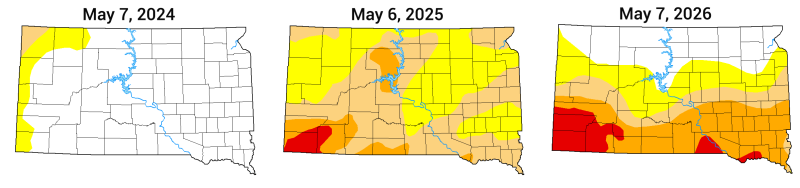
The May 7, 2026, Drought Monitor shows a variety of moisture conditions across the state, with the driest conditions in the southern third. Compared with the same week in 2024 and 2025, moisture conditions have shifted over the years.
While the Drought Monitor map provides insights into moisture conditions, the Crop Progress report offers a look at how the weather has affected production and, in turn, production practices (Figure 1).
May is historically the ‘turn out’ time for South Dakota operations. Harvested feeds have been fed, and green grass is ready to provide the needed feed and nutrition for cattle and sheep. A look at the second week in May highlights the variation in South Dakota weather and its effects on grazing (Figure 2).
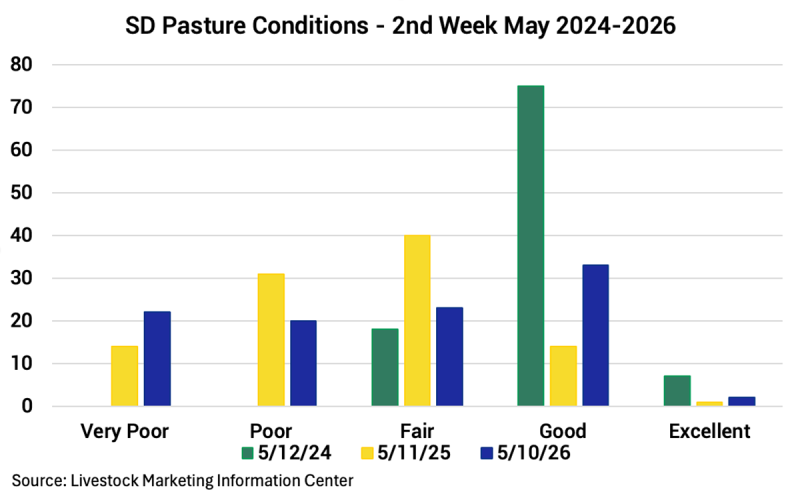
In 2024, pasture conditions were high, with 0 percent reported as Very Poor or Poor. This is in direct contrast to 2026, when 20 percent or more of South Dakota’s pasture acres fell into the poorest condition categories.
These poor pasture conditions need to be considered when determining when to turn livestock out to pasture, what supplemental forages are needed, and which feedstuffs might need to be purchased to ensure balanced rations are provided to growing calves and lambs, lactating cows and ewes, and at different stages of gestation.
Delay spring turn out
If the decision to delay turnout is made, the next step is to determine if there is enough harvested forage on hand. The Forage Inventory and Demand Calculator can be used to take inventory of remaining feed stocks and to inventory the number of animals that need to be fed. Using this calculator, producers can determine what they have available, how long the feed will last, and what they might need to purchase.
An additional consideration might be the need to add protein, energy, or other vitamins and minerals to the ration. The Feed Nutrient Comparison Calculator can help determine the most cost-effective feedstuff for your operation.
Provide creep feed for young stock
Milk production is contingent on a consistent feed supply. When cows compete for feed in a dry lot situation, some may not get enough feed. Providing a spot for calves to eat high-quality alfalfa, hay, or grain can help fill the gap in milk production when grazing is unavailable. The creation of a ‘Calf Only’ area allows calves access to the high-quality nutrition they need, while limiting the expense related to purchasing feed. There are many other components to evaluate when creep feeding calves. Chapter 22 in Beef: Best Management Practices for Cow-Calf Production covers those considerations.
Other considerations
In addition to meeting the nutritional needs of the animals that need to be fed, health issues, future grazing, weed control, water quantity and quality all need to be considered when dry weather affects livestock production.
Producers are used to making changes to production practices. Make those decisions with the best information available.