BROOKINGS, S.D. – South Dakota State University Extension is continuing its efforts to educate specialty crop producers on high tunnel assembly, management and cropping innovations with a new educational video series.
The series is available online at “How to Build High Tunnels”. It covers major topics for anyone interested in building a high tunnel, from cost to site preparation through the different stages of construction.
The videos feature Kristine Lang, assistant professor and SDSU Extension Consumer Horticulture Specialist; Tanner Aiken, SDSU Project Manager/Horticulturist; and South Dakota producers Shannon Mutschelknaus, of Wayward Springs LLC; Dirk Oudman, of Blue Sky Vegetable Co.; and Darin Waldner, of Waldner Farms.
Each producer outlines their own experiences with using high tunnels to grow produce in South Dakota, along with input from Aiken, who supervised the build of two high tunnels at the SDSU Specialty Crop Research Field in 2024.
“My favorite part is the diverse ideas each farmer expert brought to the videos,” said Lang. “They often discuss multiple ways to approach high tunnel construction, and I think that’s highly valuable.”
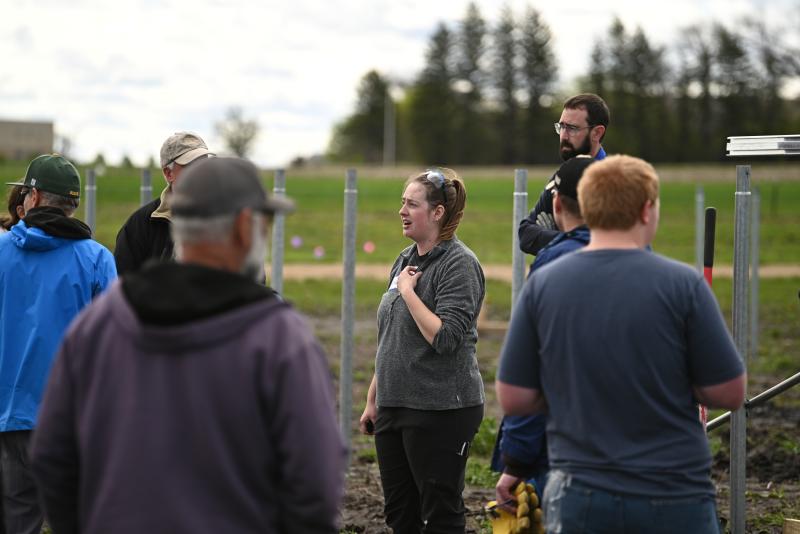
Lang said high tunnel education has continuously evolved since 2014 and a focus on high tunnel education benefits the growing population of specialty crop producers across South Dakota. After building the first high tunnel, SDSU Extension offered the public a chance to gain hands-on experience during the construction of the second high tunnel – a 30-by-96-foot gothic-style, double-poly structure.
“Building high tunnels on campus allows us to have a high-impact research program that helps people optimize production in the tunnels they have built,” Lang said. “At the end of the day, this work is about getting more South Dakota-grown food onto tables in our state.”
That open build, along with workshops and other outreach efforts, has helped build momentum that participants are using to create their own programs.
Chris Goldade, a soil health technician with the South Dakota Soil Health Coalition, has participated in numerous SDSU Extension workshops and field days, and progressed to co-hosting workshops with SDSU Extension, conservation districts, Sisseton Wahpeton College and the Natural Resources Conservation Service because he sees the need for more education.
“People have an interest in learning more about high tunnels but there are very few examples to be found in South Dakota,” he said.
Erica Fischer, Extension director at Sisseton Wahpeton College, learned about high tunnels through Lang’s outreach, and attended the high tunnel build on SDSU’s campus. That inspired her to participate in the workshop later co-hosted at Sisseton Wahpeton College.
“Our community has had high tunnels distributed and we thought it would be great to get some of the individuals involved in the SDSU build to come to our community and share their experience,” she said.
Also known as a hoop house, a high tunnel is a protective structure used to extend the growing season and improve the quality of produce. An increasingly popular option for vegetable and flower growers, high tunnels offer a less expensive alternative to greenhouses. Plants in a high tunnel are still grown directly in the soil, unlike a greenhouse.
For more information, contact Kristine Lang, assistant professor and SDSU Extension Consumer Horticulture Specialist.