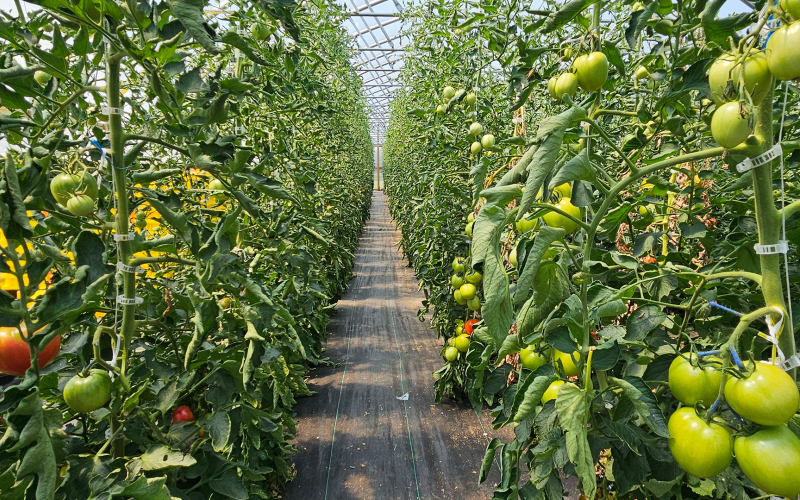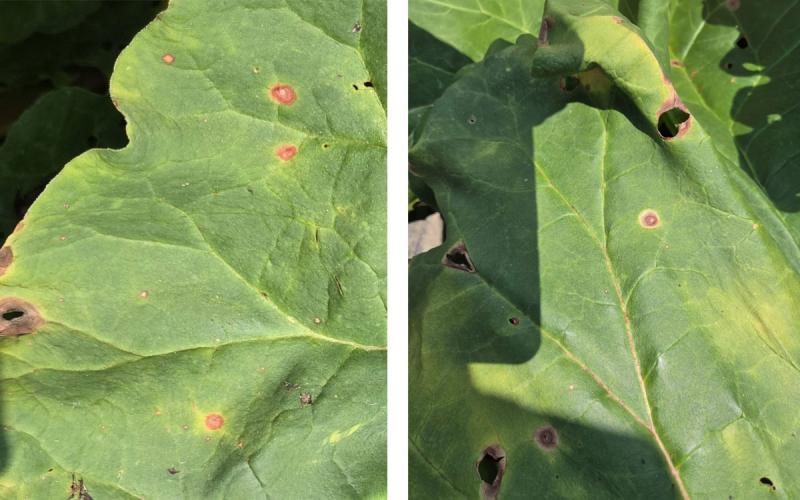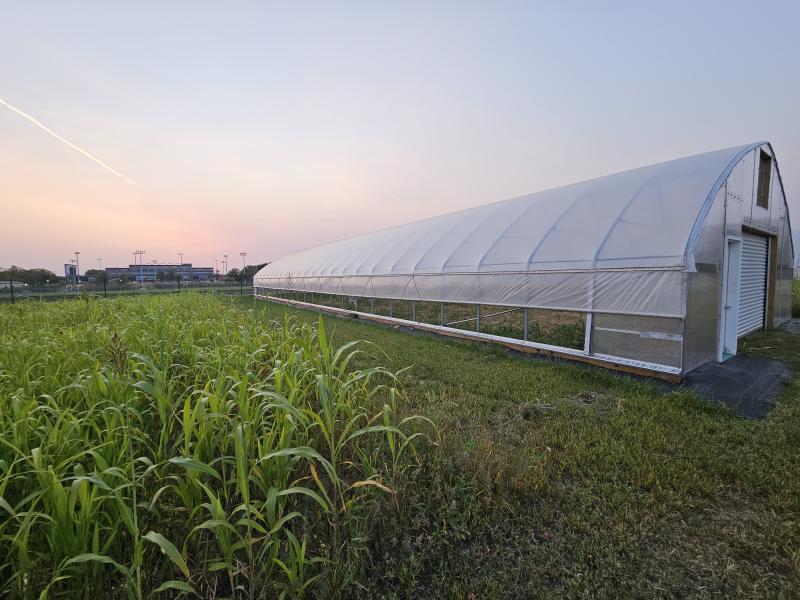
High tunnels serve as an important tool for the expansion of the local food and flower economy across South Dakota as small and diversified farms use high tunnels to grow seasonal fruits, vegetables, and flowers. In addition to extending the growing season, research has strongly indicated that high tunnels can increase yield, enhance shelf life, and improve the quality of crops grown (Carey et al., 2009). The benefits of high tunnels may be one reason that the number of South Dakota farms growing food crops under “glass or other protection”, as defined by the USDA Census of Agriculture, increased by 37% from 2012 to 2017 (USDA, 2019). In the most recent census the area under protection has increased an additional 15% with the value of crops grown under protection exceeding $1.2 million (USDA, 2024).
Benefits
A focus on high tunnel education benefits the growing population of specialty crop producers across South Dakota through updated education and expansion of high tunnel research. Extension programming continues to include extensive training on high tunnel assembly, management, and cropping innovations. Additionally, high tunnel training empowers technical service providers, including non-profit partner organizations and USDA NRCS conservationists, to better service the state’s specialty crop producers. Finally, this work on strengthens SDSU relationships with stakeholders to inform the next decade of specialty crop research to expand South Dakota’s market share in fruit, flower, and vegetable production while strengthening local economies.
A large volume of high tunnel research in the Midwest has focused on vegetable and fruit crop production; however, cut flowers are another specialty crop that can be grown within high tunnels. There is a growing cohort of specialty cut flower farmers in South Dakota, and high tunnels could provide incredible opportunities to protect these high-value crops and extend the production season for local markets in South Dakota.
A recent, renewed focus within South Dakota to strengthen Farm to School initiatives from both the production and procurement side can create opportunities to increase high tunnel production in South Dakota. The USDA Farm to School Census, as presented to a group of South Dakota stakeholders in 2021, reported that a “limited availability of local foods” was the number one barrier to purchasing local foods for use in South Dakota schools. Expanding the use of high tunnels could extend the season so that production and harvest of crops more closely aligns with fall and spring demands for local food from South Dakota schools.
Ongoing Research
With the increased adoption of high tunnel production, research and training related to high tunnels has also expanded; however, growers may still feel overwhelmed by the task of managing these high-producing, labor intensive structures, and they are eager for more information on crop-specific management strategies (Bruce et al., 2019). This indicates a need for ongoing high tunnel research and production training within the Midwest. Researchers at SDSU are focused on mitigating heat stress on crops grown in high tunnels, reducing tillage, improving soil health, and fine tuning crop rotations to help South Dakota Farmers become more successful.
Funding High Tunnels
The USDA NRCS EQIP High Tunnel System Initiative continues to create opportunities for specialty crop producers in South Dakota to utilize this season extension and resource conservation tool. Within South Dakota, the USDA NRCS has provided funding for implementation of 47 high tunnels from 2012-2016 (personal communication) and an additional 92 high tunnels from 2017-2020 (EQIP Data Dashboard, farmers.gov). These numbers indicate that interest in placing high tunnels on South Dakota specialty crop farms remains strong. Additionally, strengthening connections between technical service providers and South Dakota specialty crop producers expands awareness of, and access to funding and technical support opportunities to make implementation of high tunnels a lasting success.
References
- Bruce, A. B., E. T. Maynard, and J. R. Farmer. 2019. Farmers’ perspectives on challenges and opportunities associated with using high tunnels for specialty crops. HortTechnology 29:290–299.
- Carey, E.E., L. Jett, W.J. Lamont, T.T. Nennich, M.D. Orzolek, and K.A. Williams. 2009. Horticultural crop production in high tunnels in the United States: A snapshot. HortTechnology 19:37–43.
- U.S. Department of Agriculture, National Agricultural Statistics Service. 2019. 2017 Census of Agriculture. Volume 1: Chapter 1: South Dakota State Level Data. Table 39. Floriculture and bedding crops, nursery crops, propagative materials sold, sod, food crops grown under glass or other protection, and mushroom crops: 2017 and 2012. U.S. Dept. Agr., Washington, DC.
- U.S. Department of Agriculture, National Agricultural Statistics Service. 2024. 2022 Census of Agriculture. Volume 1: Chapter 1: South Dakota State Level Data. Table 39. Floriculture and bedding crops, nursery crops, propagative materials sold, sod, food crops grown under glass or other protection, and mushroom crops: 2022 and 2017. U.S. Dept. Agr., Washington, DC.
Special thanks to the USDA Specialty Crop Block Grant Program administered by the SD Department of Agriculture and Natural Resources and the USDA North Central SARE Professional Development Program for funding portions of this work.
Featured Resources
Videos
2024 Vegetable Research Update https://youtu.be/GasWhaGUKfc?si=7o69BfgMUuvouswt
Kristine Lang - So You're Thinking About Building a High Tunnel https://www.youtube.com/watch?v=wfLAhkhtce0
Optimizing High Tunnel Tomato Production with Kristine Lang https://www.youtube.com/watch?v=zZXwQuCP9-0
Garden and Yard Newsletter
Subscribe to our newsletter to receive our latest news, resources and events.
Subscribe