Introduction

Two key principles of soil health are minimizing soil disturbance and keeping the soil surface covered. Both can be achieved by adopting no-till practices and leaving crop residue on the soil surface.
Conventional tillage buries crop residue and exposes darker soil. Dark soil absorbs more sunlight, causing it to warm more quickly and remain warmer throughout much of the growing season, particularly before crop canopy closure. Warmer soils, combined with the increase in oxygen that occurs when soil is disturbed, accelerate the breakdown of organic matter. Over time, this can reduce soil organic matter levels and decrease the soil's ability to retain water.
Tillage also disrupts soil structure and destroys pores formed by soil organisms as well as by natural wetting-drying and freezing-thawing cycles. These larger pores are important pathways for water infiltration. Following a dry summer, such as many areas of South Dakota experienced this year, large soil cracks often develop. Snowmelt and rainfall can rapidly infiltrate through these cracks and be stored in the soil for future plant use. Disturbing these natural pore networks can reduce infiltration rates and limit the amount of water entering the soil profile. In addition, warmer soils lose more moisture through evaporation.
Leaving crop residue on the soil surface provides several benefits. Residue returns organic matter and nutrients to the soil while protecting the surface from direct sunlight. Because residue is generally lighter in color than bare soil, it reflects more sunlight and reduces heat absorption. This helps conserve soil moisture by reducing evaporation.
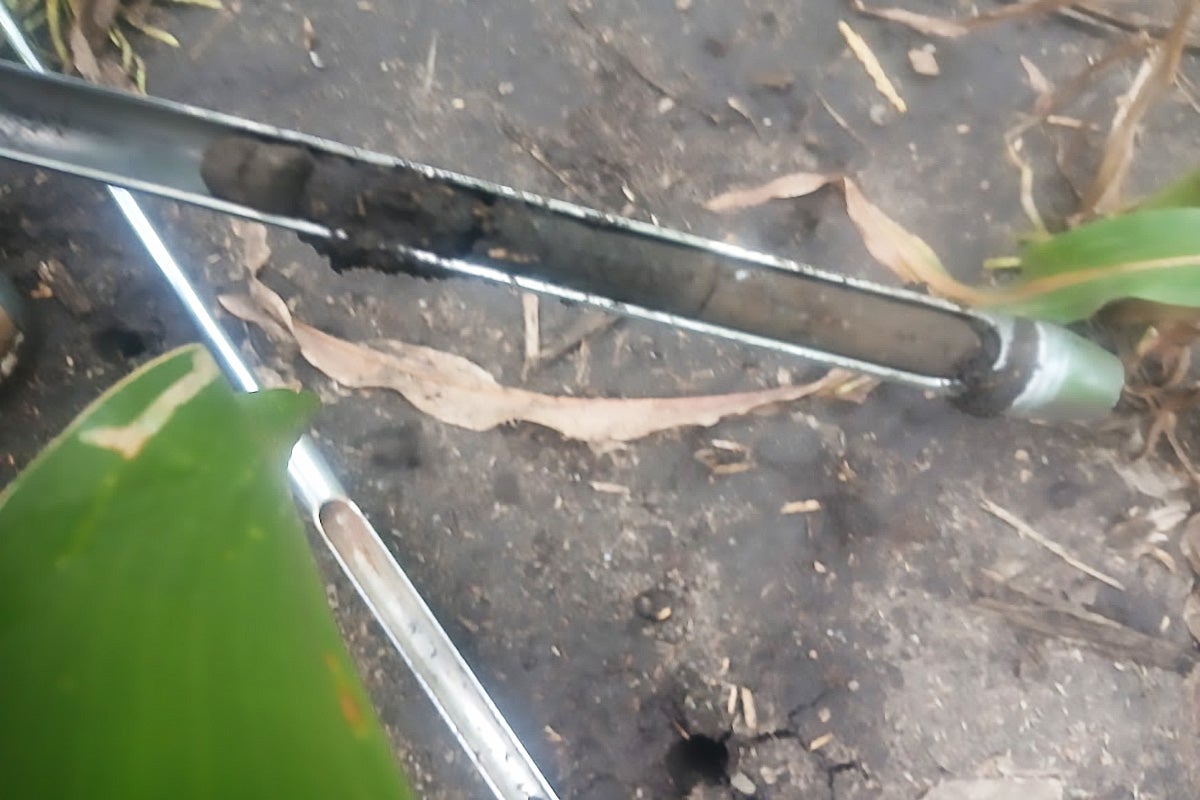
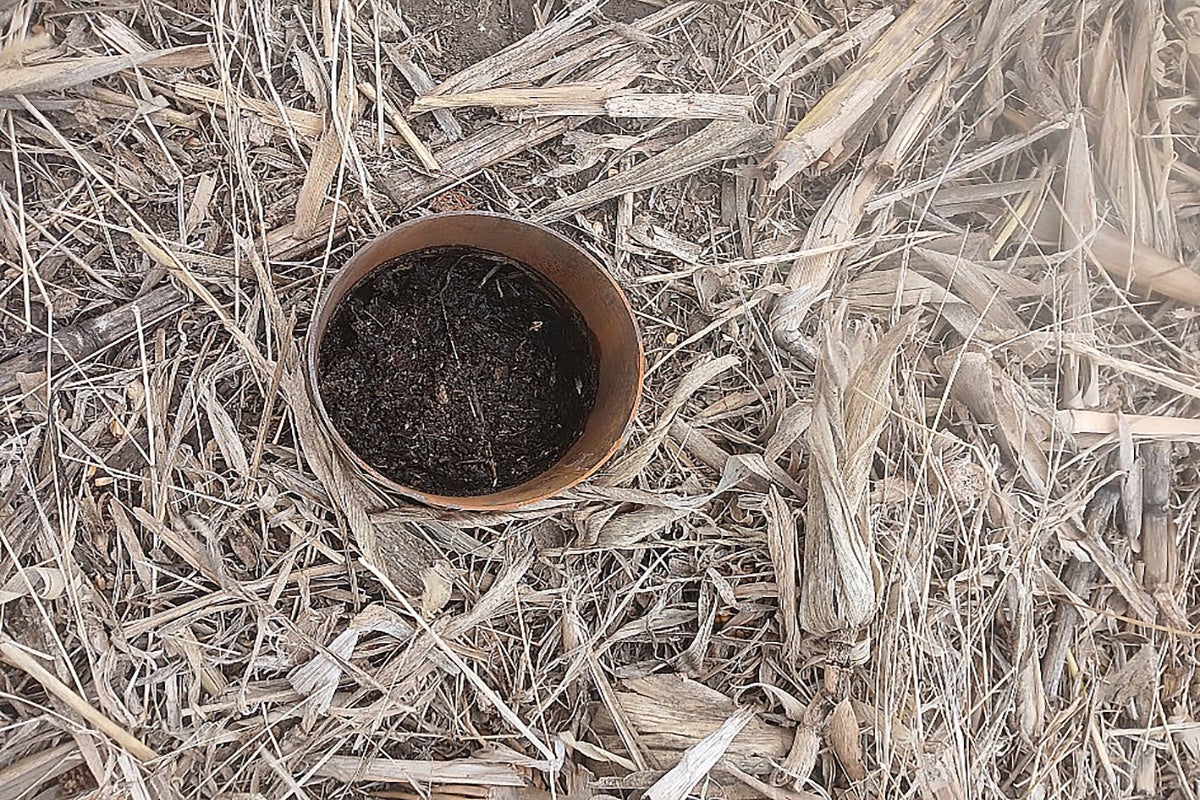
Surface residue also contributes to higher soil organic matter levels over time, increasing the soil's water-holding capacity. In addition, residue protects the soil from raindrop impact, which can break down soil structure and lead to surface crusting. Figure 1 shows a conventionally tilled soil surface that has experienced raindrop impact. The crusted surface contains few large pores connected to the soil surface, limiting water infiltration. Soil cover can also support greater populations of beneficial soil organisms such as earthworms, bacteria and fungi. These organisms create channels and pores that improve water infiltration, drainage, and water storage. Figure 2 shows a no-till soil with adequate residue cover.
Evidence from South Dakota Studies
Several studies conducted in South Dakota have examined the effects of crop residue retention and tillage practices on soil moisture, water retention, and soil organic matter.
A study conducted near Brookings, South Dakota, found that retaining corn residue in a corn-soybean rotation increased soil organic carbon, soil water retention, and soil water content throughout the growing season (Chalise et al., 2019). These improvements were observed after ten years of residue retention compared with residue removal. The study also reported greater water infiltration rates and increased plant-available water where corn residue was retained.
A long-term study near Beresford, South Dakota, found that soil moisture levels were higher during much of the year under no-till management than under conventional tillage (Vital et al., 2025). Soil organic carbon concentrations were also higher in no-till systems compared with conventionally tilled systems (Ahlameid et al., 2017).
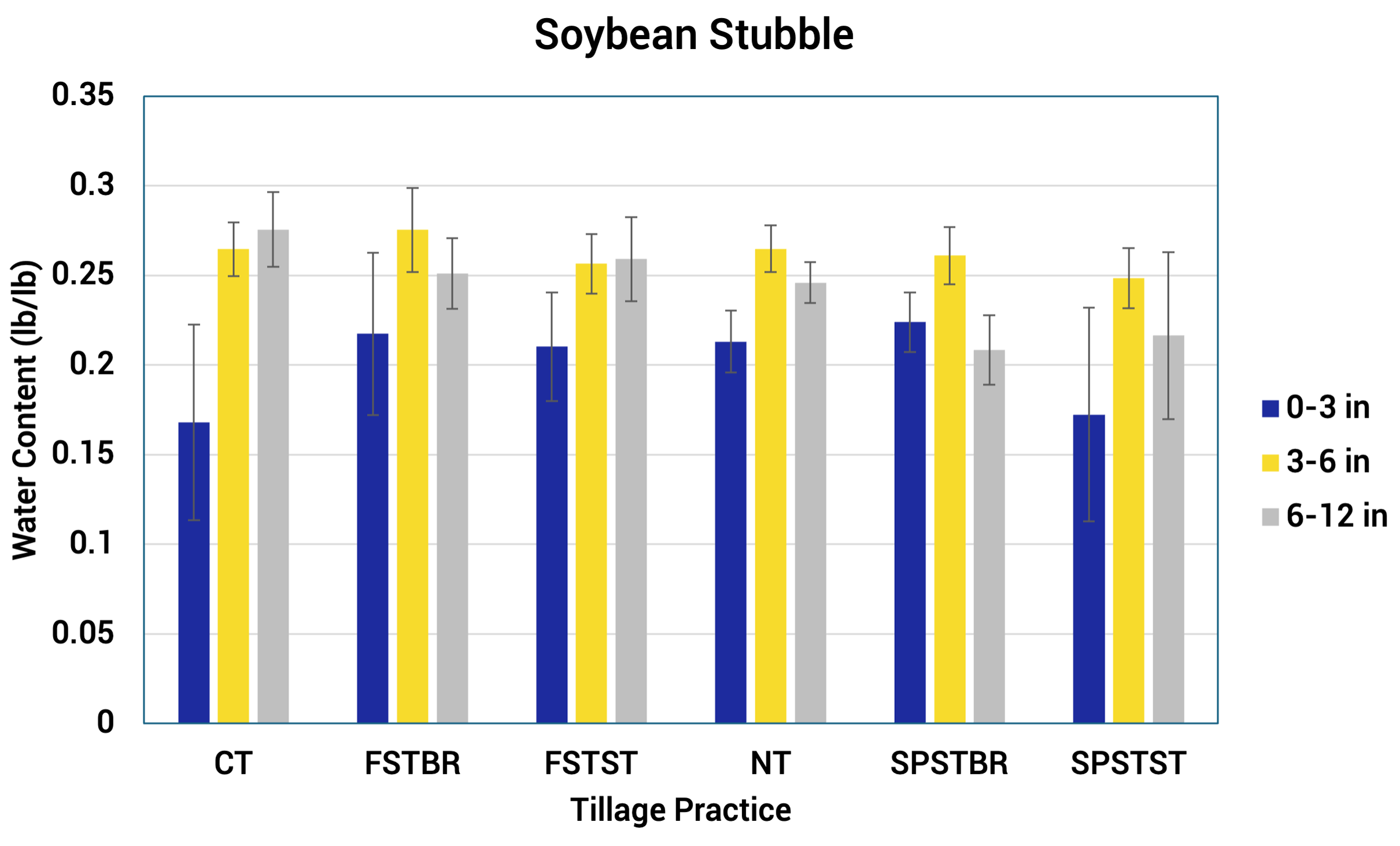
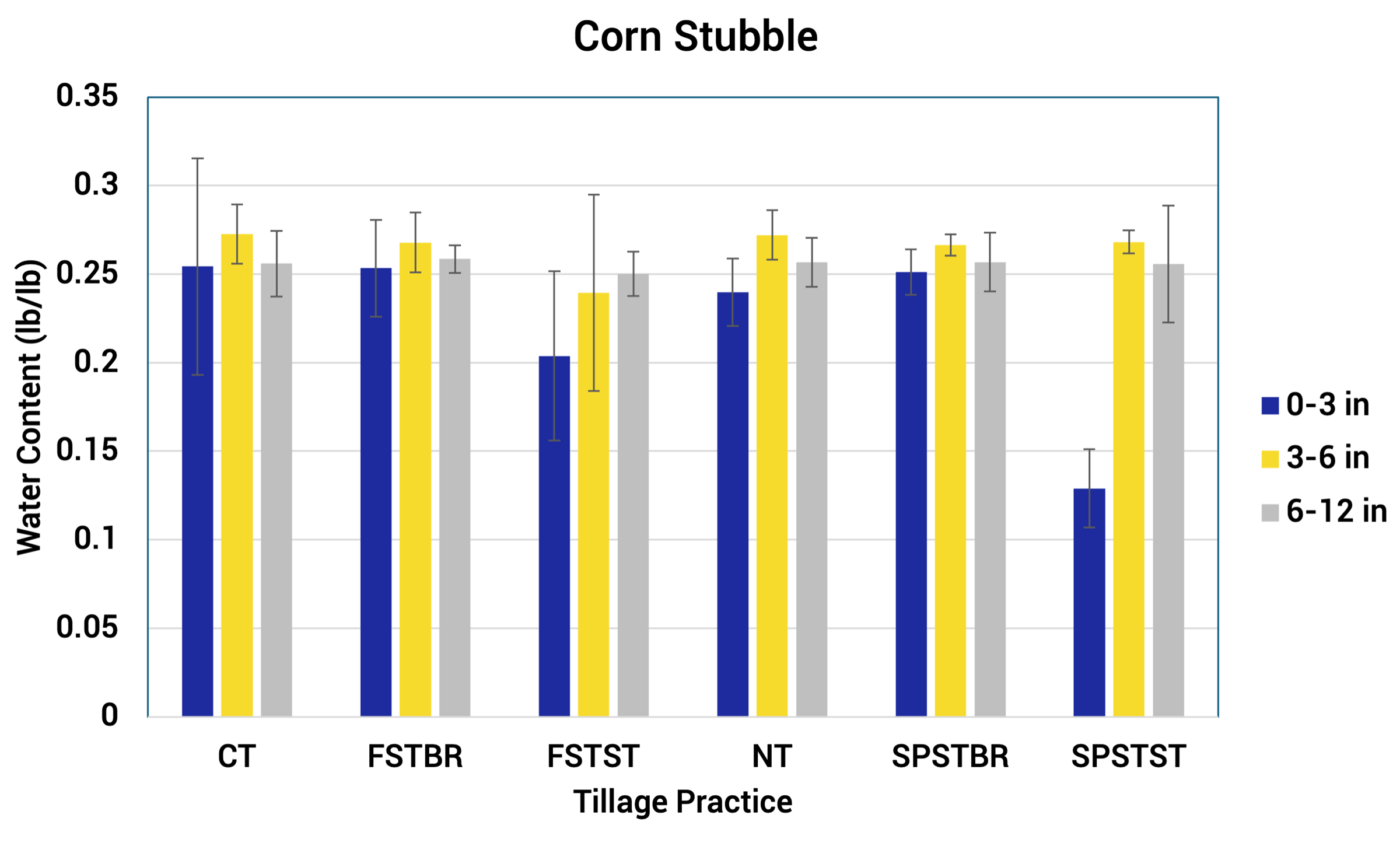
Additional data was collected in May 2026 at the SDSU Northeast Research Farm near South Shore, South Dakota. This two-year study evaluated no-till, fall strip-till, and spring strip-till systems and a conventional tillage system. In soybean residue, conventional tillage plots were chisel-plowed in fall 2025 and disked in spring 2026. In corn residue, conventional tillage plots received spring disking but no fall tillage.
In soybean residue, soil water content near the soil surface was lower in the spring strip-till rows and under conventional tillage than under no-till or between the strip-till rows (Figure 3). At deeper soil depths (3 to 6 inches and 6 to 12 inches), water content did not differ among tillage treatments.
In corn residue, soil water content was lower within both fall and spring strip-till rows than under conventional tillage, no-till, and the areas between strip-till rows (Figure 4). Soil moisture levels in the conventional tillage treatment were similar to those observed under no-till because the plots had been disked only one day before sampling.
Additional soil health indicators were measured in this study and will be presented in a fact sheet later this year. Together, these studies demonstrate that no-till management and residue retention can increase soil organic matter and improve water conservation in South Dakota cropping systems.
Summary
South Dakota has experienced both wet and dry conditions in recent years, with much of the state experiencing drought conditions this year. Soil health practices help soils function more effectively under both extremes.
Leaving crop residue in the field and reducing or eliminating fall tillage are practical first steps toward improving soil health. These practices support two foundational soil health principles: maintaining soil cover and minimizing disturbance. Over time, they can increase soil organic matter, improve water-holding capacity, enhance infiltration, and reduce water loss through evaporation.
Research conducted in South Dakota has consistently shown these benefits. While improvements in surface soil moisture may become noticeable within a few years, larger changes in soil organic matter, infiltration rates, and plant-available water often require long-term management. Nonetheless, adopting these practices can improve the resilience and productivity of South Dakota cropping systems over time.
Declaration of Generative AI and AI-Assisted Technologies in the Writing Process
During the preparation of this work, the author used Copilot to make minor editorial corrections. After using this tool/service, the authors reviewed and edited the content as needed and take full responsibility for the article’s content.
References
- Alhameid, A., Ibrahim, M., Kumar, S., Sexton, P., & Schumacher, T. E. (2017). Soil organic carbon changes impacted by crop rotational diversity under no‐till farming in South Dakota, USA. Soil Science Society of America Journal, 81(4), 868-877.
- Chalise, K. S., Singh, S., Wegner, B. R., Kumar, S., Pérez‐Gutiérrez, J. D., Osborne, S. L., ... & Rohila, J. S. (2019). Cover crops and returning residue impact on soil organic carbon, bulk density, penetration resistance, water retention, infiltration, and soybean yield. Agronomy Journal, 111(1), 99-108.
- Vital, S., Xu, S., Zhang, X., Ghimire, N., Sexton, P., Geza, M., ... & Xu, L. (2026). Soil macropore characteristics and hydro-physical properties improved by diversified crop rotations and cover cropping in long-term no-till cropping systems. Soil and Tillage Research, 260, 107124.