Black rot (Xanthomonas campestris pv. campestris, Xcc) is uncommon but can be a devastating bacterial disease in South Dakota. Typically, South Dakota’s climate is not conducive to development of this disease, but when periods of hot and wet weather are sustained, it can lead to rapid and widespread crop loss. Black rot can develop at any stage of growth, though it is more commonly seen either in the spring on new transplants or late summer following several days of high humidity and temperatures. When the environment is less suitable, progression and spread of this disease will slow, though symptoms will rapidly worsen when conditions are suitable again.
Black Rot of Brassica Crops
Related Content
SDSU Extension to host Annie’s Project for Specialty Producers
September 15, 2026
Specialty crop producers across the region will have an opportunity to strengthen their business skills and learn new strategies for managing risk through a six week virtual program offered by South Dakota State University Extension finance and horticulture experts.
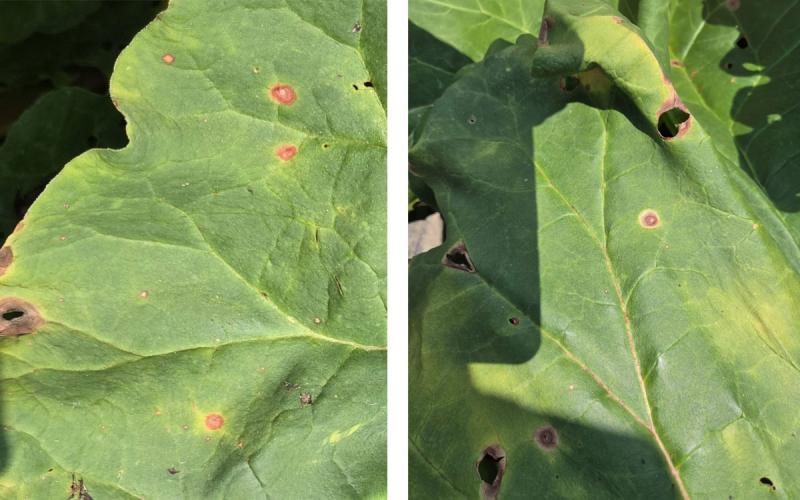
Leaf Spot Diseases of Rhubarb in South Dakota
In South Dakota, rhubarb is generally hardy, but it can develop several diseases that, when left unmanaged, cause severe damage and decline of plants. Leaf spots caused by the fungi Ascochyta rhei and Ramularia rhei are the most-common diseases we observe.
SDSU Extension hosts 6th annual Specialty Crop Field Day
August 31, 2026
South Dakota State University Extension welcomes vegetable, flower and fruit farmers to the sixth annual Specialty Crop Field Day in Brookings.