Written collaboratively by Eric Jones, Graig Reicks, Philip Rozeboom, Jill Alms, and David Vos.
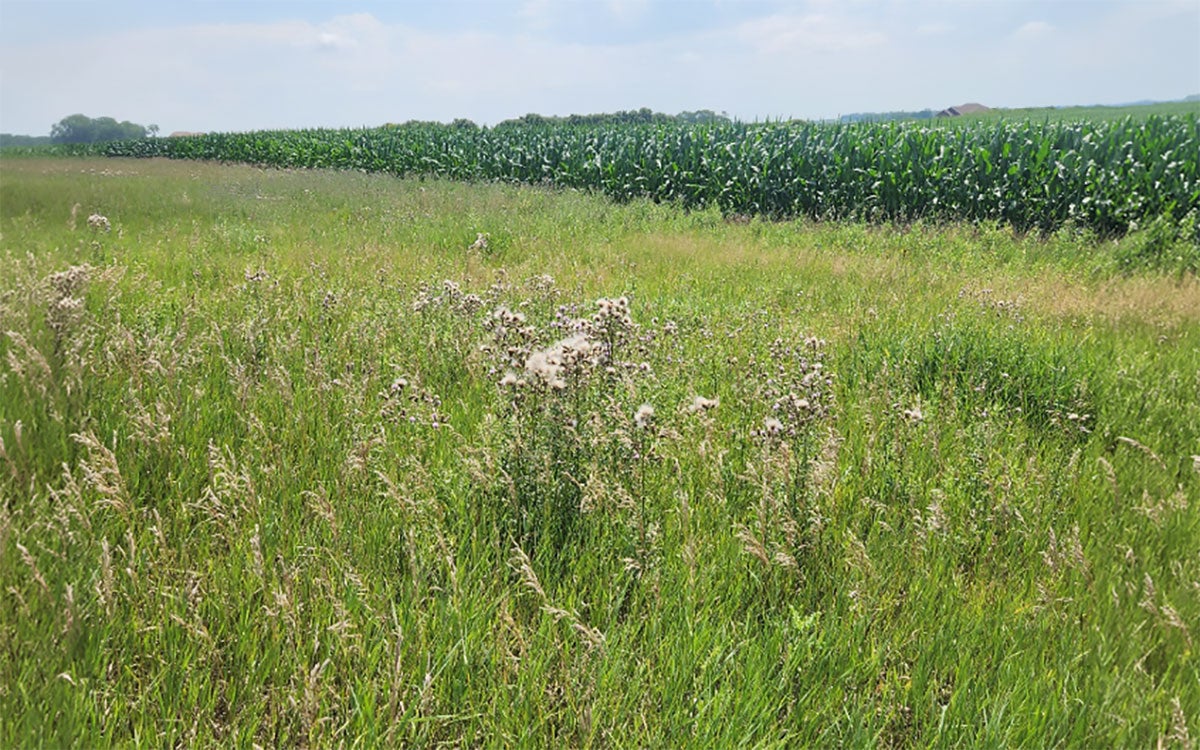
After June 15 or July 10(dependent on location), right-of-way ditches can be mowed and/or hayed as announced by the South Dakota Department of Transportation. While there is a demand for grass hay, care should be taken when haying right-of-way ditches. Noxious weeds can grow within these areas and should be avoided to minimize hay contamination and the spread of seeds across the landscape (Figure 1).
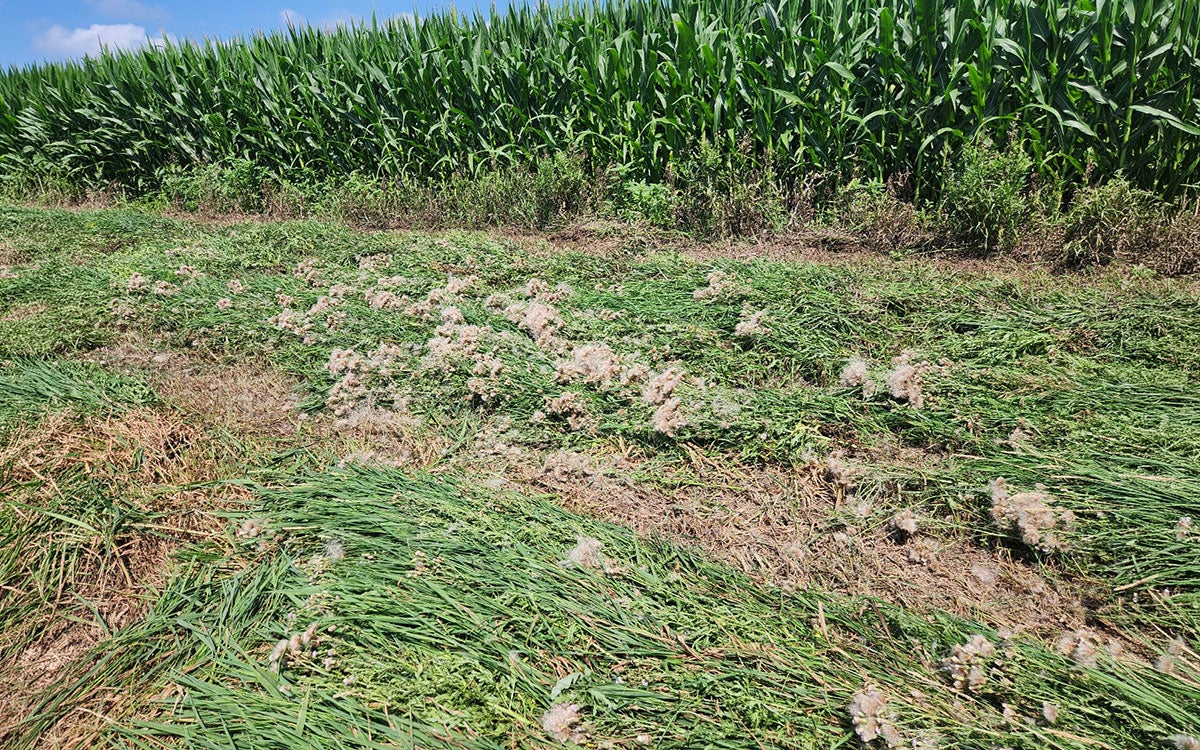
While mowing can be a viable tactic to manage noxious weeds, cutting plants with seeds should be avoided to minimize agitation to the plant that can cause seed dispersal (Figure 2). Seeds can also be baled with the hay and can be dislodged during transportation or feeding in a new area can facilitate infestations of those areas. Patches of noxious weeds should not be mowed or baled if seeds are present. Scouting the right-of-way ditches prior to haying or mowing can identify areas that are infested with noxious weeds that should be avoided. Small areas should be managed by removing the seedheads from the plant and destroying the seeds.