Written collaboratively by Adam Varenhorst, Philip Rozeboom, Patrick Wagner, and Brad McManus.
Army cutworm caterpillars are active in South Dakota wheat fields. This activity is only going to increase with the forecasted temperatures. Fortunately, some of the caterpillars have already reached maturity, but many are still actively feeding.
Lifecycle
The army cutworm caterpillars overwinter in winter wheat and alfalfa fields after the moths return from the Rocky Mountains in the fall. Because the caterpillars begin feeding in the fall and then overwinter, they are often one of the first insect pests we observe in wheat fields during the spring. Army cutworm caterpillars feed at night and hide just below the soil surface or plant residue during the day. During overcast days, the caterpillars may remain active. Army cutworm activity begins when temperatures reach approximately 40 °F.
Identification
- All developmental stages have light brown head capsules.
- Young, small caterpillars are typically light green to light brown in color with few markings.
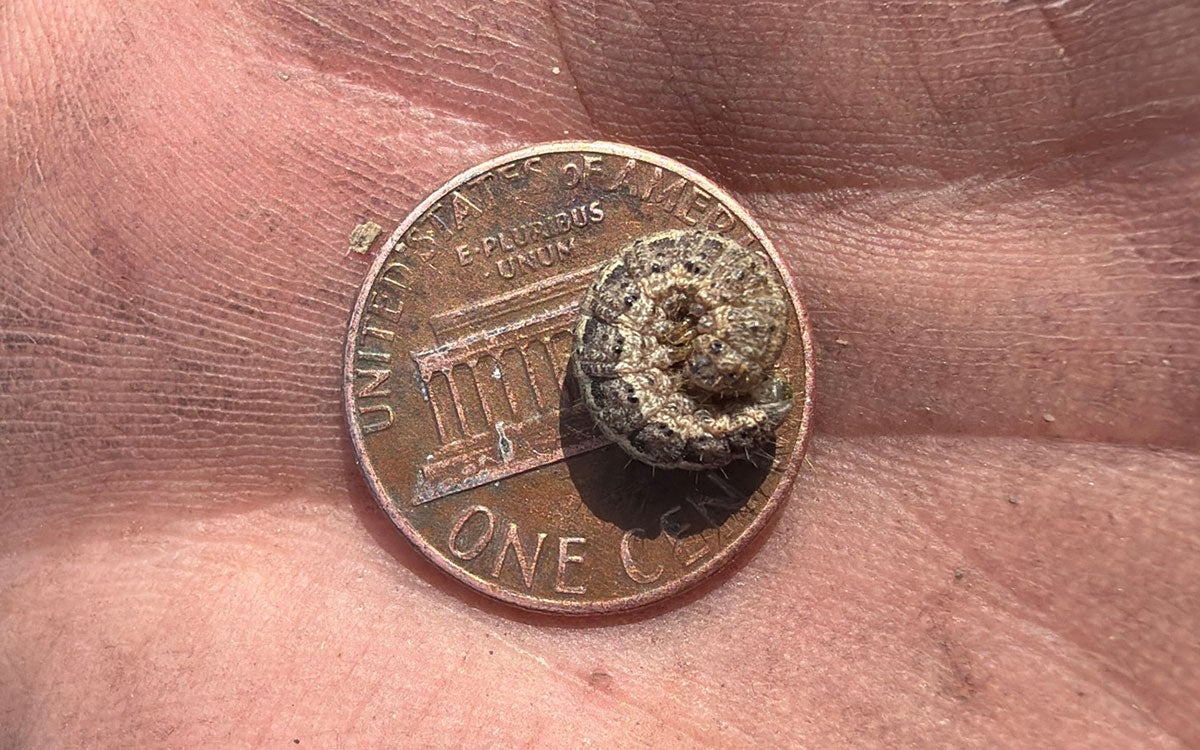
- Older caterpillars have dull gray or gray-brown bodies with spots and smeared markings.
- Mature caterpillars will have pale stripes that run the length of the body (Figure 1).
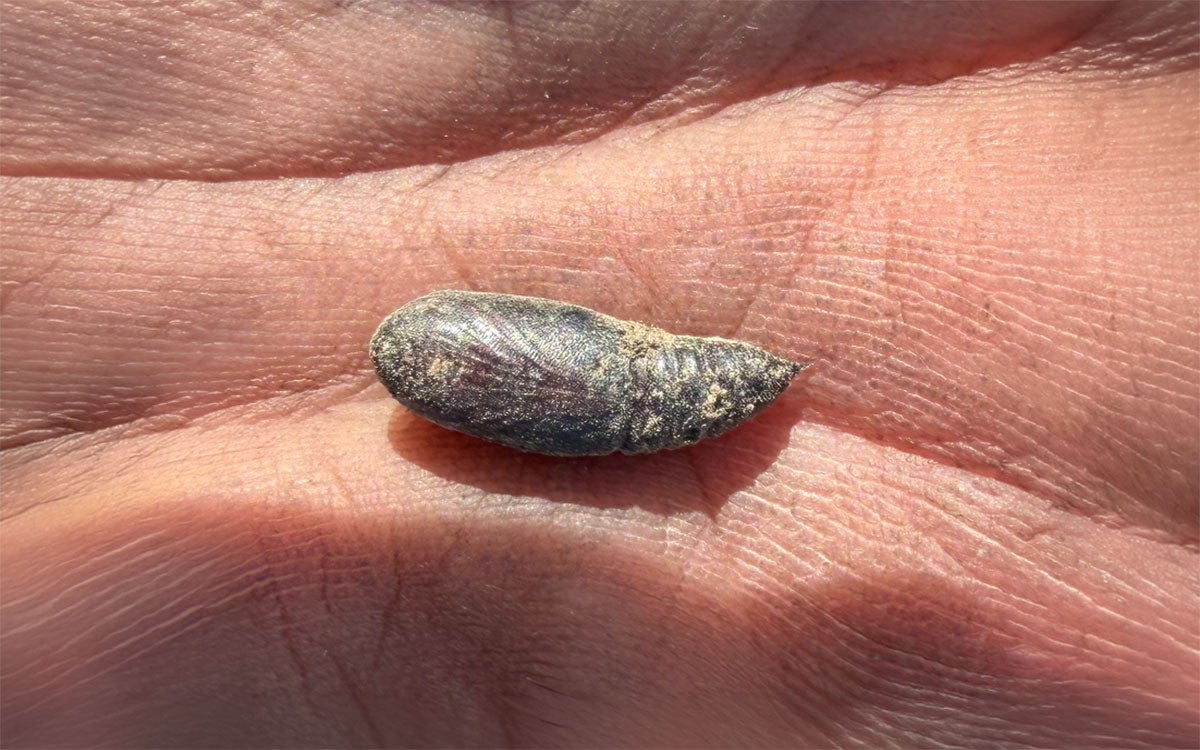
- Pupa are red-brown in color and approximately the size of a large pill (Figure 2).
Scouting
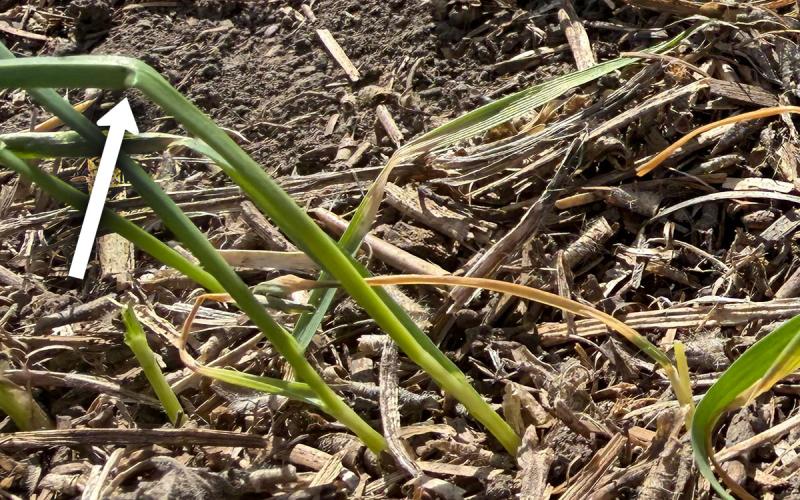
Scouting for the caterpillars can be time intensive due to their tendency to hide, but they can be found with some effort. The more obvious evidence of their presence in a wheat field is the clipped or cut wheat plants. This feeding results in ragged patches of plants that appear to be cut near the soil surface (Figure 3).
For winter wheat, the caterpillars tend to feed on the tender blades and normally don’t feed on the stem, crown, or meristematic tissues. As a result, wheat can often recover from army cutworm infestations.
Management
Management is recommended if large patches of the field have been defoliated or cut, or if 2-4 army cutworm caterpillars are observed per square foot.
Injury to winter wheat from army cutworms will be worse for fields that are experiencing moisture stress. If management is necessary, an insecticide application is recommended. Please refer to the current South Dakota Pest Management Guide: Wheat for a list of products labeled for cutworm management. Before applying insecticides for army cutworm management, make sure that the forecasted temperatures are at or above 50 °F for three to four days after application. Cooler temperatures will reduce the army cutworm activity and reduce the effectiveness of the insecticide application.