This article was derived from a presentation at the 2026 Joint Meeting of the South Dakota Chapter of the Wildlife Society and the Dakota Chapter of the American Fisheries Society by Hannah Mulligan, SDSU NRM Graduate Research Assistant.
What Are Aquatic Invasive Species?
The definition of an invasive species is an organism that 1) is non-native to the ecosystem under consideration and, 2) whose introduction causes or is likely to cause economic or environmental harm or harm to human health. Prior to the arrival of zebra mussels in South Dakota, AIS education and outreach for other species had not captured the public’s attention the way zebra mussels have, even though they have been here longer. For instance, curly-leaf pondweed is an invasive aquatic plant that was first documented and collected in southeastern SD in the 1960s and 1970s. However, zebra mussels have been more visible and are now well known in the state since first being discovered in Lewis & Clark Lake in late 2014. Now that it is clear what negative impacts AIS can have, concerns for other species have increased significantly since the arrival of the zebra mussel.
Recent Research and Outreach Efforts
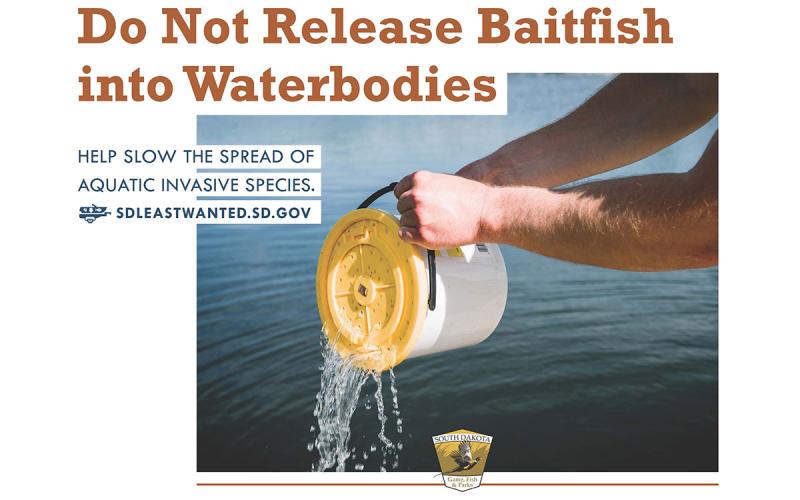
Today, more resources are being devoted to AIS research and outreach to increase the public’s understanding of the potential harm that can be caused by AIS. We are also improving our understanding of the potential vectors and pathways by which people can spread AIS. A good example of that can be found in the live bait trade. Environmental DNA (eDNA) sampling is a non-invasive technique that looks for the presence of DNA in different mediums such as water, soil, or air. Recent research conducted by Hannah Mulligan, SDSU graduate student, led to the discovery that the bait trade can represent a pathway that can contain invasive species such as Silver and Bighead Carp. This research has resulted in signage in many bait shops to remind anglers not to illegally release baitfish into South Dakota waterbodies (Figure 1).
Another example of AIS outreach and education includes the AIS Middle School Curriculum that was developed in 2024 through a collaboration between SD Game, Fish & Parks and the SDSU Department of Natural Resource Management, Extension, and 4-H. The primary curriculum consists of 5 lesson plans, in addition to a series of short videos, and “AIS crates,” which provide hands-on activities for students (Figure 2).
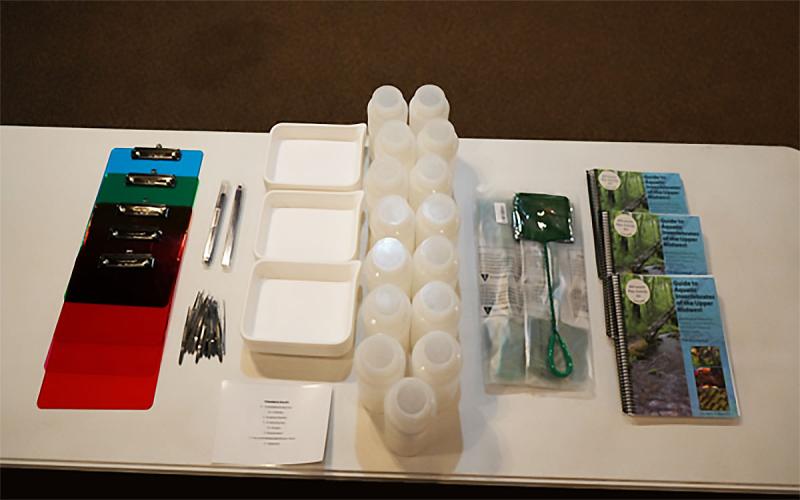
A total of ten crates are currently available at the SD GFP Outdoor Campuses in Sioux Falls and Rapid City, as well as select 4-H offices throughout the state.
These are just two examples of the work that is being done regarding AIS education and outreach in South Dakota. As this work continues and expands, we must all learn how we can help slow the spread of AIS and do what we can to help protect our South Dakota water and fisheries.
Additional Information
- South Dakota 2026 Fishing Handbook; South Dakota Game, Fish and Parks.
- SD Least Wanted; South Dakota Game, Fish and Parks.
- 2023 Aquatic Invasive Species Strategic Management Plan; South Dakota Game, Fish and Parks.