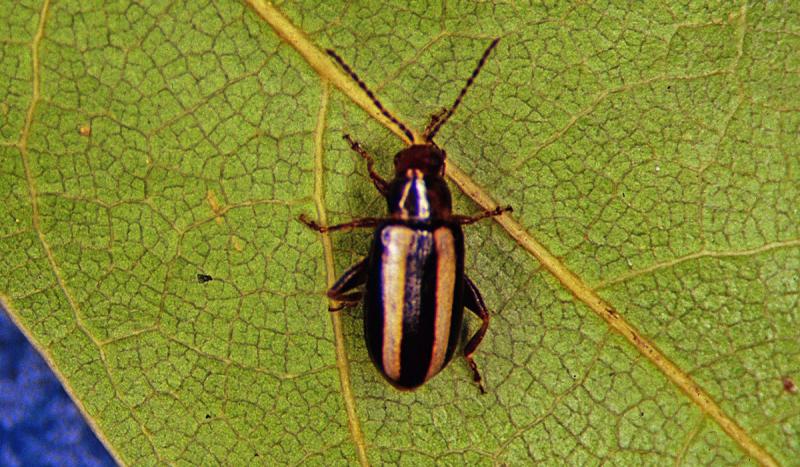
Palestriped flea beetles (Figure 1) have recently been observed in alfalfa fields in South Dakota. This pest is a generalist herbivore and can be problematic for seedling alfalfa, sunflowers (without a neonicotinoid seed treatment), and just about everything grown in a garden. The adults defoliate plants by chewing small irregular shaped holes. Small populations of palestriped flea beetles may go unnoticed due to their small size (4 mm in length) and rapid dispersal when disturbed.
Large populations of palestriped flea beetles can cause rapid defoliation and stunt seedling alfalfa. However, they rarely cause economic levels of defoliation to older stands. For seedling alfalfa, fields should be monitored weekly to ensure stand loss isn’t occurring. Treatment should be applied if any stand loss is observed.