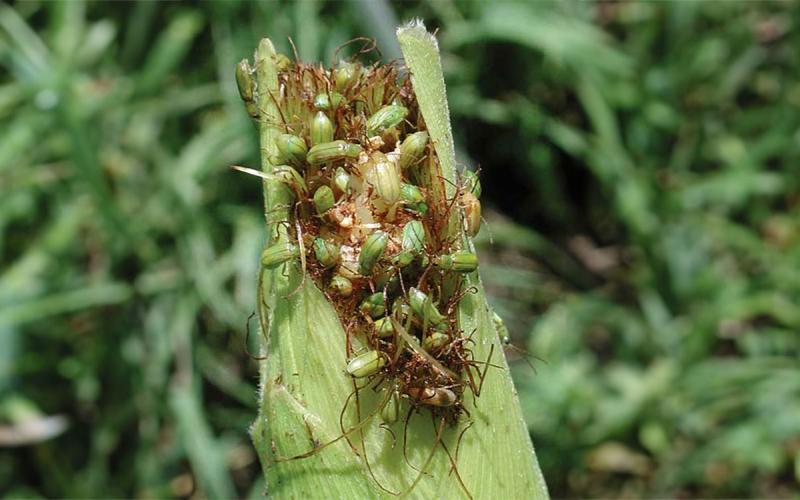
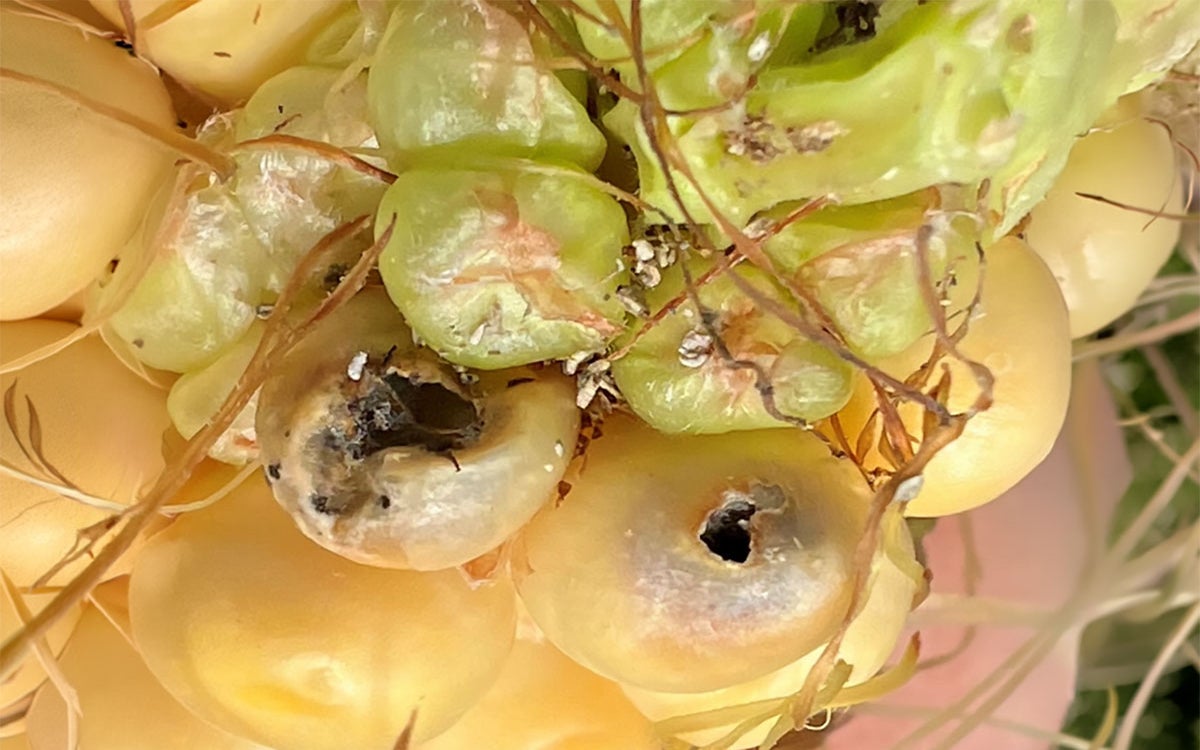
There has been a recent increase in the observation of small black beetles infesting the tips of corn ears (Figure 1) and often being found in damaged kernels (Figure 2). There are actually three species of beetles, that are often referred to collectively as sap beetles, that can be found feeding on corn. In addition to the adults, the larvae of these species also feed on developing kernels. Although these beetles are not considered a major pest of corn, this year, they are present in large numbers. In addition to the adults, the larvae are also actively feeding on corn kernels.
Identification

Adults
Adults of the three species differ in appearance and can be identified by the following characteristics.
- Corn Sap Beetles: Corn sap beetles are a uniform dull black color and are approximately 1/8 of an inch long (Figure 1).
- Dusky Sap Beetle: The dusky sap beetle is also a dull black color but is approximately 1/6 of an inch long.
- Picnic Beetle: The picnic beetlestands out from the other two species due to both coloration and size. It is the largest of the three species and is approximately 1/3 of an inch long. Picnic beetles are shiny black and have four yellow or orange spots on their wing covers (elytra).
Larvae
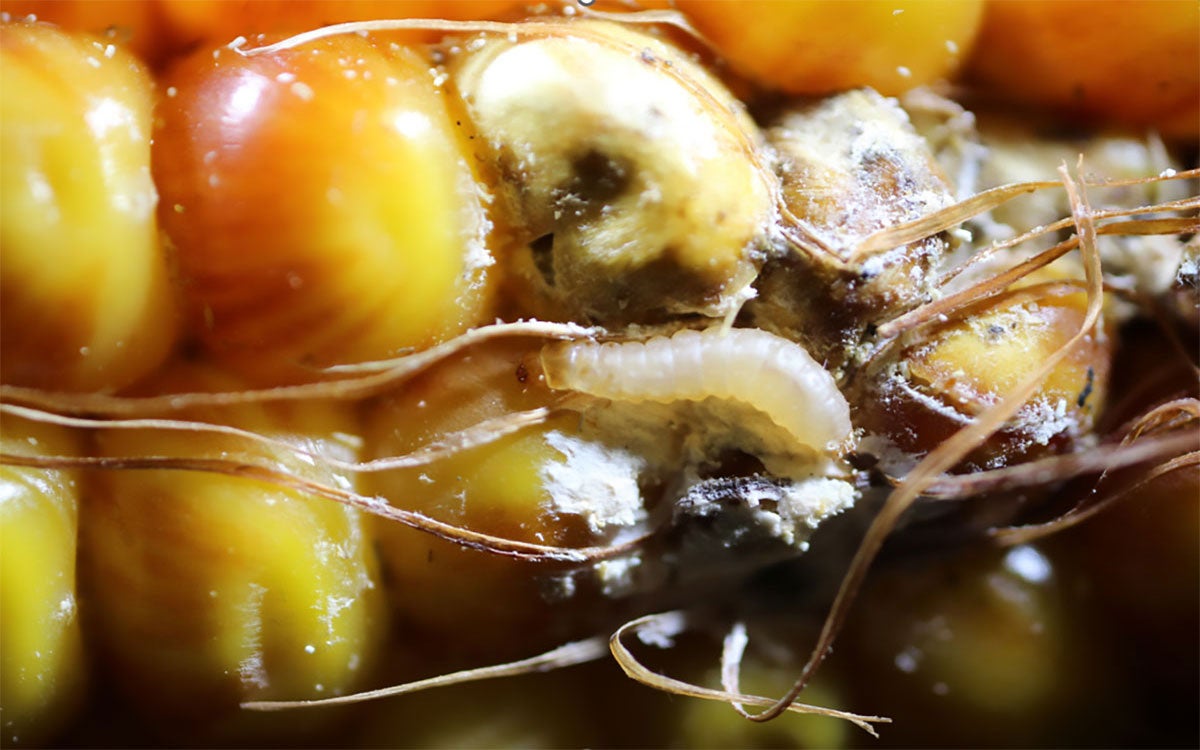
The larvae of the three species are very similar and are difficult to distinguish. The larvae are approximately ¼ of an inch long and are typically a cream to light pink color. They have a brown head capsule with the segment directly behind the head a mottled brown (Figure 3).
Damage to Corn
Adults of these beetles are typically attracted to corn ears that were previously damaged by other insects or abiotic factors. However, they are also capable of entering undamaged ears at any time from silking to maturity. Both adults and larvae may damage corn ears by feeding on developing kernels. Larvae can hollow out kernels that are present on the upper half of the ear. Each ear may have several larvae present. In addition to their feeding, these beetles can vector fungi from the genera Aspergillus, Penicillium, and Fusarium. These fungi can produce mycotoxins. The larvae of these beetles rarely cause economic losses for commercial corn.