The optimal application window for preemergence herbicides to turf is normally during April, and earlier in the month during warmer years. Crabgrass (Digitaria spp.) is usually the target weed for these applications. Crabgrass is a warm season annual that emerges when daily soil temperatures average >60˚F (Fidanza et al., 1996).
Crabgrass vs. Quackgrass
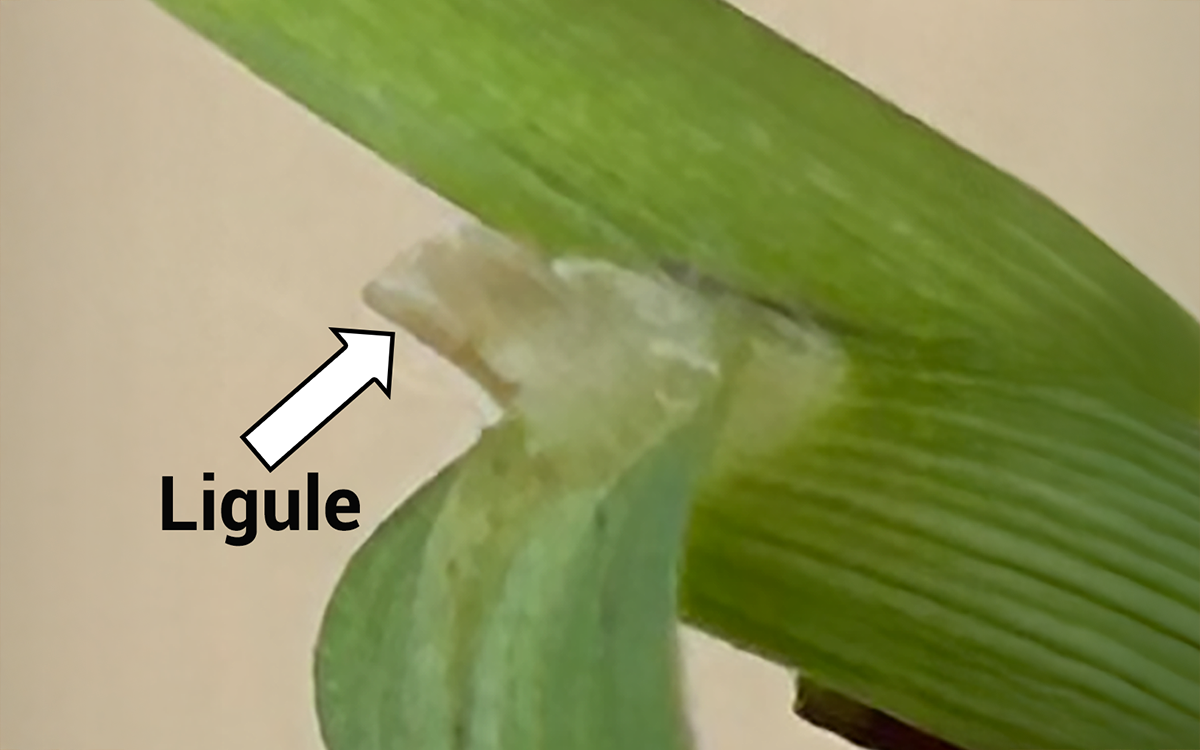
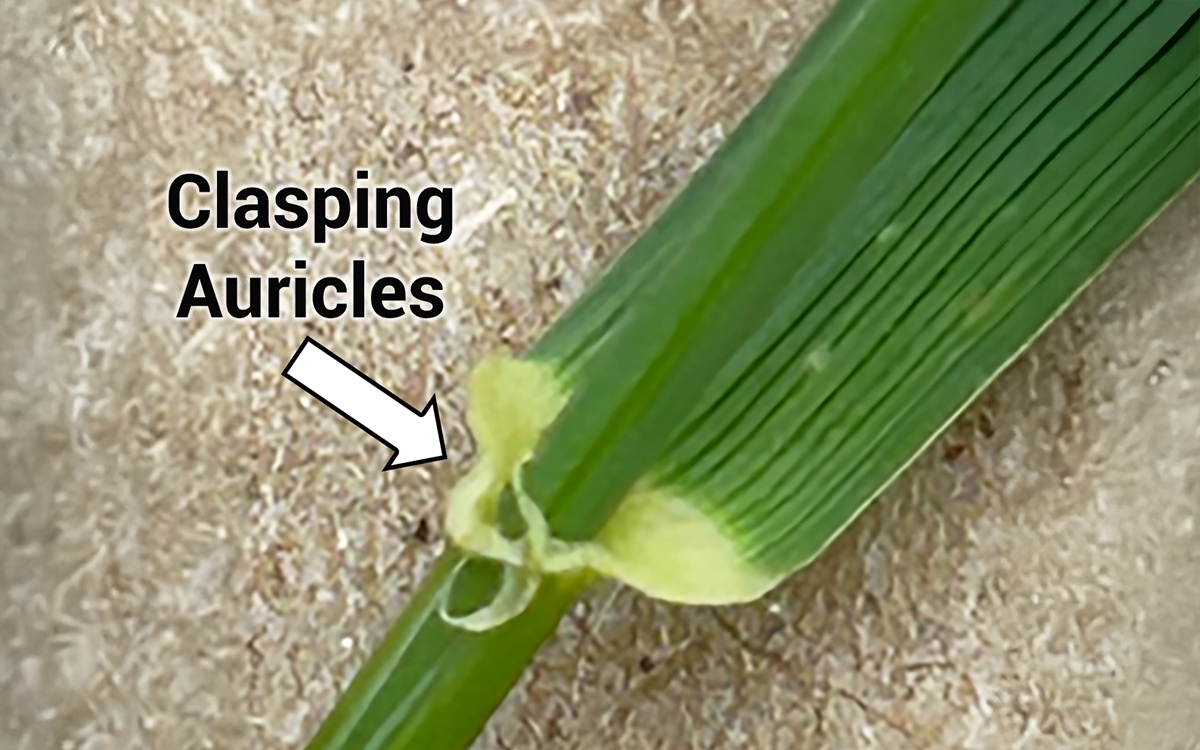
Quackgrass (Elymus repens) (Figure 2) is often confused for crabgrass (Figure 1), but the two species have key differences. Quackgrass is a cool-season perennial, meaning it can tolerate frost and emerges not only from seeds, but also from rhizomes that lie dormant in the soil during winter. Quackgrass can be identified by its clasping auricles (Figure 2), which aren’t always apparent on the youngest leaves seen during the early spring. If you don’t see the auricles at this time, keep in mind that quackgrass is a cool-season species, meaning that the grassy weeds seen in your lawn at this time are likely quackgrass. Glyphosate is the only reliable herbicide option for killing quackgrass, but this herbicide will also kill the lawn.
Smooth Crabgrass
Quackgrass
Herbicide Basics
Preemergence herbicides used to prevent crabgrass emergence belong to the dinitroaniline (group 3) family of active ingredients and are often sold as “crabgrass preventers.” Crabgrass preventers do not prevent seed germination. Instead, the weeds die when young shoots and roots absorb the herbicide while growing through the soil. Table 1 details the different active ingredients approved for use in South Dakota turfgrass. Once crabgrass emerges, prodiamine (Barricade®, Lebanon®) and pendimethalin (Pendulum®) are no longer effective. At this time, dithiopyr (Dimension®) should be considered. Prodiamine and dithiopyr have potential to injure some grass species. If unsure of which species exist in your lawn, apply pendimethalin or a low rate of prodiamine (see label for rates). If planning to overseed this year, prodiamine should be avoided given its long persistence in the soil. In newly seeded lawns, the general guideline is to wait until after the second mowing before applying preemergence herbicides to reduce chances for injury. Preemergence applications require at least 0.5 inch of rain to incorporate them into the soil for maximum effectiveness. Fidanza et al. (1996) reported an average daily minimum soil temperature of 54˚F during the week prior to crabgrass emergence. The daily minimum can be measured at sunrise with a meat thermometer inserted 1 in. into the soil. Applying a crabgrass preventer when daily minimums reach the upper 40s or low 50s, may provide enough time to receive the necessary rainfall to activate the herbicide in a timely manner.
| Active Ingredient | Sensitive Established Turf Species | Overseeding Precautions | Other details |
|---|---|---|---|
| Prodiamine | Reduced rates recommended for buffalograss, Ky. bluegrass, perennial ryegrass, fine fescues, and creeping bentgrass. Do not apply to bentgrass <0.5 in tall. | 5 months to over a year depending on rate applied | N/A |
| Pendimethalin | Do not apply to bentgrass <0.5 in tall. | 3 months | Can stain surfaces |
| Dithiopyr | Not recommended for bentgrass and fine fescue. Can injure buffalograss during spring of establishment year. | 3-4 months depending on rate applied | Also provides post-emergence crabgrass control from 1-3 leaf stage. |
Product Options
Option 1. Granular Products for Spreading
Granular products are usually the easiest to apply, especially when there is no access to a sprayer. Stores are currently stocked with spreadable products sold as Fertilizer Plus Crabgrass Preventer or something with a similar name. These are often the most economical spreadable products. However, lawn fertilization with nitrogen (N) is seldom recommended in the upper Midwest during early spring. Applying N at this time can suppress root development in turf, which can lead to increased stress during the hot and dry summer months. Delaying N fertilizer until mid- to late-May can promote better root growth. Some granular crabgrass preventers do not contain N fertilizer. See Table 2 for details. Always check the product label to ensure you select the desired active ingredient.
| Active Ingredient | Tradename | Package Size | Sq. Ft. / Package | Approx. cost/ 0.25 ac | Contains Nitrogen Fertilizer |
|---|---|---|---|---|---|
| Prodiamine | Lebanon® Prodiamine 0.58G Biodac® | 40 lbs | 13,500 | $43 | No |
| Prodiamine | Barricade® DG Pro | 40 lbs | 12,900 | $80 | No |
| Pendimethain | several products | 40 lbs | 15,000 | $16 | Yes |
| Pendimethain | Pendulum® 2G | 40 lbs | 23,000 | $47 | No |
| Pendimethain | Scotts WeedEX with Halts | 10 lbs | 5,000 | $55 | No |
| Dithiopyr | Dimension® 0.25G | 50 lbs | 11,000 | $66 | No |
Option 2. Products for Spraying
Sprayable products tend to be the most economical option, but applicators must have access to calibrated spray equipment. See Pesticide Mixing and Sprayer Calibration Equations for details. Sprayable crabgrass preventers aren’t typically found on store shelves and often come in large quantities that the average homeowner would require years to use. See Table 3 for details on some of these products.
| Active Ingredient | Tradename | Container Size | Acres / Container | Approx. cost/ 0.25 ac |
|---|---|---|---|---|
| Pendimethain | Pendulum® 3.3 EC | 2.5 gal | 5 | $7 |
| Dithiopyr | Dimension® 2EW | ½ gal | 2 | $17.50 |
| Prodiamine | Barricade® 4L | 1 gal | 5 | $8 |
Final Thoughts
Even though pre-emergence herbicides (crabgrass preventers) are best for controlling crabgrass and other annual weeds in turf, post-emergence options still exist for weeds that escape. Since crabgrass tends to be patchy, pay attention to where those patches exist in your lawn and apply preemergence herbicides to those areas to save money.
References
- Fidanza, M.A., P.H. Dernoeden, and M. Zhang. 1996. Degree-days for predicting smooth crabgrass emergence in cool-season turfgrasses. Crop Sci. 36:996-996.
- Jones, E., S. Robertson, P. Rozeboom, A. Varenhorst, and M. Shires. 2024. Pesticide mixing and sprayer calibration equations. South Dakota State University Extension.