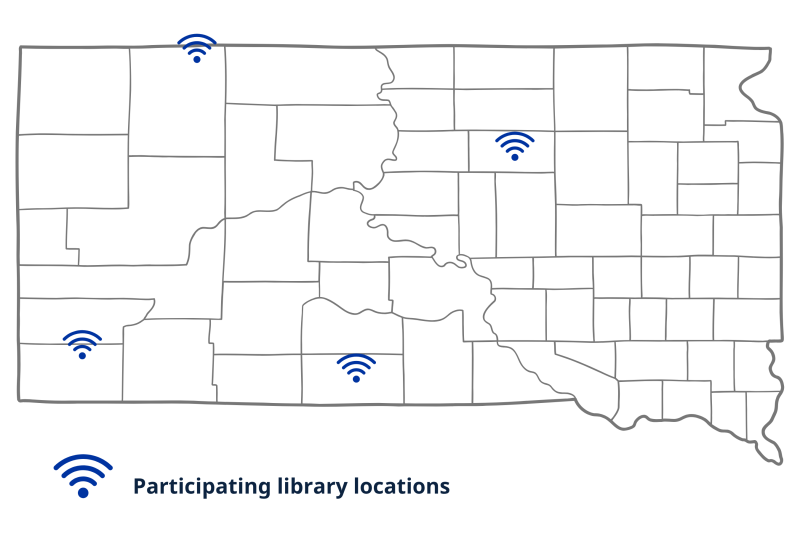
BROOKINGS, S.D. – South Dakota State University Extension is collaborating with AARP South Dakota and South Dakota’s public libraries to give the state’s rural citizens better access to the internet.
The Rural Library Hotspot Lending Program is a new initiative that will enable residents in four pilot communities to visit their local library and “check out the internet” by borrowing a hotspot device.
Lemmon Public Library, Hot Springs Public Library, Faulk County Library in Faulkton and Sinte Gleska University Library in Mission will receive several hotspot devices, like a phone or tablet, that community members can check out.
"This pilot program will not only support households in rural South Dakota facing affordability barriers to home internet subscriptions, but also strengthen bonds between rural libraries and their communities,” said Whoi Cho, assistant professor of applied economics in the Ness School of Management at SDSU.
Each library selected to be part of the program will receive mobile hotspots with internet service at no cost for one year. Libraries will be responsible for setting circulation policies, such as loan duration, late return fees and other usage guidelines.
“Access to reliable internet is a basic need for every home today,” said Sarah Sellars, assistant professor and SDSU Extension Sustainable Farm and Food Systems Specialist. “Without it, they may struggle with schoolwork or job searches, and they miss out on free digital resources offered by South Dakota libraries. We’re proud to be able to offer this hotspot lending program.”
Any rural South Dakota library is eligible to apply by emailing Sellars.
Erik Gaikowski, AARP South Dakota State Director, said more than 40 percent of households in some South Dakota counties do not have regular, reliable access to the internet.
“Many residents in South Dakota have limited or no internet access for work, study, or accessing vital services like health care,” said Gaikowski. “This program will bring connectivity to people in rural areas needing support for everyday needs.”
For more information, contact Sarah Sellars, assistant professor and SDSU Extension Sustainable Farm and Food Systems Specialist; or Whoi Cho, assistant professor of applied economics in the Ness School of Management and Economics at SDSU.