Written collaboratively by Adam Varenhorst, Philip Rozeboom, Patrick Wagner, and Brad McManus.
Pea aphids are a common pest of alfalfa in South Dakota, and large populations have been detected again in 2026. When temperatures are around 70 °F, pea aphid populations can rapidly increase and cause alfalfa yield reductions. Even when temperatures exceed 90 °F, their populations will continue to increase but at a slower rate. When large pea aphid populations are present in a field, their feeding can cause the alfalfa fields to take on a “golden” color. There are many natural enemies or predators that feed on pea aphid infestations, but these predators are unable to keep pea aphid populations in check when the pea aphid populations are rapidly increasing.
Identification
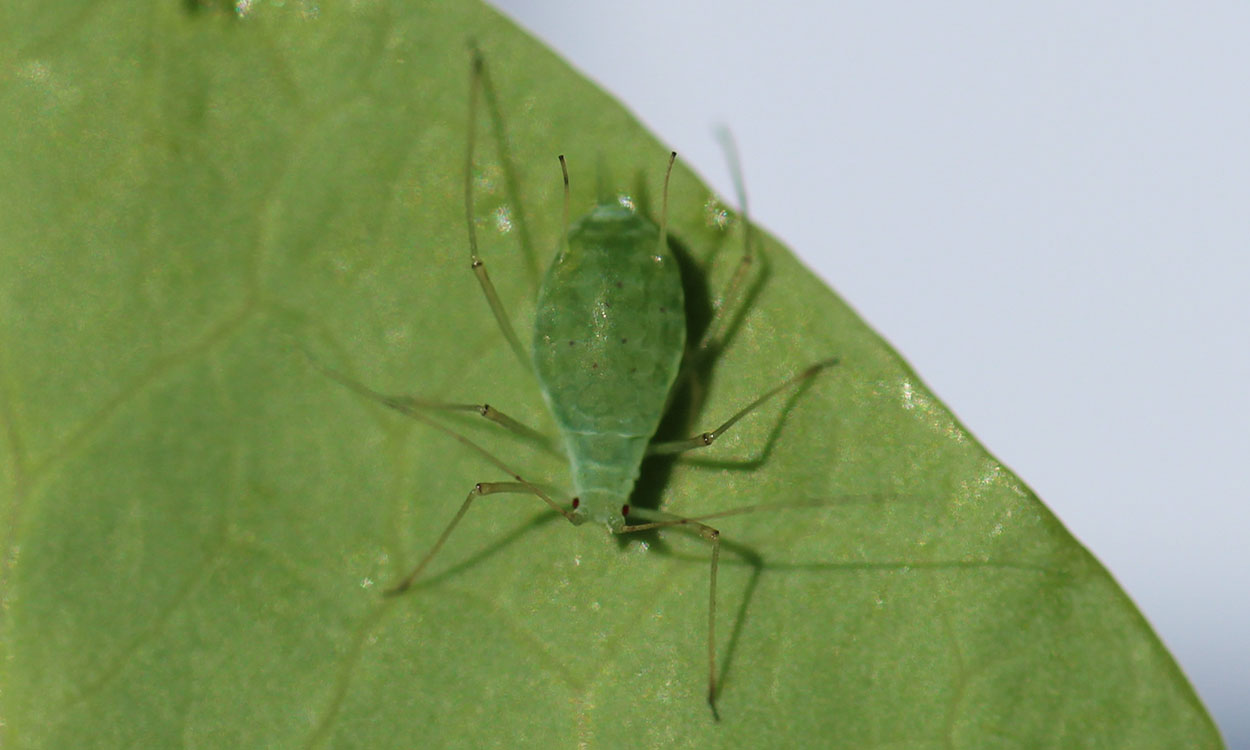
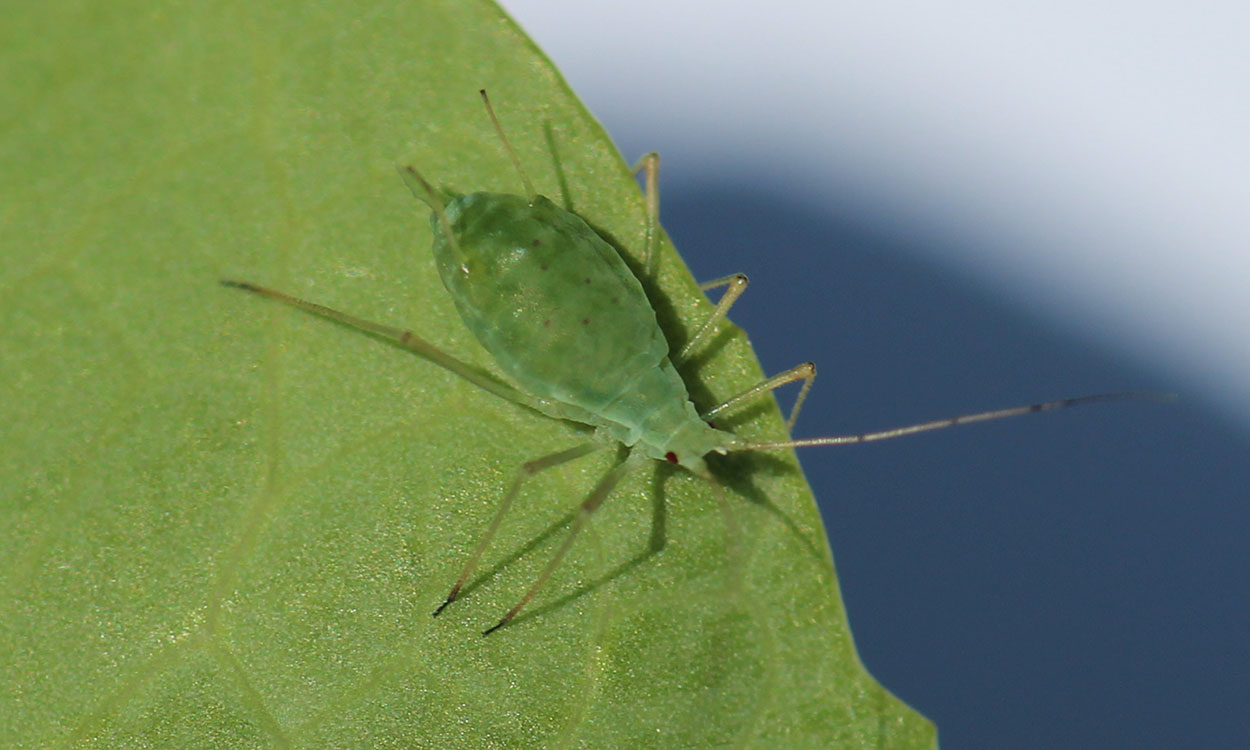
Adult pea aphids are approximately 1/8 to 1/4 of an inch in length making them noticeably larger than other aphids species present on alfalfa. The nymphs and adults are light green-yellow or dark green in color. However, there is the possibility to observe pea aphids that are a pale pink color. Pea aphids have long cornicles (tailpipes) that are noticeably darker at the tips (Figure 1). The antennae have dark bands between segments and red eyes (Figure 2).
Tailpipes
Antennae and Eyes
Scouting and Management
The fastest way to determine if pea aphids are present in an alfalfa field is to use a sweep net and see if any are captured. Pea aphid colonies tend to occur on alfalfa stems and the newest leaves.
To stay ahead of pea aphid populations, alfalfa should be scouted on a weekly basis, especially when forecasted temperatures are around 70 °F. Table 1 provides thresholds for pea aphids for either sweep netting or stem counts. If a sweep net is being used to sample, conduct 30 pendulum swings for each leg of a “W” or “Z” pattern while walking in the field. Count the number pea aphids present after every 30 swings and calculate the average. Repeat this process in an additional area of the field to determine field infestation levels.
If stem counts are being conducted, collect a total of thirty stems while walking in a “W” or “Z” pattern. For each stem carefully cut it near the soil surface, and shake it into a white bucket, then count the total number of pea aphids per stem and calculate an average for the field.
No matter which method you use, while walking through the field pay attention to the presence and abundance of natural enemy species. If numerous natural enemies are also collected in the sweep net or observed while walking, insecticide management may not be necessary depending on the aphid populations and daily average air temperatures. However, if thresholds are exceeded, a list of insecticides that are currently labeled for aphid management in alfalfa can be found in the latest South Dakota Pest Management Guide: Alfalfa and Oilseeds.
| Average Number of Pea Aphids Found | ||
|---|---|---|
| Growth Stage | Sweep | Stem |
| Seedling | -- | 5 |
| Less than 10” tall | 300 | 40 |
| More than 10” tall | 400 | 75 |
Reference
Hodgson, E. 2009. Getting to know aphids in alfalfa. ICM News, Iowa State University Extension.