It's time to plan our end-of-season alfalfa management strategy, and with it come the questions: “Should I make another cutting?” “When should I cut?” and “How much time does my stand have left?”
An analogy I like to use this time of year is that bears don’t go into hibernation on an empty stomach; rather, they spend their summer fattening up to survive the long winter and still come out of hibernation much thinner than when they were in the fall. Alfalfa isn’t very different in this way.
As a perennial crop, alfalfa needs sufficient carbohydrate storage in the root system to promote vigorous spring growth the following season. When alfalfa is cut, the plant relies on stored energy in the crown and roots to produce sufficient leaf area for photosynthesis to take over and begin rebuilding those reserves as the plant grows. This transition usually takes place after 7-10 inches of regrowth, which is a lot to ask from a plant when it can’t rely on photosynthesis to store energy quite yet. Consequently, if the crown and roots lack sufficient stored carbohydrates, it will weaken or kill healthy stands long before they’ve had the chance to produce to the fullest.
For young, vigorous alfalfa stands of less than four years old, the best way to ensure sufficient carbohydrate storage for a strong spring flush in the next growing season is to give the plants enough time to rest and grow before a killing frost sends the stand into dormancy. On average, alfalfa needs 500 uninterrupted growing degree days to complete this “winterization” process. For healthy alfalfa stands, this translates to a rest period of about 5 to 6 weeks from the last cutting to the first killing frost. A killing frost is sustained temperatures of 25 degrees or less for more than four hours. For already weakened stands, this rest period should be several weeks longer to allow the plant to “bulk up” before the killing frost. Frequently, we see alfalfa regrowth after weak frosts, just at the freezing point or for a short duration, meaning cutting during this winterization period is a risky move that can stress the plants and lead to increased winterkill.
Here in South Dakota, we typically see our first true killing frost in the first half of October, meaning that our last planned cutting should be no later than the first week in September in a normal year. That said, late harvest dates are acceptable for alfalfa stands if they are scheduled for termination to be rotated out the following season.
The caveat to all of this is that alfalfa stands of any age can be harvested one last time at the end of the winterization period without any significant loss of carbohydrate storage. This means that a stand left to grow from September onward can be cut at the time of a killing frost without damaging the plant. This ensures maximized forage potential is captured without any of the risky guesswork that comes from harvesting during the winterization period. That’s not to say that a cutting at the time of the killing frost is without risk; as forecasts are often wrong and the plants may begin to regrow again if warm weather follows, so ensuring the last cutting is timed with a true killing frost and continued cold weather is critical.
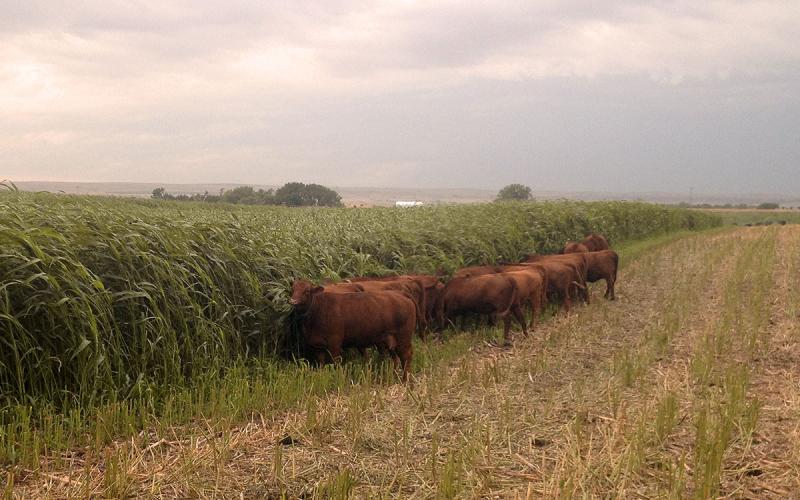
If grazing is the preferred harvest method, allow at least 10 days following the killing frost to reduce the potential for bloat, as frost damaged alfalfa causes high risk to cattle until fully dried down.
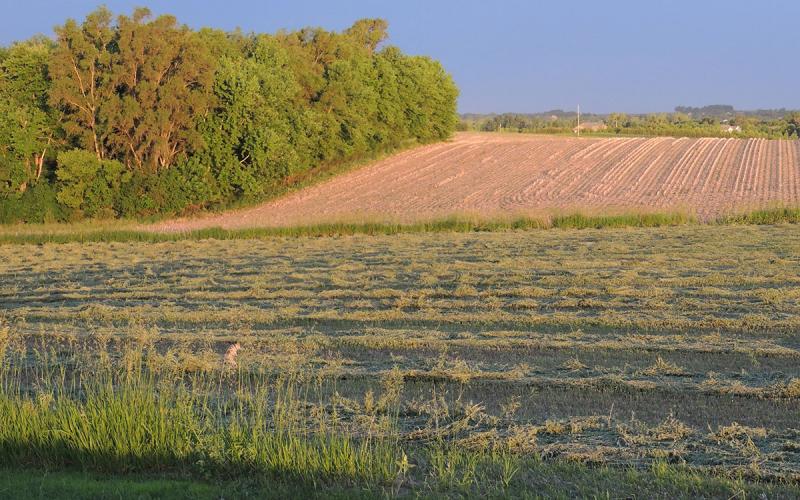
Regardless of the harvest method, leaving 5-6 inches of stubble is needed to reduce erosion, capture snow, and protect the roots and crowns from frigid winter temps. If properly cared for, alfalfa stands can last several years here in South Dakota. Often, it’s the simple measures such as skipping fall cuttings and timing late season harvests to Mother Nature’s schedule that will result in healthy, productive stands for years to come.
For more information on alfalfa management, visit our forage page.