Written collaboratively by David Karki, Gazala Ameen, Madalyn Shires, Karl Glover, Sunish Sehgal and Dalitso Yabwalo.
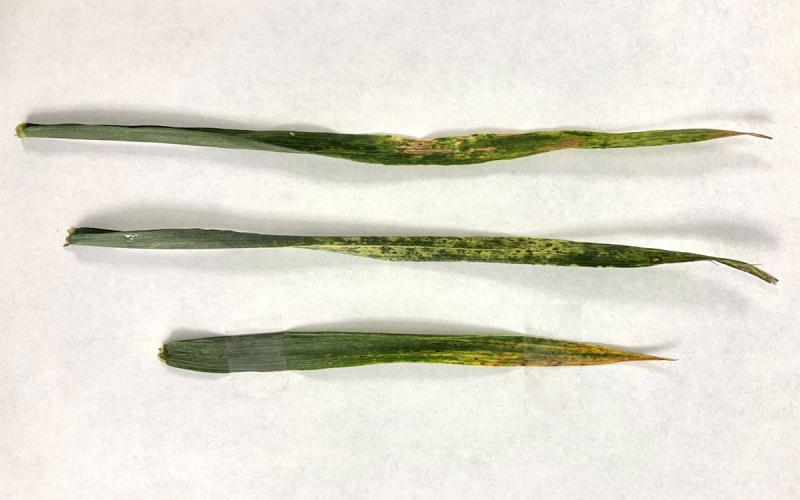
Bacterial leaf streak (BLS) is considered the most devastating bacterial disease of wheat and is one of the economically important diseases overall. In experiments conducted in controlled environments (greenhouse, disease nursery), susceptible varieties have shown yield losses in the range of 40% to 60%. However, in field conditions, yield losses in the range of 10% to 30% can be expected during wet seasons. The disease also reduces grain quality by causing discoloration on the spikes and is known as black chaff. Other small grain crops, such as barley and oats, are known to be affected by BLS as well.