Written collaboratively by Eric Jones, Philip Rozeboom, Jill Alms, and David Vos.
Despite dry conditions and great temperature swings, the planting season in South Dakota is going strong. Dry conditions have limited the activity of preemergence herbicides, but enough heat units have been accumulated that weeds are starting to emerge. Waterhemp seedlings were observed in Volga, South Dakota (May 13, 2026) and other observations of emerging seedlings have been and reported elsewhere in the state (Figure 1).
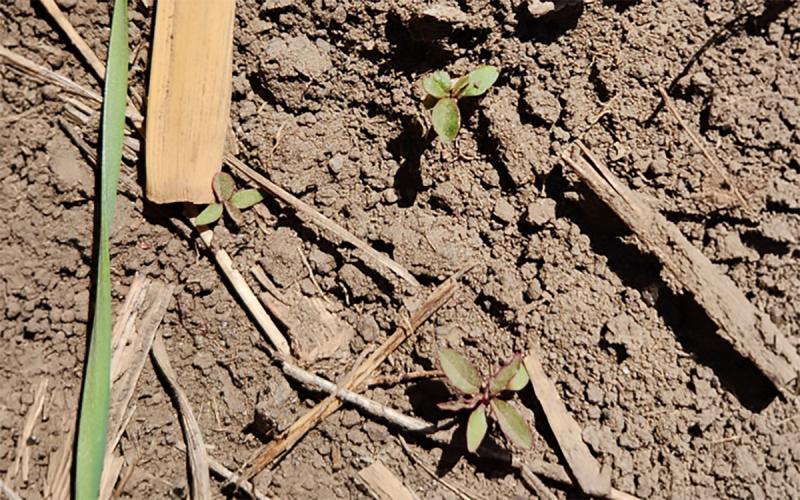
While the seedlings are still small, forecasted rain and increased temperatures will cause these plants to grow rapidly. Under ideal conditions, waterhemp can grow 0.5 to 1 inch per day. Therefore, if waterhemp plants have just emerged and conditions are ideal, plants can reach 4 inches in height within a week. Since 4 inches in height is the ideal time to spray with an herbicide, the window for a timely application will likely be short.
Management Considerations
Waterhemp seedlings that have emerged in fields that have not been planted or tilled, tillage will provide effective management. If the fields are in no-till production, a burndown herbicide application is likely necessary. If seedlings are observed in corn fields, an early postemergence herbicide application may be needed. Additionally, consider adding a residual herbicide in the postemergence herbicide application (example: Dual Magnum [S-metolachlor], Outlook [dimethenamid-P], and Warrant [encapsulated acetochlor]). These herbicides will not affect the emerged weeds but will manage the later emerging weeds that can interfere with the crop and possibly produce seed to be managed in future growing seasons. While dry conditions this growing season have not been favorable to activate residual herbicides, there is no chance of activation if the herbicide is not applied.
Refer to the South Dakota Pest Management Guides for more information on effective herbicides to manage waterhemp and other weeds in various crops.


