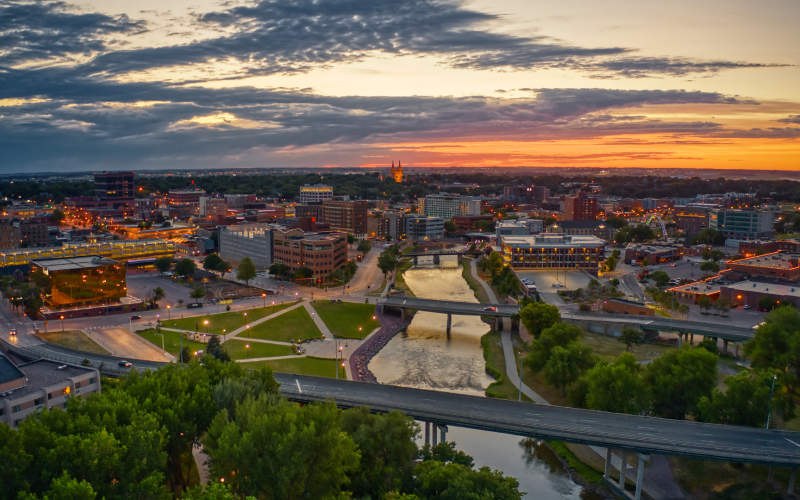
This article is part one of a two-part series. It serves as the cornerstone of a new program for developing local fairs and festivals that is being created jointly by the SDSU Extension Community Vitality and 4-H capstones.
Introduction: South Dakota Festival Deserts and Festival Revival
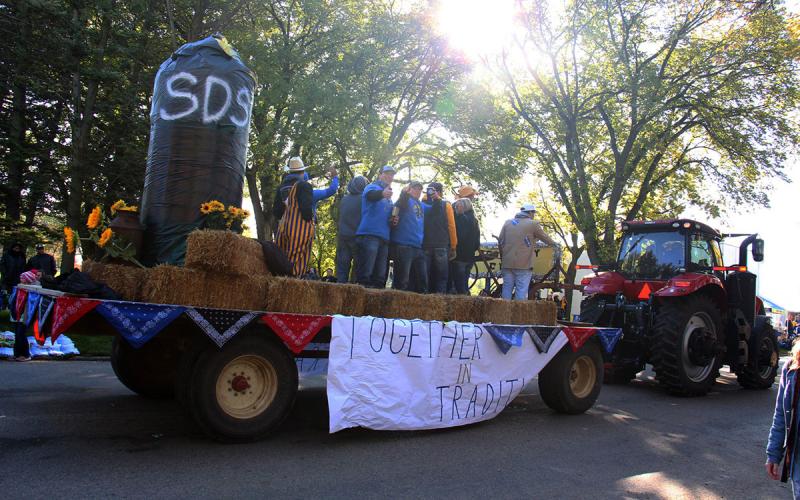
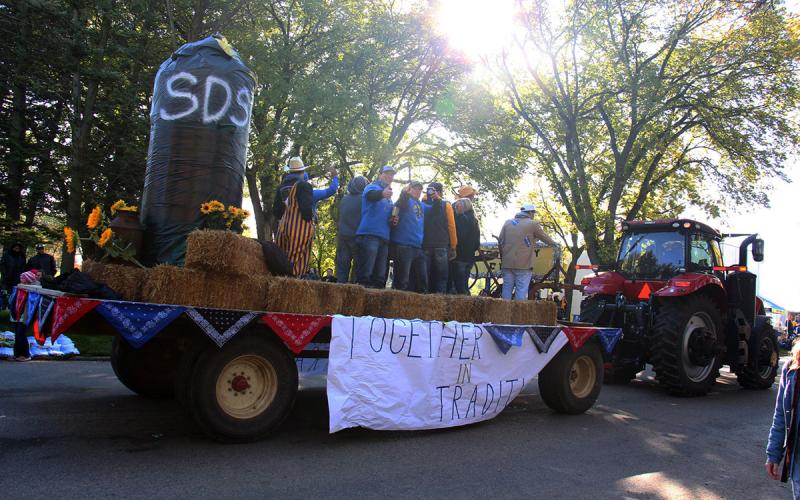
The hosting of annual fairs and festivals by communities throughout the U.S. is a tradition that stretches back to the nation’s earliest days. While the exact nature and theme of these festivals varies greatly across communities, they often, historically, center around local agriculture, industry, or other natural resource production. In South Dakota, many fairs and festivals take place in late summer or fall to celebrate a successful harvest, and the ways of life that made it possible. Yet, in this increasingly globalized world, fewer and fewer communities actually rely on local agriculture, extract natural resources, or boast local manufacturing. In this “post-productivist” economy, where the original foundations of many local festivals have vanished, many festivals have disappeared or declined. Those that remain can end up feeling like relics of a bygone era, perhaps cherished only by the community’s eldest members. The result is that many communities in South Dakota can be considered “festival deserts,” which lack the recurring celebrations of the life and culture that is important to a community, and which promote a sense of belonging and shared identity (Duffy and Mair 2017; Fontefrancesco 2022; Gibson, Connell, Waitt, and Walmsley 2011; Mair 2019).
At the same time, we have also entered a new era of festival revival and “festivalization,” characterized by both a rising number of festivals nationwide and a reimagining of festivals in their themes and purposes. In a world experiencing economic uncertainty and social disconnection, festivals have taken on a dual role as both a celebration of community and a strategy for economic development. For local people, festivals can represent an opportunity to maintain traditions, build connections, display achievements, attract tourists, and promote products and services. For visitors and locals, festivals can represent an opportunity for leisure and escapism, togetherness and socialization, and experience and education. At times, striking the balance between building community and attracting tourist revenue can bring tension and difficulty (Duffy and Mair 2017; Gibson, Connell, Waitt, and Walmsley 2011; Li, Huang, and Cai 2009; Mair 2019; Marsden 2010). Perhaps the greatest evidence of the importance of South Dakota fairs and festivals in this era is seen in the effects of the COVID-19 pandemic. The pandemic necessitated the cancelling of dozens of South Dakota fairs and festivals in 2020. This resulted in millions of dollars of lost income for businesses, nonprofit organizations, and individuals, along with crucial sales tax revenue for the state and local governments, not to mention reduced community morale and wellbeing (Lowrey and Pfankuch 2020).
The remainder of this publication focuses on the impacts of local festivals, to emphasize why they are worth preserving, developing, or reimagining. This begins with economic impacts, followed by environmental impacts, and concluding with social and cultural impacts.
The Economic Impacts of Festivals
Festivals have the potential to bring significant economic benefits to host communities. In the Upper Midwest region overall, 156 festivals in 2024 brought in a total of 9.5 million attendees including 1.8 million from out-of-town. Those festivals saw a total of $1.3 billion of direct spending, and $2.8 billion in total economic impact. They led to $74.6 million in sales tax, $33,330 in hotel tax, and a total of $74.7 million in government fiscal impact. Finally, they led to $1.0 billion in wages and 21,800 jobs. Festivals below 25,000 attendees had an average of $2.44 million in local economic impact (International Association of Fairs and Expos 2025).
Despite these impressive numbers, the type and extent of economic benefits varies greatly across festivals and is influenced by a variety of factors, including the size and duration of the festival, the characteristics of the local economy, and the nature of the festival and its overall goals (Black 2016). For instance, not all festivals are designed to attract as many tourists as possible or to generate significant revenue and profit. Some festival organizers prefer to prioritize attendance by local people, or worry about the effects of too many outside visitors (George 2015; Mair and Duffy 2018; Ranjan and Chaturvedi 2022). Nonetheless, festivals are an increasingly common component of many communities’ economic development strategies. Festivals have the potential to impact multiple sectors of the local economy, and require moderate levels of skill and capital compared to many alternative development initiatives (Kim and Dombrosky 2016).
The aspects of the local economy that festivals have the potential to affect are numerous. A successful festival can bring many visitors and, along with that, substantial spending as well as an improvement in the community’s profile and branding. Festivals can impact a wide range of business sectors, such as increasing revenue for local restaurants, lodging, waste management, sound and lighting providers, vendors, etc. Festivals can also provide businesses a venue to showcase new products and arrange business deals. When local foods or other goods are available, the festival can serve to connect local farmers and producers with consumers. Festivals can also be a significant source of revenue for local nonprofit organizations through fundraising activities. Organizing the festival in the first place can lead to the creation of new jobs, and make use of local expertise, services, and material goods. Local governments can generate tax revenue to invest into the community, potentially driving infrastructure and other development (Chhabra, Sills, and Cubbage 2003; Gibson, Connell, Waitt, and Walmsley 2011; International Association of Fairs and Expos 2025; Kim and Dombrosky 2016; Kwiatkowski 2018; Mair 2019; Moscardo 2007; O’Sullivan and Jackson 2002; Richards 2017).
It is worth noting that the previously described potential benefits do not simply happen on their own. Rather, specific details of festivals must be designed with those goals in mind (O’Sullivan and Jackson 2002). For instance, if a goal is to generate revenue for local nonprofits, their fundraisers should be given prime locations without competition from vendors. Another area that local festivals can expand is entrepreneurship. Festivals can serve as an incubator for local entrepreneurship under certain conditions. These include making spaces for local entrepreneurs affordable and accessible (possibly at the expense of established businesses), encouraging collaboration between entrepreneurs and local resources, and linking local entrepreneurs with broader market trends (Hjalager and Kwiatkowski 2018).
Beyond the direct effects, festivals can also have multiplier effects that potentially benefit the local economy. For example, a local business, such as a restaurant, that anticipates many customers during the festival will order additional food, which benefits their suppliers. Whether these types of multiplier effects benefit the local community depends on the extent to which businesses and vendors source their supplies locally or from outside companies (Chhabra, Sills, and Cubbage 2003; Gibson, Connell, Waitt, and Walmsley 2011; Kim and Dombrosky 2016). Another important consideration in measuring the economic impact of festivals is whether to include spending by locals, which is typically excluded unless there is proof they would have spent their money outside of the community if the festival had not occurred. Other considerations include defining what counts as “local spending” geographically, as well as the need to balance revenue against both direct local expenses and opportunity costs (Crompton 2006).
A final note on the economic impact of festivals concerns individual perception. Not everyone involved will see impacts the same way, at the same time, or to the same extent. Vendors, for example, are often the most skeptical of festival success as their overwhelming concern is typically with their profit margins. Vendors may even grow resentful as a festival grows in size because it can bring more competition. On the other hand, local residents sometimes perceive festivals to have positive economic impacts on their community even when they do not personally experience any economic benefits themselves (Li 2021; Ossowska, Janiszewska, Kwiatkowski, and Kloskowski 2023; O’Sullivan and Jackson 2002).
In short, festivals can bring a wide variety of economic benefits to communities, but they should be designed with achieving specific benefits in mind.
The Environmental Impacts of Festivals
While not discussed here at length, the environmental impacts of festivals deserve some consideration. Most discussions of environmental impacts focus on the potential negatives. A large influx of people and equipment into a relatively small area can be a serious burden to communities. For example, large crowds and various activities occurring can damage local parks, overburden local water and sanitation infrastructure, degrade roads, and lead to pollution (Li 2021). Yet, there is also the potential for significant environmental benefits. When festivals are based around local natural features, there is a direct incentive to invest in their preservation or restoration. Additionally, festivals often provide motivation to undertake efforts to make the community and physical landscape more presentable, as well as to invest in new facilities and regeneration of rundown areas. Lastly, revenue from festivals can be directed toward improving the local environment regardless of the theme of the festival itself (Moscardo 2007; O’Sullivan and Jackson 2002; Richards 2017).
The Social and Cultural Impacts of Festivals
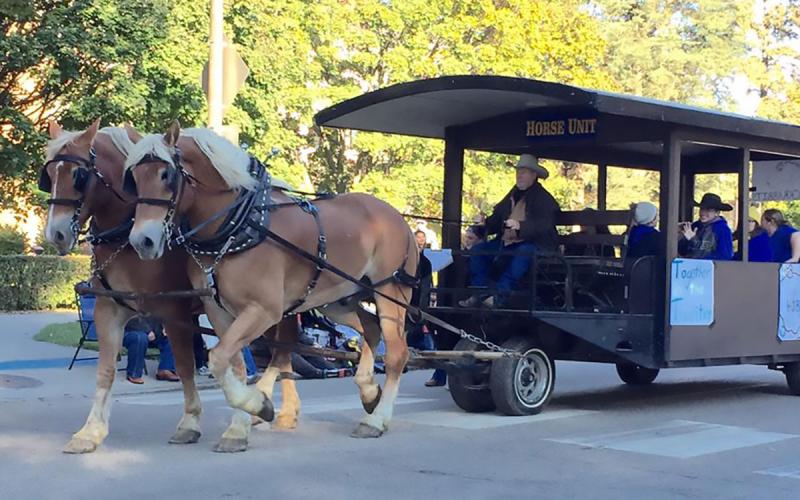
Festival benefits go beyond economic impacts. Indeed, a festival that generates little revenue or even loses money could still be considered a success when judged by its social and cultural effects. The sociocultural impacts of festivals generally fall into three key overlapping areas: Placemaking and sense of community, social sustainability, and social and cultural capital accumulation. Like economic benefits, these do not necessarily happen on their own and must be consciously sought out when designing festivals.
Festivals have great potential to contribute to forming and strengthening local identities and senses of community through their role in placemaking processes. By bringing together a community to accomplish shared objectives, they may increase local spirit and pride. By working to preserve and create local traditions, festivals can help reinforce relationships and social ties. Festivals can also establish bonds between people who do not otherwise collaborate much, and can be especially important during times of uncertainty and change when local identities can be lost. By bringing otherwise unrelated people together for something special, festivals represent a critical opportunity for bridging divides, resolving tensions, and integrating diverse local groups. This can lead to a strengthened sense of interdependence and mutual understanding. Through participation in local festivals, communities can create an economy of hope with positive visions for the future. They can also promote creativity, reinvigorate local life and lifestyles, and shift the image of their community from a “place where events sometimes happen” to an “eventful place” (Derrett 2003; Duffy and Mair 2017; Fontefrancesco 2022; George 2015; Gibson, Connell, Waitt, and Walmsley 2011; Hassanli, Walters, and Williamson 2021; Li 2021; Ranjan and Chaturvedi 2022; Richards 2017; Wilks 2013).
Having a strong sense of community and local identity provides a foundation for social sustainability, which can be understood as the conditions and processes that support human wellbeing (Hassanli, Walters, and Williamson 2021). Festivals can further contribute to social sustainability in a number of ways. Through building networks of connectivity, increasing interdependence and cohesion, and building a community that is not only physical but relational, festivals can promote socialization and reduce social isolation. Through bridging efforts, festivals can also assert and celebrate rural and other marginalized identities, which can help build tolerance and equality. Through emphasizing community involvement and participation, festivals can also lead to greater community resilience in the face of hardship. Additionally, through a focus on stimulating local assets and strengths, festivals have the potential to increase knowledge and skills, reduce poverty, and mitigate outmigration (Black 2016; Duffy and Mair 2017; Fontefrancesco 2022; Kwiatkowski 2018; Li 2021; Mair 2019; McGillivray, Walters, and Guillard 2023; Stevenson 2022).
In addition to economic capital, festivals have the potential to provide social and cultural capital to individuals. While economic capital refers to assets directly convertible to money, social capital refers to valuable social connections and networks, and cultural capital refers broadly to various skills, credentials, interests, and goods that an individual possesses. In certain circumstances, capital of one form can be convertible to another, such as a social connection leading to a job (Bourdieu 1986). Festivals can build social and cultural capital, as well as provide opportunities to make use of them, through several processes. These include efforts that enhance the skills and abilities of local residents, efforts that make community organizations stronger, efforts that build links among people, and efforts that build links among organizations. Festivals have the potential to both forge new social networks and strengthen those already in place (Duffy and Mair 2017; Hassanli, Walters, and Williamson 2021; Mair 2019; Mair and Duffy 2018; Moscardo 2007; Wilks 2013). Festivals can further build cultural capital for individuals through their role as an arena for displaying, reinforcing, and acquiring elements of local culture such as unique knowledge, skills, and products (Rossetti and Quinn 2021).
In short, while festival success is often measured in economic terms, sociocultural effects are just as important to consider when both designing a festival and evaluating its impacts.
Conclusion
In this era characterized by both festival deserts in some areas and festival revival in others, consider whether you feel represented by a festival in your community. Does your town have a festival? Does your county? Is it reaching its full potential in terms of the impacts it may be capable of providing, or is there room for improvement? Does your local festival, if you have one, adequately promote the assets and strengths of your community as they are today? Or, does it celebrate a way of life that may be vanishing? Lastly, is there something to be gained by involving yourself further in your local festival, and what knowledge, skills, and experience might you be able to bring to the table? Given the many potential positive impacts of local festivals on both individuals and communities, these questions are well worth considering.
References and Further Reading
- Black, N. (2016). Festival connections: How consistent and innovative connections enable small-scale rural festivals to contribute to socially sustainable communities. International Journal of Event and Festival Management, 7(3), 172–187.
- Bourdieu, P. (1986). The Forms of Capital. In Richardson, J.G. (Ed.), Handbook of Theory and Research for the Sociology of Education (pp. 241–258). Greenwood Press.
- Chhabra, D., Sills, E., & Cubbage, F. W. (2003). The significance of festivals to rural economies: Estimating the economic impacts of Scottish Highland Games in North Carolina. Journal of travel research, 41(4), 421-427.
- Crompton, J. L. (2006). Economic impact studies: instruments for political shenanigans? Journal of travel research, 45(1), 67-82.
- Derrett, R. (2003). Making sense of how festivals demonstrate a community's sense of place. Event Management, 8(1), 49-58.
- Duffy, M., & Mair, J. (2017). Festival encounters: Theoretical perspectives on festival events. Routledge.
- Fontefrancesco, M. F. (2022). Food festivals in Italy: a festive strategy against rural marginalization. Food, Culture & Society, 25(1), 3-17.
- George, J. (2015). Examining the cultural value of festivals: Considerations of creative destruction and creative enhancement within the rural environment. International Journal of Event and Festival Management, 6(2), 122-134.
- Gibson, C., Connell, J., Waitt, G., & Walmsley, J. (2011). The extent and significance of rural festivals. In C. Gibson & J. Connell (Eds.), Festival places: revitalising rural Australia (pp. 3-24). Channel View Publications.
- Hassanli, N., Walters, T., & Williamson, J. (2021). ‘You feel you’re not alone’: how multicultural festivals foster social sustainability through multiple psychological sense of community. Journal of Sustainable Tourism, 29(11-12), 1792-1809.
- Hjalager, A. M., & Kwiatkowski, G. (2018). Entrepreneurial implications, prospects and dilemmas in rural festivals. Journal of Rural Studies, 63, 217-228.
- International Association of Fairs and Expos. (2025) IAFE Impacts National Report Summary: September 2025. International Association of Fairs and Expos.
- Kim, S., & Dombrosky, J. (2016). Economic impact of small scale event to the local economy: Case of Canfield Fair. Journal of Tourism Insights, 7(1), 7.
- Kwiatkowski, G. (2018). The multifarious capacity of food festivals in rural areas. Gastronomy and Tourism, 3(3), 217-227.
- Li, M., Huang, Z., & Cai, L. A. (2009). Benefit segmentation of visitors to a rural community‐based festival. Journal of Travel & Tourism Marketing, 26(5-6), 585-598.
- Li, X. (2021). Residents’ perceptions of small-scale rural events: A dual theory approach. Events and Tourism Review, 4(2).
- Lowrey, N., & Pfankuch, B. (2020, June 3). Cancellation of festivals costing SD communities money and momentum. South Dakota News Watch.
- Mair, J. (2019). Introduction. In J. Mair (Ed.), The Routledge handbook of festivals (pp. 1-11). Routledge.
- Mair, J., & Duffy, M. (2018). The role of festivals in strengthening social capital in rural communities. Event Management, 22(6), 875-889.
- Marsden, M. T. (2010). The County Fair as Celebration and Cultural Text. Journal of American Culture, 33(1), 24-29.
- McGillivray, D., Walters, T., & Guillard, S. (2023). Place-based community events and resistance to territorial stigmatisation. International Journal of Event and Festival Management, 15(1), 7-23.
- Moscardo, G. (2007). Analyzing the role of festivals and events in regional development. Event Management, 11(1-2), 23-32.
- Ossowska, L., Janiszewska, D., Kwiatkowski, G., & Kloskowski, D. (2023). The impact of local food festivals on rural areas’ development. Sustainability, 15(2), 1447.
- O'Sullivan, D., & Jackson, M. J. (2002). Festival tourism: a contributor to sustainable local economic development?. Journal of sustainable tourism, 10(4), 325-342.
- Ranjan, A., & Chaturvedi, P. (2022), Rural Festival. In D. Buhalis (Ed.), Encyclopedia of Tourism Management and Marketing (pp. 772-775). Edward Elgar Publishing.
- Richards, G. (2017). From place branding to placemaking: the role of events. International Journal of Event and Festival Management, 8(1), 8–23.
- Rossetti, G., & Quinn, B. (2021). Understanding the cultural potential of rural festivals: A conceptual framework of cultural capital development. Journal of Rural Studies, 86, 46-53.
- Stevenson, N. (2022). The contribution of community events to social sustainability in local neighbourhoods. In Smith, A., & Mair, J. (Eds.), Events and Sustainability: Can Events Make Places More Inclusive, Resilient and Sustainable? (pp. 38-53). Routledge.
- Wilks, L. (2013) Introduction. In Richards, G., Brito, M. P., & Wilks, L (Eds.), Exploring the social impacts of events (pp. 1-11). Routledge.