Written by Sara Ogan, SDSU Extension Horticulture Assistant, under the direction, contribution, and review of Allison Dollen and Robin Buterbaugh.
Many of us are familiar with the white clover growing in our lawns or the yellow sweet clover growing in rangelands, but did you know that South Dakota has several native prairie clovers that are beneficial for pollinators, birds, and wildlife and add beauty and variety to our landscapes?
South Dakota prairie clovers (Dalea spp., aka Petalostemum spp.) are not true clovers (Trifolium spp). Rather, they are native herbaceous plants in the legume family. These legumes have long taproots and compound leaves that are attached alternately on thin stems. Prairie clovers tend to be very fragrant and produce many flowers on dense spikes. Flower colors range from white and yellow to purple depending on species. In typical legume fashion, they fix nitrogen into the soil and provide good livestock forage. They have also had ethnobotanical uses among Indigenous peoples of North America for many years. In addition to being drought resistant, pollinators such as native bees and butterflies are nourished by the clover nectar while birds and other animals eat the seeds.
The genus name, Dalea, honors the English botanist, Samuel Dale. The specific species' names describe the unique and varied flowers among the genera, but their differences go beyond floral characteristics. Each species prefers specific growing conditions, has unique uses, and exudes a distinctive fragrance. One fun way to experience the species differences is by rubbing the leaves together in your hands and deciding whether they smell like pine, lemons, or oranges!
Dalea purpurea (Purple prairie clover)
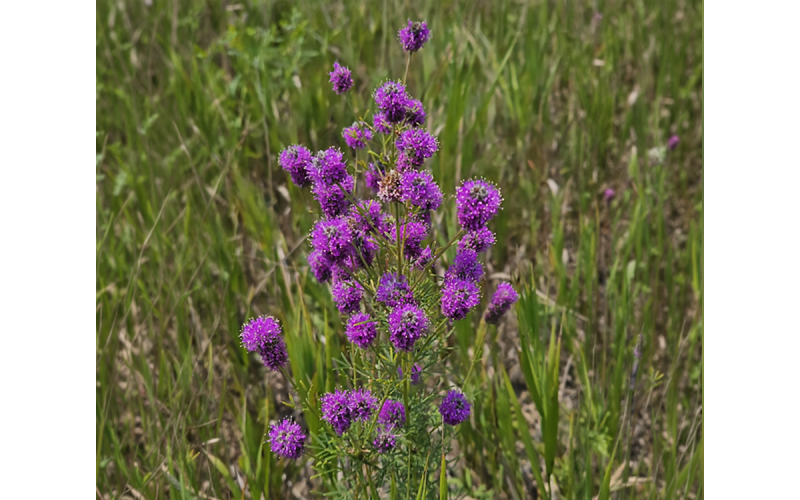
Height: 1 to 3 feet
Bloom Time: July to August
Flower Color: Purple
Habitat: Full sun, dry soil; fields, prairies, rocky areas
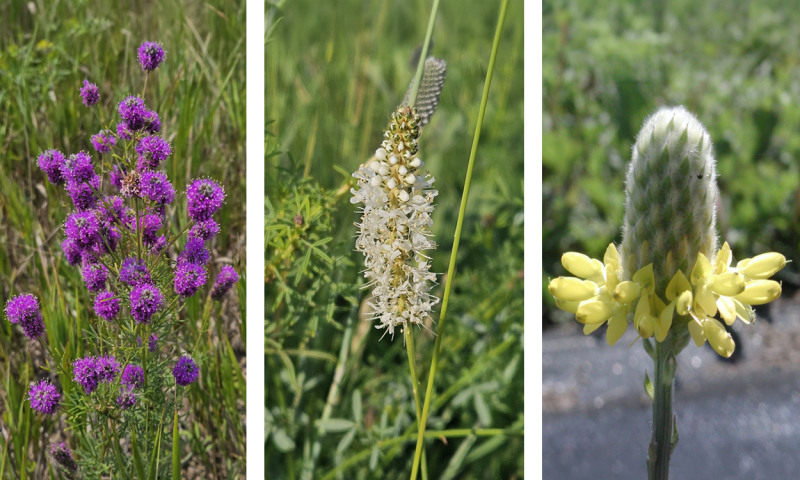
Purple prairie clover is one of the most familiar and widespread of the perennial prairie clovers. The vibrant purple flowers densely packed on cone-shaped heads attract a variety of pollinators. The species also features frilly foliage that adds to its beauty.
Plant this drought-tolerant species in sunny garden beds or naturalized plantings that have average to dry soil.
Dalea candida (White prairie clover)
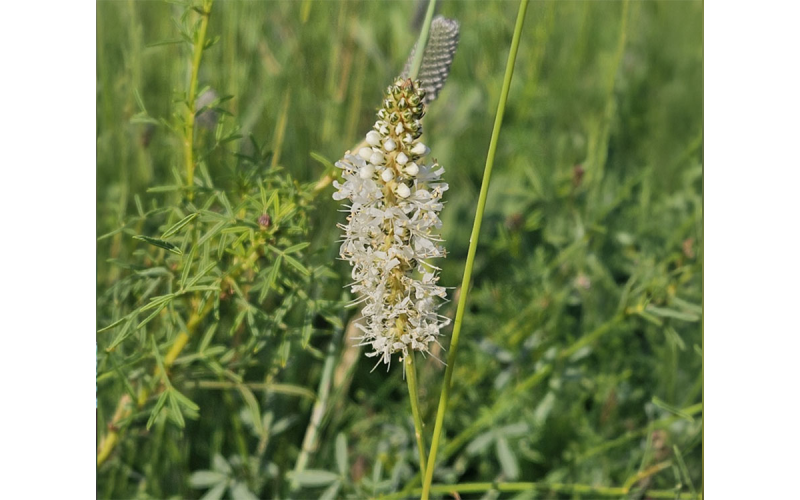
Height: 1-3 feet
Bloom Time: June and July
Flower Color: White
Habitat: Full sun; dry to moderate prairies, rocky or sandy soil
White prairie clover has leaves that are larger, broader, and not as densely packed on the stem compared to other prairie clovers. It typically blooms earlier than the other South Dakota prairie clovers as well.
It can be planted in all soil types that drain well, and it thrives in prairie or meadow gardens.
Dalea villosa (Silky prairie clover)
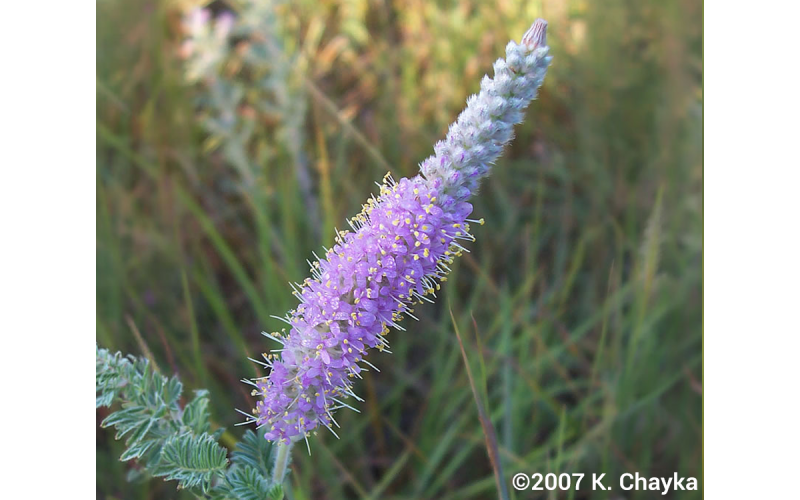
Height: 12-18 inches
Bloom Time: July and August
Flower Color: Light purple
Habitat: Full sun; dry; sandy soil, prairies
Silky prairie clover has spikes up to 5 inches long with light purple to white flowers. This species can sometimes be mistaken for leadplant (Amorpha canescens), as they have similar leaves and flower color. Silky prairie clover leaves and stems are covered with fine hair while leadplant has a hairless, woodier stem and blooms earlier.
This prairie clover prefers sandy soils and can withstand drought conditions.
Dalea aurea (Golden prairie clover)
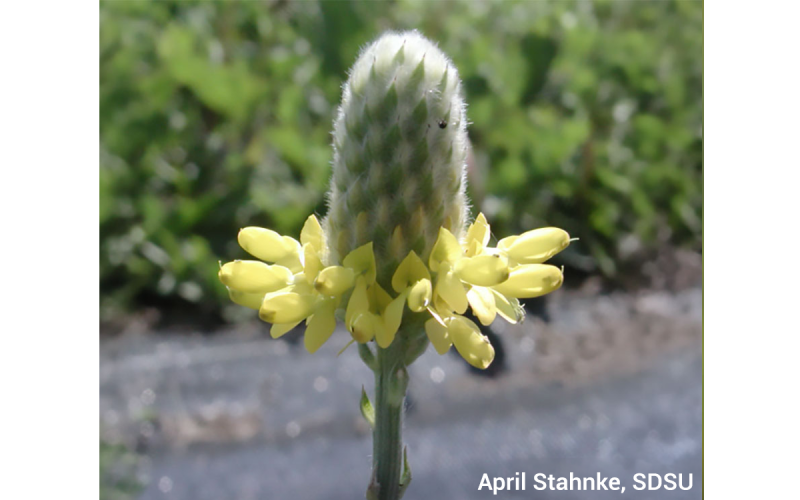
Height: 8-30 inches
Bloom Time: June-September
Flower Color: Bright yellow
Habitat: Rocky prairie slopes, open wooded or brushy hillsides, waste areas, stream valleys, and ravines
Golden prairie clover is a drought-tolerant plant and blooms in mid-summer when other species may struggle in the heat. It is slightly taller, on average, than the other prairie cloves of South Dakota.
Due to its affinity for dry, rocky soils, it is a wonderful addition to rock gardens.
Dalea leporine (Foxtail prairie clover)
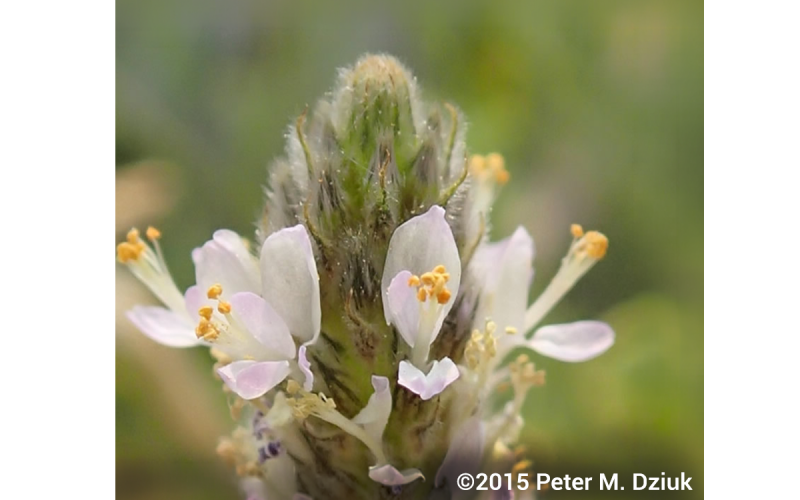
Height: 1-2 feet
Bloom Time: July-September
Flower Color: White
Habitat: Sun; disturbed soils, fields, sandy soils
Foxtail prairie clover is an annual that re-seeds itself in the right conditions. Scatter seeds in areas with full sun and moderately dry to rocky soils. Once established, it requires very little care. To distinguish from the perennial prairie clovers, check the underside of the leaves for the presence of visible gland dots.
The prairie clovers native to South Dakota thrive in a variety of soil and moisture conditions. If you have a sunny location in your field or yard, there is a prairie clover to fit your landscape!
Sources
- Native Plant Research at South Dakota State University, Open Prairie.
- Prairie Clover, Minnesota Wildflowers.
- South Dakota Plants to Know: Purple prairie clover, SDSU Extension.
- Dalea aurea (Golden prairie clover), Native Plants of North America.
- Violet Prairie-clover - Dalea purpurea, North Carolina Extension Gardener Plant Toolbox
- Plant Profile: Prairie Clovers, Dyck Arboretum
- White Prairie Clover, USDA-NRCS.
- Golden prairie-clover, Kansas Wildflowers
- Dalea aurea, Native Plant Society of Texas.