BROOKINGS, S.D. – To continue growing connections across the state, South Dakota State University Extension has compiled and released a directory of organizations supporting South Dakota’s local food network.
Researched and written by Blake Pulse, a doctoral research assistant in the SDSU Department of Natural Resource Management, the project maps out the organizations, efforts and initiatives in the South Dakota local food system.
Pulse said illustrating the organizations, what roles they play and how they relate to one another can help anyone interested in local food efforts in South Dakota. It is available for free on the "Growing Connections: An Organizational Map of the South Dakota Local Food System" publication page.
“My biggest takeaway is that local food spans a much larger network of organizations than one would think, including government, producer support, public education and outreach, food sovereignty initiatives and the infrastructure that connects how our food moves from the field to our tables,” Pulse said.
Pulse spent more than two years compiling the organizations that contribute to strengthening the local food system. His work revealed a wide range of people and organizations involved in the state’s local foods network.
“What we found was that efforts across the state were operating in isolated pockets, disconnected from one another,” he said. “There is a real need for coordination, much of the work happens internally within organizations, and building bridges for collaboration will strengthen the local food system.”
That gap is what motivated Pulse to create a “map” with three main goals: to highlight ongoing work in advancing local food in South Dakota; provide a central location for producers, consumers, or communities to connect or learn about local food efforts; and foster collaboration among local food system actors across South Dakota.
Kristine Lang, assistant professor and SDSU Extension Consumer Horticulture Specialist, said this organizational map is different from “where to buy” local food directories, meant to fill in gaps and connect people and organizations.
“The goal wasn't to duplicate prior directories, but rather to highlight and organize other puzzle pieces for our food system,” Lang said. “We hope that people use this to connect and build new collaborations with partners to get more South Dakota-grown and raised foods onto the tables of South Dakotans in creative, regionally relevant ways.”
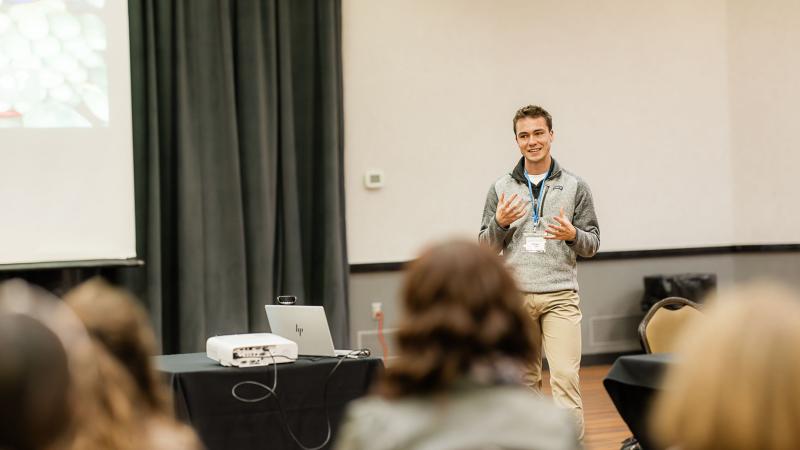
As one of the faculty members who supervised Pulse’s research, Lang said the map combines research and community knowledge gathered during 30 interviews and eight focus groups where participants identified individuals and organizations involved in the South Dakota local food system. She said through listening sessions, interviews and presentations, Pulse and the research team engaged in both outreach and research throughout this project.
“It has been a great privilege learning from the stories I hear from farmers in interviews and from local food system advocates in focus groups,” Pulse said.
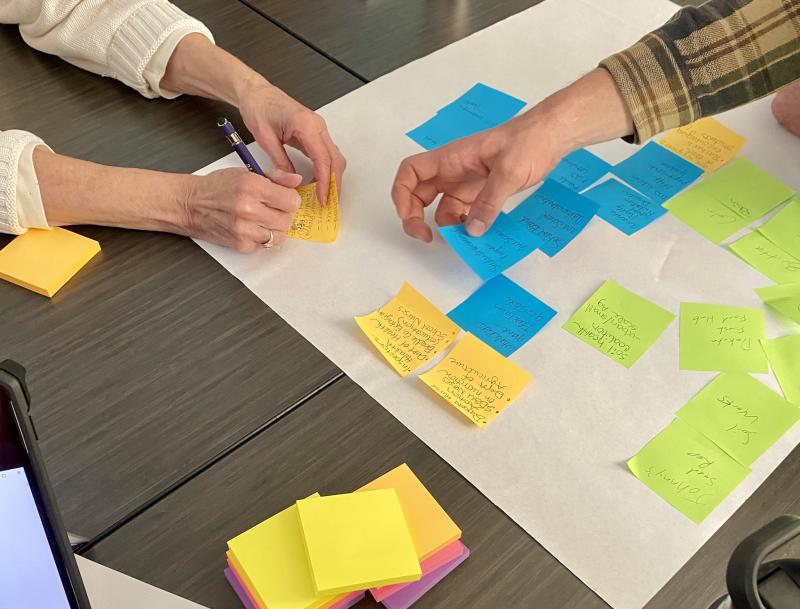
In the map, organizations are categorized into six clusters: food sovereignty; producer support, outreach and education; grassroots and producer networks; local food markets and distribution; youth and public education; and government and public support.
Pulse noted that while each cluster represents a unique domain, they are all connected and depend on one another. By compiling what exists, Pulse hopes the people and organizations passionate about local foods can get a better idea of what already exists, and what else is needed.
Lang said the beauty of this collaborative research is it brings together ideas from farmers, ranchers, schools, partner organizations and consumers versus a few experts making educated guesses.
“I think all of the deep dive work Blake is doing to study the local food system in South Dakota has given us incredible insights into the unique challenges of growing, raising and marketing a wide variety of meat, fruit and vegetable products for our state,” she said. “On the positive side, this has also brought forth many possible solutions and helped prioritize the order in which to tackle those solutions to build a better food system.”
A native of South Dakota, Pulse said his interest started before he knew what “local foods” were. He grew up surrounded by agriculture and always knew he would work in agriculture or food systems in some capacity. Then, in his freshman year at SDSU, he was a South Dakota FFA state officer and spent the year interacting with various agricultural areas.
“I had wonderful experiences across the agricultural sector, but the most impactful interactions I had during my year as a state officer were with small local producers and processors,” Pulse said. “The pride and passion that local producers took in their farms and products, and care for their communities really stuck with me throughout college. When my current research position became available, it was a no-brainer.”
He believes local food is important for South Dakotans for a variety of reasons, including health and nutrition, state and local economies and community connections and well-being. Not only is locally produced food often fresher and more nutrient-dense than a mass-produced counterpart, Pulse said dollars spent on local food products tend to stay in communities. He also noted the connections between producers and consumers are important for resilient communities.
“I truly believe that South Dakota produces some of the highest-quality food, and consuming it locally is a way to stay connected to our state's agricultural identity,” Pulse said. “Food brings people together, and that is what we need more of in today's world.”
Pulse worked under the direction and review of Jennifer Zavaleta Cheek, assistant professor in the SDSU Department of Natural Resource Management; Kristine Lang, assistant professor and SDSU Extension Consumer Horticulture Specialist; and Gemma Bastian, assistant professor and SDSU Extension Nutrition and Health Specialist.
“I am excited to design a tool that helps connect people to one another so that their individual impact can be multiplied,” Zavaleta Cheek said.
This project was developed in partnership with the South Dakota Local Foods Coalition, Dakota Rural Action and SDSU Extension with funding from the USDA Regional Food Systems Partnership Program.
For more information, contact Kristine Lang, assistant professor and SDSU Extension Consumer Specialist; or Blake Pulse, SDSU graduate research assistant.