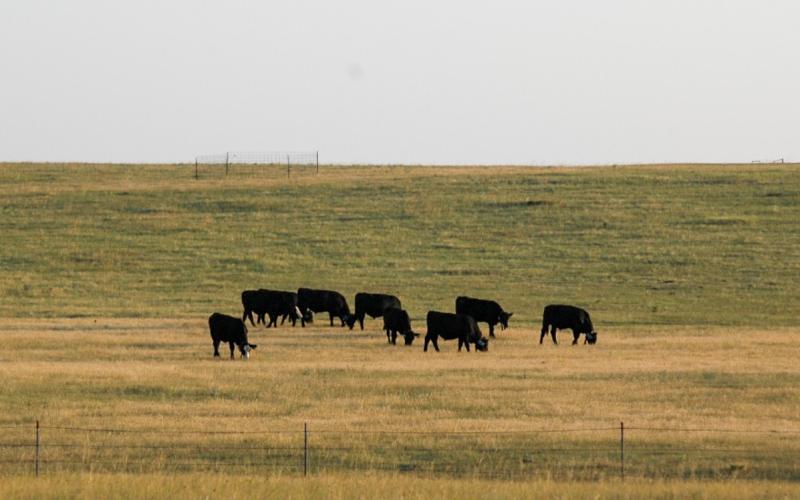
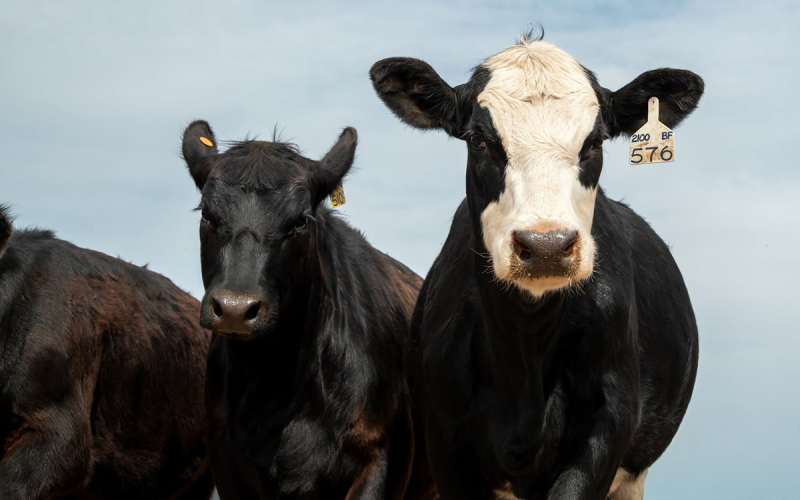
BROOKINGS, S.D. – The ninth annual Rosebud Range Workshop was held on July 15, 2026, at the Rosebud Sioux Tribal Ranch, and event organizers lauded it as a successful and productive event.
This annual event serves as a unique educational opportunity for people of all ages to learn about rangelands at the Rosebud Sioux Tribal Ranch. It was coordinated by South Dakota State University Extension, the Natural Resources Conservation Service, South Central Resource Conservation & Development Council and the Rosebud Sioux Tribal Ranch, with the help of many volunteers and sponsors.
In the morning session, adult participants learned about proper rangeland management. First, Kaylee Wheeler, SDSU Extension Range Field Specialist, delivered a hands-on lesson on calculating stocking rates for grazing animals and considerations for drought management. Each participant received a range kit with educational materials from the South Dakota Grassland Coalition and the South Dakota Soil Health Coalition, a grazing stick and clip-and-weigh supplies to calculate forage production.
Wheeler and Mary Scott, NRCS Rosebud Tribal Liaison, then led participants through a lesson on plant identification and appreciation. Scott and Wheeler offered several tips and tricks on how to identify several dozen grass, forb and shrub species. They also discussed the importance of each plant for grazing/nutrition value, medicinal or edible benefits, and contributions of that plant for pollinator or soil health values.
“Plant identification is really the foundation of range and pasture management,” Wheeler said. “You have to understand what plants you have in order to implement the best management practices for optimal grazing nutrition, undesirable plant control, wildlife habitat and everything depending on your goals.”

To conclude the adult session, Tanse Herrmann, NRCS State Grazinglands Soil Health Specialist, presented a rainfall simulator. Herrmann discussed the importance of soil health using a mobile trailer rigged with soil samples from various management practices and the application of artificial rainfall. Participants were able to witness in real time what the effects of different management practices had on the amount of rainfall that runs off the soil surface compared to soaking in. Soil samples that had more rotational grazing management were able to capture more rainfall than the sample from continuous grazing.
The afternoon session is designed for youth to learn about the importance of rangeland ecosystems and their components, as well as the basics of plant identification and uses. Youth participants also received range kits that included educational materials.
Similar to the adult session, youth were taught the difference between the three major plant types on the rangeland (grasses, forbs and shrubs) and why each type is important for the ecosystem, and for grazing, pollinator and cultural value.
Next, the youth participants had the opportunity to learn about rangelands through the South Dakota Grasslands Initiative hands-on education totes. One activity taught youth about the importance of having plant diversity and a variety of different pollinator insects. Jewell Bork, South Central Resource Conservation & Development Council, helped youth create pollinator seed balls, where they formed a soil ball and rolled it into a mixture of pollinator plant seeds. Students were then instructed to throw the balls into the grassland, where the seeds would hopefully germinate and take root in time.
Ron Frederick, SDSU Extension 4-H Educator – Todd County, also taught youth how various plants can be used medicinally with several examples of plant-based salves. The day was rounded off by students participating in a Web of Life activity. In this activity, students learn how each part of the ecosystem (wildlife, pollinators, soil microbes, plants, etc.) interacts with each other and works together in a system. A complimentary lunch was provided for all attendees.
For more information on the 2027 workshop, contact Kaylee Wheeler, SDSU Extension Range Field Specialist; or Ron Frederick, SDSU Extension 4-H Educator – Todd County.
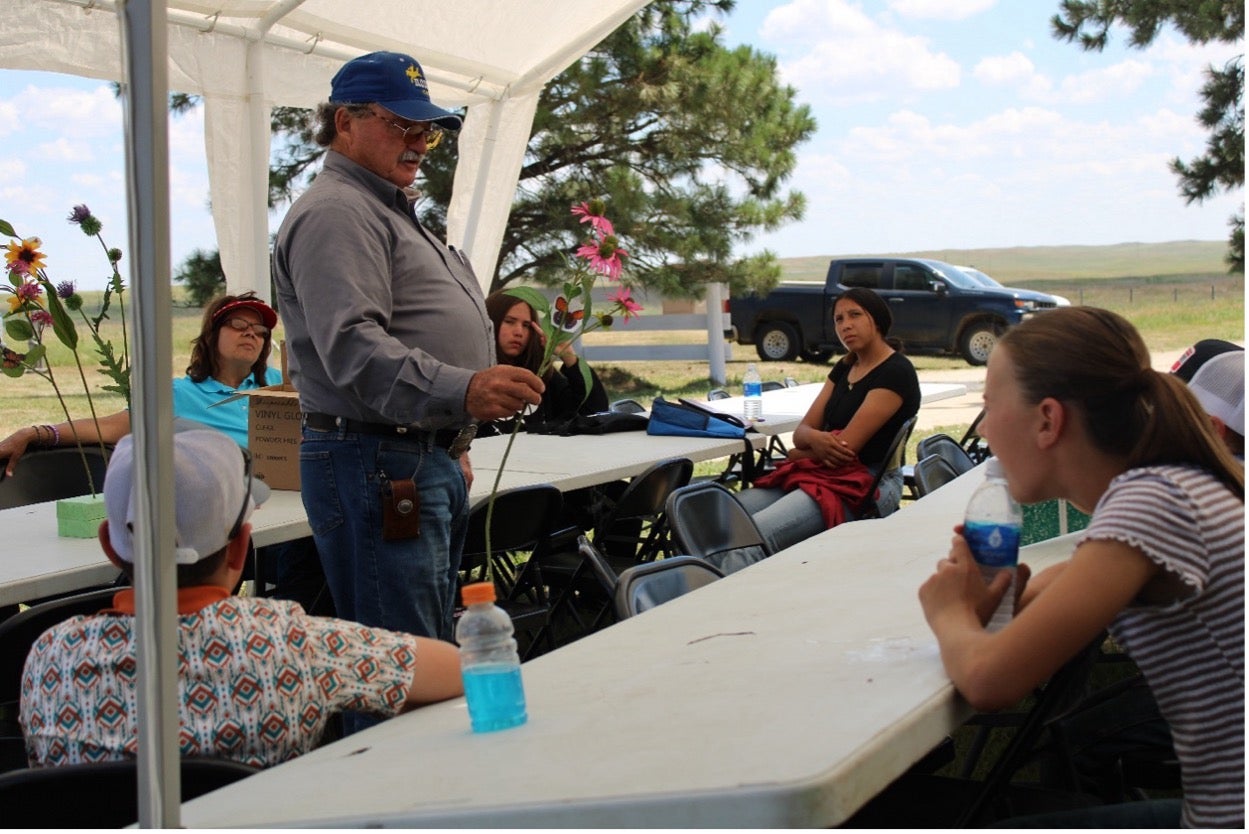
Ronald Frederick, SDSU Extension 4-H Educator – Todd County, discusses the importance of plant diversity and pollinators with youth at the 2026 Rosebud Range Workshop. Photo courtesy of Dawn Waln, Todd County Tribune.
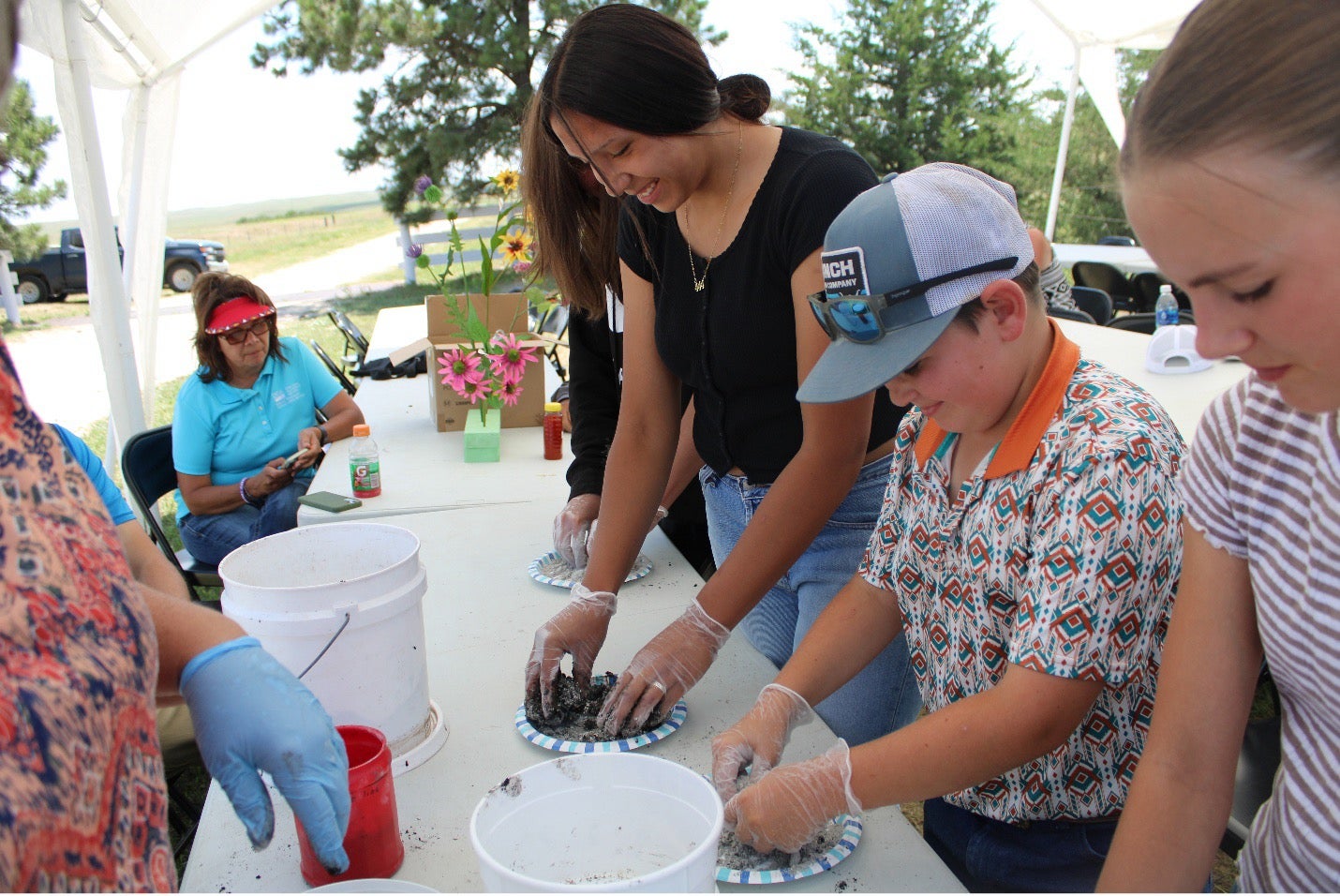
Youth create pollinator balls at the 2026 Rosebud Range Workshop. Photo courtesy of Dawn Waln, Todd County Tribune.