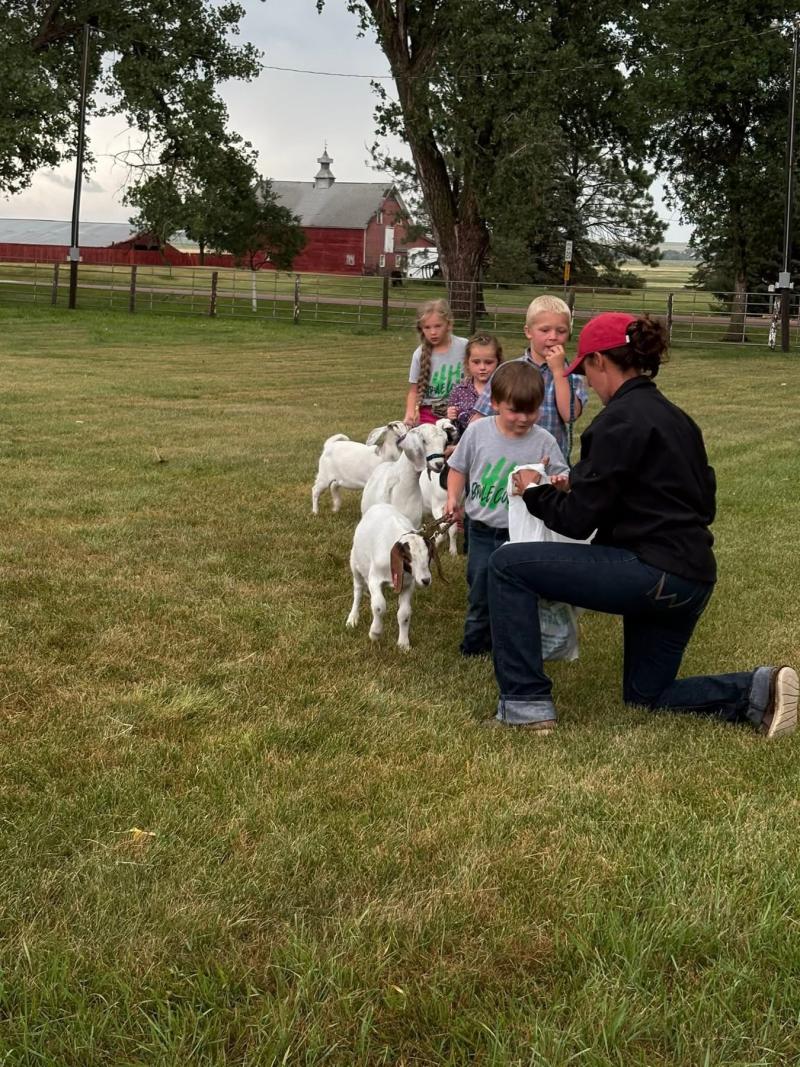
As populations drift off farms and into towns, some South Dakota communities have created unique opportunities for non-farm youth to experience the joy and responsibility of raising large animals.
In Potter County, for example, the Gettysburg school FFA program has partnered with the local 4-H office to lease pigs to youth who are interested. The animals are housed on a lot owned by the school and cared for by a rotation of the participating youth.
Jean Senyak, SDSU Extension 4-H Program Assistant for Potter County, helps with Youth Livestock Literacy training for participants, and said there are 37 youth in the project this year – most of whom live in town.
“A lot of these kids wouldn’t have any experience with pigs if it weren’t for this project,” Senyak said.
Sarah Schofield, Gettysburg School District’s agriculture teacher and FFA advisor, puts together a “chore chart” that assigns families to care for the pigs throughout the summer. They feed them, wash them and spend time with them in preparation for the show ring.
Not only does it provide youth with hands-on experience caring for livestock, Senyak said it introduces them to other aspects of 4-H, as well. In June, five youth who signed up for the pig project attended a project day to create a decoupage craft for exhibit at the county fair.
“We try to get them as involved as possible,” she said.
Laura Alexander, SDSU Extension 4-H Educator for Brule and Lyman counties, sees the same thing in her communities.
“Leasing is just planting a seed for youth to explore their interests in the livestock industry. I definitely think youth that may start 4-H just to show livestock can see what all different things 4-H can offer,” she said.
In Brule County, Marty Michalek, a 4-H alumnus and longtime volunteer, finds sponsors to help cover the cost of a sheep, goat or pig for local youth. The sponsor pays for half of the animal, and the youth pays for the other half. Michalek then matches the animal and owners together by pulling names out of a hat.
“They take the animal home, they’re responsible for taking care of it and getting it ready to show, but we’ve eliminated their need to find out where to buy it,” he said.
Michalek said they noticed some of these 4-H members had younger siblings who wanted to participate in livestock programs as well, so he also works with his stepsister’s family to lease goats to Cloverbuds (4-H members under the age of 8). Because of their age, Cloverbuds in Brule County don't show the animals as older youth would, but participate in a separate Cloverbud show as part of the program.
“It’s a neat way to spark an interest in younger kids, especially so they don’t feel left out,” he said. “Going through this project and having to work with us a little bit and take care of an animal – some of them are completely different kids than when I first met them, which is neat to see.”
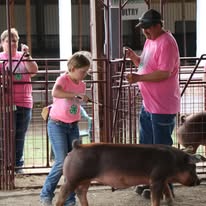
Youth participate in the Potter County 4-H swine show, which has partnered with Gettysburg school FFA to lease pigs to youth who are interested. The animals are housed on a lot owned by the school and cared for by a rotation of the participating youth.
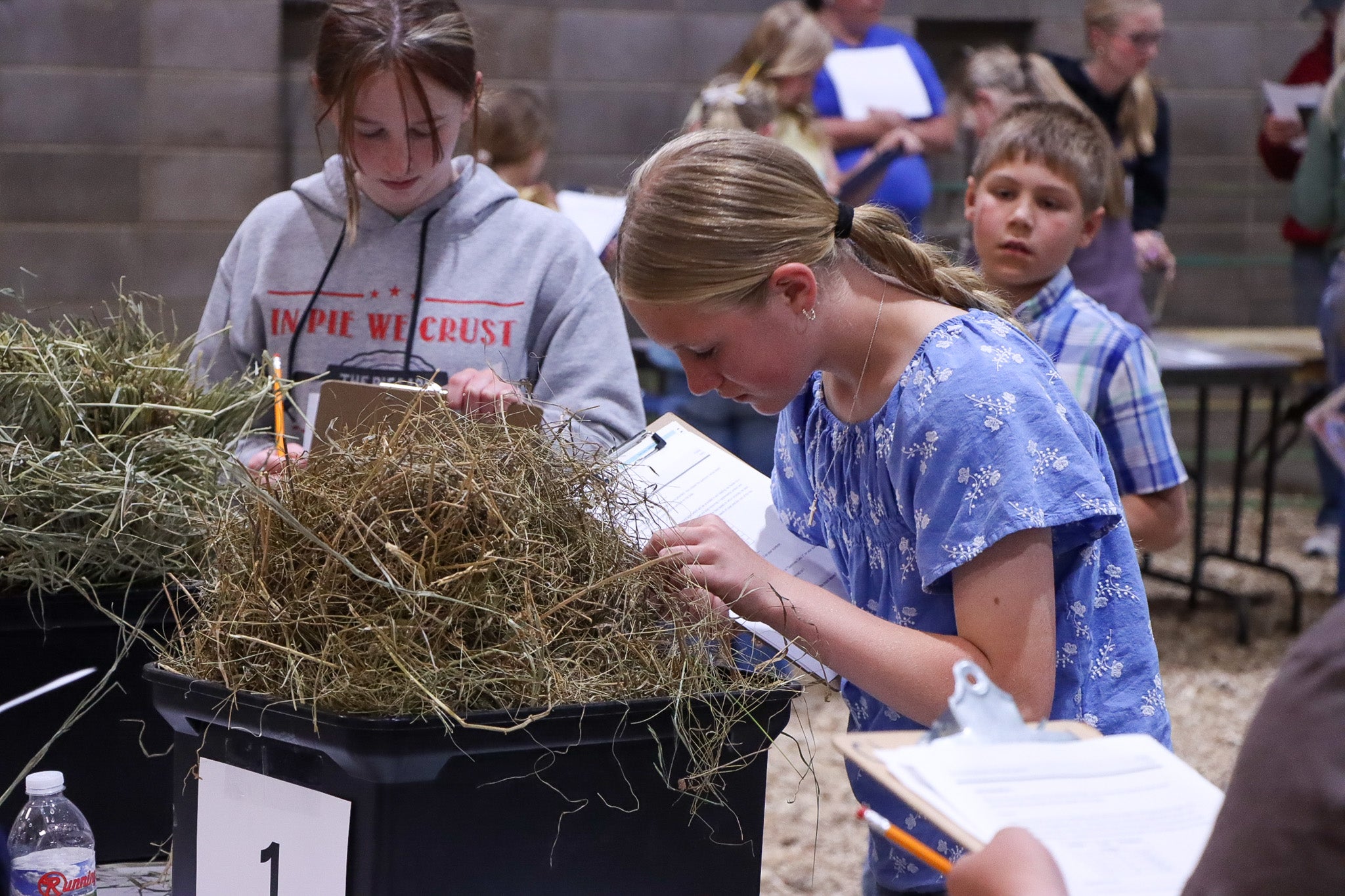
4-H youth judge forage samples during the 2026 Clover Classic in Brookings. (SDSU Extension)
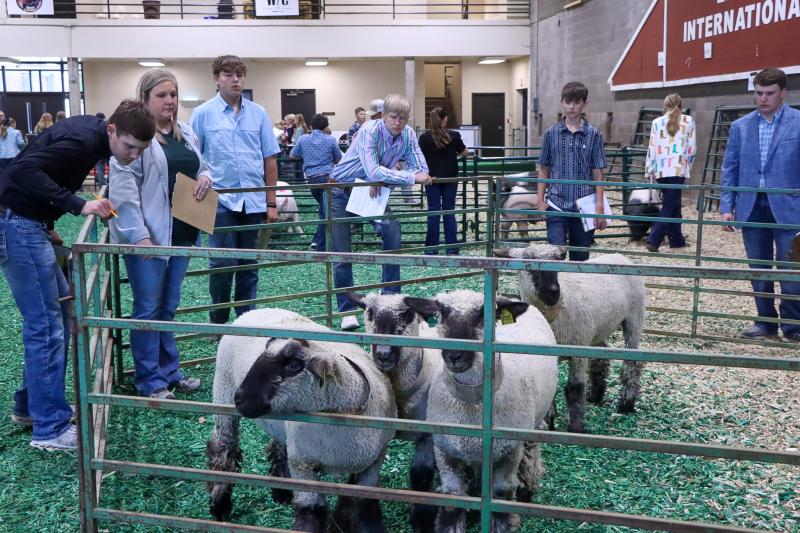
Clover Classic brings together livestock Youth-in-Action opportunities
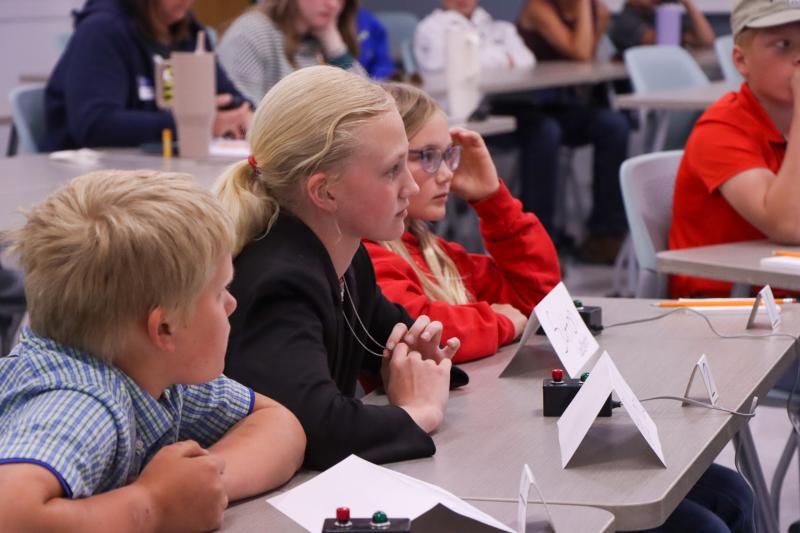
Another way for youth to learn about livestock and agriculture without needing access to their own animals is through the various 4-H Youth-in-Action activities like judging, skillathons, quiz bowls and public presentations.
To make it easier for busy youth to participate in multiple events, a committee of volunteers, youth and 4-H staff deliberated and ultimately decided to host a joint event. The inaugural Clover Classic was held in June on the SDSU campus in Brookings. Over two days, 4-H members could compete in hippology, horse quiz bowl, horse judging, livestock skillathon, livestock judging, livestock quiz bowl and new events, meat judging and poultry judging. There were also social activities hosted by State 4-H ambassadors in the evening.
“It was a jam-packed two days,” said Kelsey VanderWal, SDSU Extension 4-H Livestock Program Manager. “Everybody’s lives are so busy right now. This allowed kids to come, participate and maybe try a new event.”
About 100 youth participated in each of the livestock judging and livestock skillathon contests, from which the top placers can go on to compete at a national level. For the livestock quiz bowl, there were seven beginner teams and three senior teams. In the horse events, 27 competed in hippology and 21 in judging, with two beginner/junior teams in the horse quiz bowl. About 20 joined the poultry judging contest, and 31 participated in meats judging.
“We had a lot of positive feedback about this, instead of trying to add one more thing at State Fair,” VanderWal said. “I’m excited to see over the next couple of years how they continue to excel.”
Rosie Nold, assistant dean and Director of Global Agricultural Leadership and SDSU Extension interim 4-H Program Director, said youth-in-action events – meaning the youth participate in events versus making a product – are prime opportunities to build life skills such as decision-making, time management, teamwork and communication skills.
Through general knowledge competitions like the livestock skill-a-thon, quiz bowls and hippology, Nold said youth learn about myriad aspects of animal care, like nutrition, anatomy and reproductive management.
She praised the competitions for the different ways they teach youth about livestock and the agriculture industry. Meat judging and poultry judging offer a cross between production and consumer knowledge, teaching youth how to identify things like the best meat cuts and egg grades.
“The decision-making and communication skills they learn from these are absolutely invaluable,” Nold said. “You don’t have to own an animal or have access to one. All of these contribute to life skills.”
4-H Youth-in-Action animal and livestock project areas include:
- Livestock judging (cattle, swine, sheep, goats)
- Livestock skillathon
- Livestock quiz bowl
- Poultry judging
- Poultry skill-a-thon
- Meat judging
- Horse judging
- Hippology
- Horse quiz bowl
- Livestock/horse/animal public presentations
- Rabbit skill-a-thon
- Dairy skill-a-thon
Interested in learning more?
The 4-H year starts on Oct. 1 and ends Sept. 30. To exhibit animals, youth must be registered 4-H members by May 31, with animals identified by June 1. To find more information on your local 4-H office or to enroll as a 4-H member or volunteer, click the link below.
Learn more about SDSU Extension 4-H